





Bahrain Minister of Foreign Affairs Attends First International Space Summit
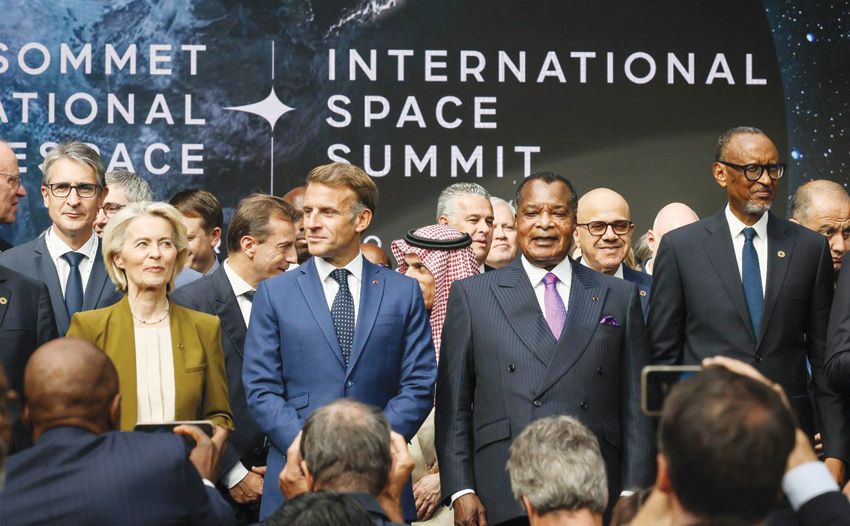
In a landmark event, Dr. Abdullatif bin Rashid Alzayani, the Minister of Foreign Affairs of Bahrain, represented the Kingdom at the First International Space Summit in Paris, France, from September 9 to 10, 2026. This summit, initiated under the auspices of His Majesty King Hamad bin Isa Al Khalifa, marks a significant milestone in global discussions concerning space governance and international cooperation.
Significance of International Collaborations in Space Exploration
The summit featured participation from numerous heads of state, government leaders, and foreign ministers from around the world, alongside representatives from international organizations, agencies specializing in space affairs, and members of the scientific community. French President Emmanuel Macron opened the summit, articulating visions for the future of space endeavors that encompass both strategic competition and international security. He emphasized that space has evolved from a mere scientific or commercial domain to a critical arena for geopolitical engagement.
In his address, President Macron advocated for the establishment of clearer international regulations governing space activities, including the management of traffic and space debris. He underscored the necessity of maintaining space as a platform for international collaboration despite escalating geopolitical rivalries.
Bahrain’s Commitment to Space Exploration
Dr. Alzayani expressed pride in leading Bahrain’s delegation to this prestigious summit, recognizing the French efforts to host such a significant gathering. He highlighted the pivotal role of Bahrain in the space sector, facilitated by the establishment of the Bahrain Space Agency. Alzayani remarked, “Access to space has become a right not confined to a select few countries, and our regulations should reflect this reality.” Bahrain is clearly poised to expand its partnerships globally based on the premise that the future of space can only be carved by cooperative endeavors.
Meanwhile, Dr. Mohammed Ibrahim Alassiri, the Chief Executive Officer of the Bahrain Space Agency, provided insights into the summit’s objectives. He mentioned that the summit sought to cultivate direct dialogue among involved stakeholders and outline frameworks through high-level panels and workshops aimed at addressing the interconnected agendas of space policy.
Significant Agreements and Investments in the Space Sector
The summit saw the signing of over 50 contracts and agreements, surpassing 20 billion Euros in value. These agreements included collaborations and investments primarily involving European and international partnerships linked with the United Arab Emirates, demonstrating a growing synergy between Europe and Gulf countries in strategic sectors.
Furthermore, discussions focused on pressing topics, categorized into four main pillars: security and resilience, economic competitiveness, governance and regulation, and the sciences and exploration. This structured approach allowed for a thorough examination of the expanding use of low Earth orbit, the structuring of the space economy, major scientific fields, lunar exploration, and the development of skills and competencies essential for future advancements.
Future Implications of Space Governance
During the two-day summit, participants adopted several key declarations aimed at enhancing the regulatory framework of space governance. Among these was the establishment of protocols for managing radio frequency spectrum and satellite orbits, instrumental for global telecommunications. Additionally, the summit laid the groundwork for the international cooperation necessary to ensure sustainable use of outer space for all nations, thereby facilitating better access to scientific data.
As the world watches the outcomes from this inaugural summit, the focus will shift toward implementing the agreements reached and monitoring how they influence global space policy. The next anticipated step will be the continued dialogue and collaboration among nations to refine space governance and ensure that exploration activities yield collective benefits.