





Bahrain ports cooperation advances after ministerial meeting
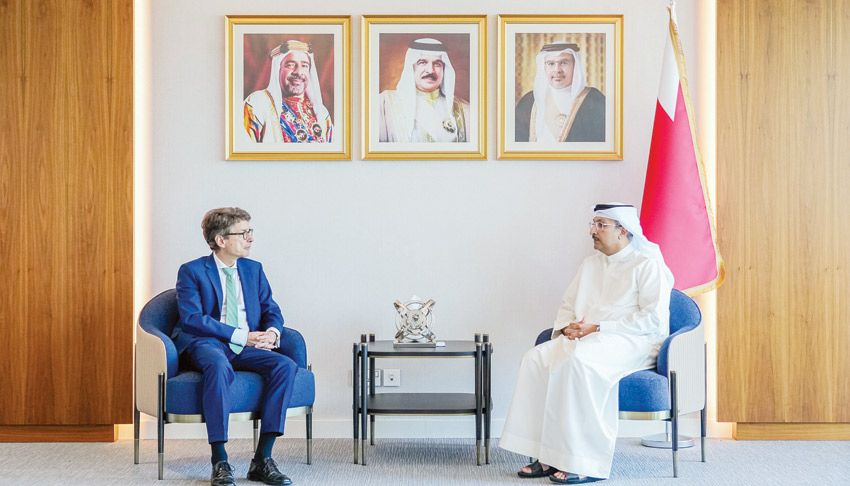
Badr Hood Al Mahmood, undersecretary for ports and maritime affairs at the Ministry of Transportation and Telecommunications, met recently with Henning Georg Simon, ambassador of the Federal Republic of Germany to the Kingdom of Bahrain, to discuss Bahrain ports cooperation. The meeting in Manama brought together senior officials to explore practical steps to strengthen ties in maritime transport and logistics services.
Officials said the talks focused on joint initiatives that could enhance trade flows and operational efficiency at Bahraini harbours. The ministry stated that the discussions aimed to identify areas for capacity building, knowledge exchange, and adoption of sustainable port technologies.
Bahrain ports cooperation: meeting highlights
The delegation discussed targeted cooperation programs covering port operations, customs facilitation, and supply chain resilience. According to ministry sources, participants reviewed existing bilateral frameworks and considered technical partnerships that align with international best practices.
In addition, they explored mechanisms to streamline freight handling, reduce turnaround times, and improve intermodal connections between sea and land transport. Meanwhile, both sides emphasized the importance of regulatory alignment and information sharing to support long-term commercial links.
Port visit and operational review at Khalifa bin Salman Port
After the formal meeting, the German delegation conducted a field visit to Khalifa bin Salman Port to inspect infrastructure and logistics capabilities. The visit allowed the ambassador and his team to observe handling equipment, container terminals, and cargo flow processes first-hand.
Observers noted the port’s advanced handling systems and operational discipline, which officials described as central to the port’s role as a regional logistics hub. Furthermore, the review included an overview of ongoing development plans intended to expand capacity and enhance integration with regional shipping networks.
Focus on maritime transport and logistics services
Both sides highlighted maritime transport and logistics services as priority areas for cooperation, citing mutual benefits for trade facilitation and economic diversification. The ministry indicated that technical workshops and staff exchanges could form the initial phase of collaboration.
Germany’s experience in port automation and green shipping practices was raised as a potential source of expertise, while Bahrain’s strategic location and growing maritime infrastructure were presented as advantages for joint projects. Therefore, proposed activities centered on training programs, regulatory support, and pilot deployments of smart port solutions.
Potential areas for technical exchange
Officials identified several specific topics suitable for knowledge transfer, including digital terminal operating systems, cargo tracking, emissions reduction technologies, and resilience planning. Furthermore, they discussed how efficiency gains might be measured and shared to inform future efforts.
Technical collaboration and smart port solutions
The meeting emphasized smart and sustainable solutions as central to future cooperation, with both parties showing interest in low-carbon operations and digitalization. According to observers, the ministry underscored plans to evaluate new technologies that improve energy efficiency and reduce environmental impacts at port facilities.
Germany’s industrial and engineering sectors were noted as potential partners for pilot projects on automation, electrification of equipment, and shore power systems. Additionally, officials suggested joint research initiatives and advisory visits to assess feasibility and deployment timelines.
Implications for regional trade and supply chains
Strengthened cooperation could translate into faster cargo processing, improved reliability for shippers, and greater integration of Bahrain into global supply chains. Analysts said enhanced operational standards and shared technology could also attract new maritime business and investment to the region.
Furthermore, aligning procedures with international partners may help Bahrain increase throughput and competitiveness, while providing German companies with access to a strategically located logistics hub. Therefore, the collaboration has implications for both commercial growth and strategic partnerships across the Gulf.
Conclusion and next steps
Officials concluded the engagement by agreeing to follow up with sectoral working groups to identify concrete projects and timelines. The ministry indicated that next steps would include technical assessments, proposals for capacity-building programs, and scheduling of reciprocal visits between port authorities and private operators.
Readers should watch for announcements of specific pilot projects or memoranda of understanding in the coming months, which will signal the transition from dialogue to implementation. Meanwhile, the meeting reinforces Bahrain ports cooperation as an evolving priority for both countries and a practical framework for future maritime and logistics collaboration.