





Recent Employment Statistics in Saudi Arabia
According to the latest report from the Ministry of Human Resources and Social Development, as of August 2026, 2.69 million citizens are employed in the private sector, with 406,000 of these positions supported by the Human Resources Development Fund, known as “Hadaf.” The unemployment rate among Saudi nationals stands at 6.5%. These statistics were released in conjunction with the announcement of the Saudi government’s budget for 2027, spotlighting the country’s ongoing commitment to enhancing its workforce and economy.
Women in the Workforce
In a notable development, the participation rate of Saudi women in the labor force has increased to 33.7%. This is a significant upward trend, reflecting the government’s initiative to empower women by opening more job opportunities. The Hadaf Fund has played a crucial role in this progress, helping to hire over 406,000 citizens, thereby contributing to the overall economic participation of women in the Kingdom.
Financial Support and Economic Empowerment
The Social Development Bank has allocated financial solutions amounting to 3 billion Saudi Riyals, benefiting over 63,000 citizens and businesses. Among these are 1,700 women who received a total of 400 million Saudi Riyals to establish their own ventures. This funding emphasizes the government’s focus on fostering entrepreneurship and supporting small and medium enterprises as a pathway to economic growth.
Emerging Work Patterns and Flexibility
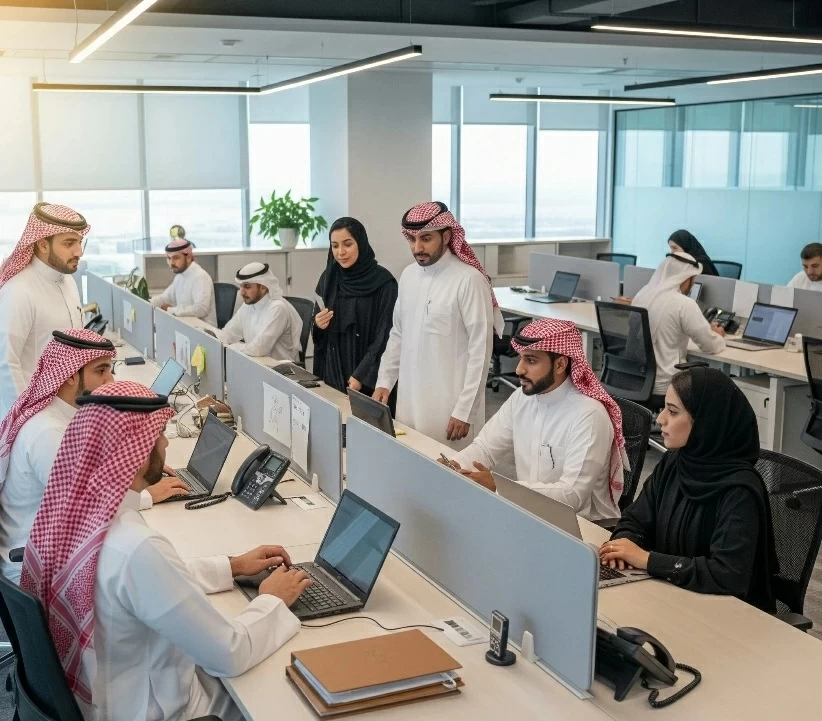
With changing dynamics in the labor market, the report shows a growth in modern work patterns. The active workforce in freelancing has exceeded 119,000 individuals, signifying a shift towards more flexible employment models. Furthermore, 11,214 workers are engaged in flexible roles, while 87,154 people are employed remotely. These statistics point to an evolving labor landscape that embraces various working arrangements.
Social Security Initiatives
In the realm of social development, 78,150 beneficiaries of social security have been empowered through skills training and self-reliance programs by the ministry. Initiatives like the “Empowerment Clinics,” launched across seven regions including Riyadh, Eastern Province, and Mecca, have assessed over 91,000 individuals, empowering more than 30,000 through developmental interventions.
Job Opportunities and Training Sessions
The Ministry has organized 10 community forums aimed at enabling social security beneficiaries to access job opportunities, with a target of 12 forums. More than 33,000 participants and 360 organizations contributed to generating 11,694 job openings. Additionally, 7,183 individuals benefited from training programs and workshops, enhancing their employability.
Corporate Social Responsibility Contributions
In terms of corporate social responsibility, the private sector’s contributions have surpassed expectations, totaling 25.84 billion Saudi Riyals. This represents 4.18% of total social spending, exceeding the established target of 4.15%. The percentage of large companies implementing social responsibility programs has risen to 71.67%, outperforming the target by a significant margin, highlighting a growing commitment to societal welfare.
Future Outlook for Employment and Development
As the Saudi government invests in various sectors, the focus on employment, particularly for women and underrepresented groups, is likely to intensify. The ongoing initiatives by the Ministry of Human Resources and Social Development will play a critical role in shaping the economic landscape. Stakeholders are encouraged to monitor upcoming economic policies and reforms that may further influence labor market trends in the Kingdom.