







Trump’s Stance on Iran’s Nuclear Threats
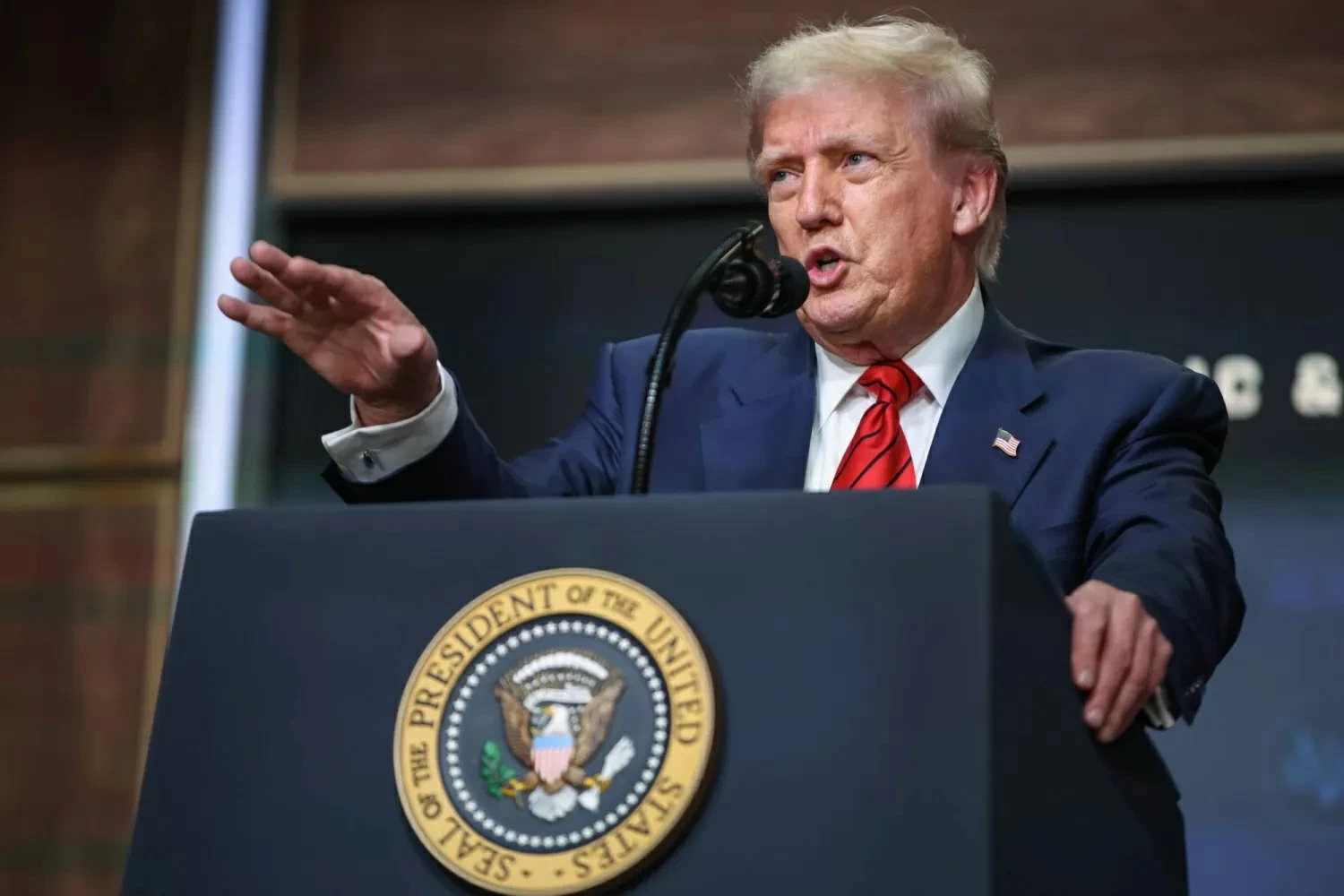
Former President Donald Trump recently affirmed that the United States might escalate military actions against Iran if deemed necessary. During a press briefing at the White House following his Asian tour and a trilateral summit with Russian President Vladimir Putin and Chinese President Xi Jinping, Trump reiterated his commitment to preventing Iran from acquiring nuclear weapons. He emphasized that any potential agreement with Iran must be substantial and not merely superficial.
Trump’s remarks come amid concerns regarding Iran’s attempts to achieve a nuclear agreement that does not align with U.S. demands. He stated that although Iran is seeking a deal, the conditions currently on the table do not fulfill the requirements set by Washington. Furthermore, he addressed rumors about Iran possibly developing a “dirty bomb,” pledging that the U.S. would reveal any confirmed threats of this nature.
Challenges in Ukraine: Putin’s Relations with Zelensky
In the ongoing conflict in Ukraine, Trump remarked that the deep-seated animosity between President Putin and Ukrainian President Volodymyr Zelensky complicates the prospects for a peace agreement. Trump noted that despite the challenges, Putin does not oppose diplomatic solutions and showed interest in ending the war. However, Trump was cautious and did not commit to providing security guarantees for Ukraine, indicating that the U.S. has yet to finalize any agreements on that front.
Trilateral Agreements: Energy and Nuclear Discussions
Regarding the outcomes of the recent summit with Putin and Xi, Trump disclosed plans to boost oil production and energy supplies. He pointed out that China agreed to engage in discussions aimed at mitigating nuclear arms risks. Additionally, Trump revealed a collaboration with President Xi to establish joint regulations on artificial intelligence, affirming that the U.S. remains a leader in technology and is keen on maintaining its technological superiority.
In a related context, Trump claimed that the U.S. is a decade ahead of China in the semiconductor industry. He expressed a desire for Jensen Huang, CEO of Nvidia, to return to helm the company, reinforcing the importance of innovation in maintaining a competitive edge.
Economic Policies and Data Center Regulations
On the economic front, Trump threatened to implement hefty taxes on American companies that set up data centers abroad, emphasizing the necessity of keeping domestic investments. He urged Congress to allocate funds for advancing air navigation systems, highlighting that recent malfunctions across various sectors were unrelated incidents.
Trump also criticized rising interest rates, deeming them excessively high. He argued that despite positive economic indicators, the continued hike in rates is unfortunate and called for the U.S. to have the lowest interest rates globally. Additionally, he pointed to the decline in oil prices while mentioning Iran’s eagerness for a deal, alongside the significant trade agreements the U.S. secured during his recent Asian trip.
Conclusion and Future Outlook
As global tensions persist, particularly concerning Iran’s nuclear ambitions and the situation in Ukraine, Trump’s administration seems committed to maintaining a robust stance on national security and international diplomacy. The unfolding scenarios require careful observation as the U.S. navigates complex international relations while balancing internal economic policies. Stakeholders will be watching closely for further developments, particularly regarding the potential for new agreements with Iran and the evolving dynamics with Russia and Ukraine.