






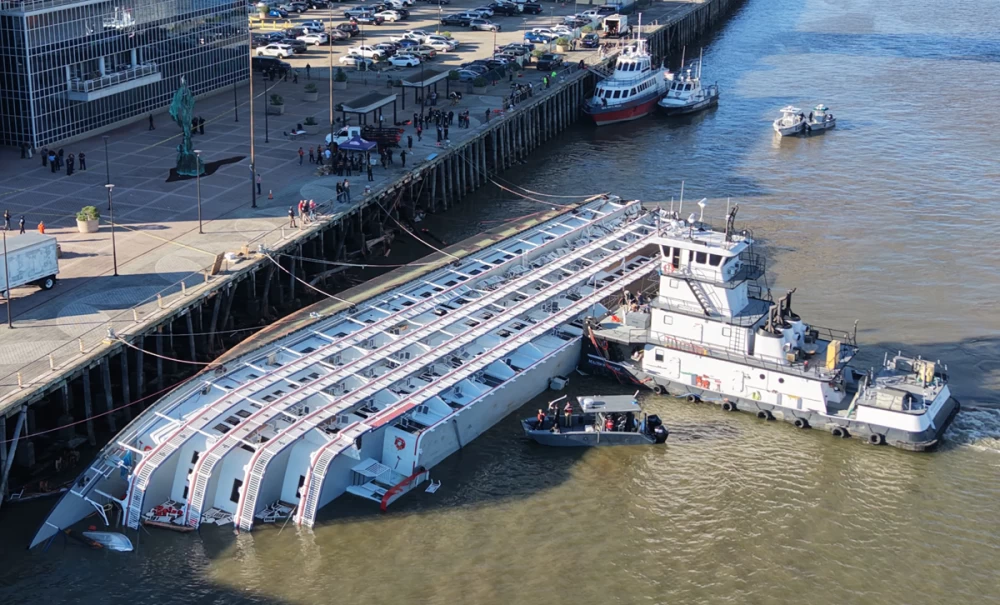

Overview of the Oil Tanker Incident in New Orleans
The U.S. authorities have reported that a malfunction in the steering system of an oil tanker resulted in a collision with a stationary cruise ship in New Orleans. This incident led to the capsizing of the cruise ship, causing several passengers and crew members to fall into the Mississippi River. As a result, 32 individuals sustained injuries, although no fatalities have been recorded.
Details of the Collision Affecting the Cruise Ship
On Sunday, the National Transportation Safety Board (NTSB) announced that the steering system of the tanker, identified as the “Atlantic Asphalt,” malfunctioned, causing the vessel to drift toward the riverbank. The steering was reportedly stuck in a rightward position, which led to the collision with the cruise ship “American Heritage.” This incident occurred merely two minutes after the steering issue was detected.
According to accident investigator Bart Barnum, the exact reason for the steering failure remains undetermined. Investigations are currently underway, examining multiple possibilities concerning the incident.
Injuries and Response Following the Accident
The cruise ship was carrying 140 passengers and 50 crew members, with 19 personnel aboard the tanker at the time of the collision on Friday. The impact resulted in several individuals—including passengers, crew members, and law enforcement officers—falling into the river. Emergency services transported 32 people to hospitals; fortunately, none faced life-threatening injuries. As of Sunday, six individuals remained hospitalized for further treatment.
Data from the voyage recorder of the tanker displayed alerts, including warning sirens and distress calls, as crew members attempted to secure the vessel. Efforts such as dropping anchors and executing emergency maneuvers were also reported to try to regain control before the incident escalated.
Investigation and Legal Developments Post-Collision
The NTSB has requested any witnesses to the accident to provide photos or videos that could assist in the ongoing investigation. A preliminary report is expected to be issued within 30 days of the incident. The authorities will likely explore all angles to comprehend the factors contributing to this incident fully.
In a legal progression, the New Orleans Port Commission has filed a federal lawsuit, claiming that the collision resulted in damage exceeding one million dollars to port facilities. A judge has subsequently granted federal authorities temporary control over the tanker as part of the legal proceedings, according to reports from the Associated Press.
Future Steps and Implications of the Incident
As investigations continue, the focus will likely remain on determining the root cause of the steering failure and the subsequent implications for maritime safety regulations. The NTSB’s findings could potentially influence future policies to prevent similar occurrences, enhancing safety protocols for tankers and passenger vessels alike.
The upcoming weeks will be crucial as the investigation unfolds, and preliminary findings are made public. Stakeholders within the maritime community and affected parties will be eager to learn about the report’s conclusions and any resulting recommendations designed to enhance safety in similar operational environments.