








Innovative Bridge Technology for Deaf and Hard of Hearing Individuals
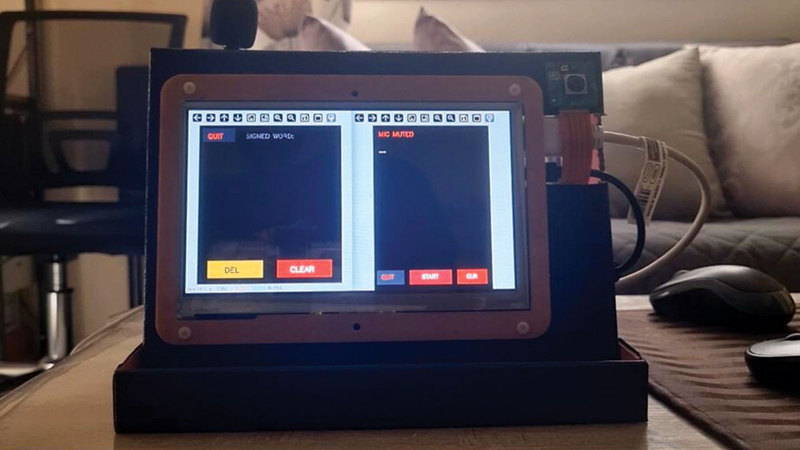
Malisha Chamoudi, a student pursuing a Bachelor of Science in Computer Systems Engineering at Middlesex University Dubai, has created an innovative device known as the “Signal Bridge.” This smart, autonomous device aims to break down communication barriers faced by deaf and hard of hearing individuals. By providing a two-way communication method that operates entirely without the internet, the Signal Bridge facilitates easier interaction in social, medical, and emergency situations, especially in areas lacking sign language interpreters.
How the Signal Bridge Works
The project utilizes a compact computer known as the Raspberry Pi 5, which integrates two technologies that work simultaneously. The first technology captures hand movements through a camera, converting sign language gestures into text and audio outputs. The second technology receives spoken words via a microphone, translating them into text displayed on the screen. This dual functionality allows for an interactive dialogue between deaf individuals and hearing persons.
To enhance the accuracy of the sign language recognition, the system employs a specialized mathematical algorithm capable of analyzing 21 key points on the hand. This is then converted into a spatial model consisting of 72 points, ensuring precise recognition of signs regardless of the distance between the user and the camera. Furthermore, the device utilizes a local artificial intelligence model that has achieved an impressive accuracy rate of 97.7%, with outputs that can be converted into speech without needing an internet connection.
Key Features and Benefits
The Signal Bridge is designed to process data locally, which means it does not send audio recordings or video clips to external servers. This feature enhances user privacy while also reducing operational costs. Additionally, the portability of the device allows it to be easily transported, making it a viable solution for various environmental contexts.
Another significant advantage is the affordability of the Signal Bridge, which is essential for broader accessibility among users. The potential applications of this device are vast, ranging from social gatherings to critical medical appointments, where seamless communication can significantly improve the overall experience for deaf and hard of hearing individuals.
Future Implications and Next Steps
The development of the Signal Bridge is a crucial step toward inclusivity for the deaf and hard of hearing community. Researchers and developers emphasize the importance of tools that support interaction in spaces where interpreters may not be present. According to industry experts, ongoing enhancements to this technology could pave the way for other innovative applications, further bridging the communication gap.
Going forward, the next phase will involve user testing and feedback collection to refine the device’s capabilities. Increased collaboration with organizations focused on the needs of the deaf community could also provide vital insights and drive the project’s future development. As this technology gains traction, it has the potential to transform how deaf individuals communicate in numerous settings.