








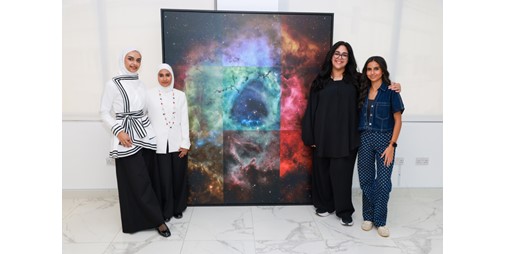

ACM Students Shine in Global Astronomy Competition
In a remarkable achievement, the American College of the Middle East (ACM) has qualified for the final round of the ZWO Astronomy Photographer of the Year 2026. The project titled “A Rose With Many Faces,” created by a talented group of astronomy club students, was selected as one of the top six works in the Annie Maunder Open Category. This prestigious competition, organized by the Royal Observatory in Greenwich, UK, showcases exceptional astronomical photography that combines scientific precision with artistic vision.
The project was among approximately 4,000 entries submitted by 769 participants worldwide, highlighting the caliber of work produced by ACM students. The project will be displayed at the National Maritime Museum in Greenwich for an entire year and will also be featured in the competition’s annual catalog.
A Closer Look at the Astronomy Project
The students of ACM dedicated around 20 hours over four nights to bring “A Rose With Many Faces” to life. Utilizing a state-of-the-art Vespera Pro telescope provided by the college, the team successfully captured intricate details of the Rosette Nebula. They then processed their images using the software PixInsight, creating nine distinct versions that reflected each member’s unique style. By merging these versions into a single image, the students showcased their collaborative approach to scientific art.
Experiential Learning in Astronomy
The experience of participating in this project has had a profound impact on the students involved. Fadak Al-Sayegh, one of the contributors, noted that being shortlisted for this esteemed competition enriched her understanding of celestial bodies and sharpened her research and presentation skills. Initially joining the club out of curiosity, she found her confidence boosted through collaborative work and public speaking opportunities. “The club has taught me that feeling nervous doesn’t mean I can’t succeed,” she stated.
Dana Al-Mashmoom reflected on how her involvement with the astronomy club transformed her perception of the night sky. “I used to think every bright object in the night sky was a star. However, observing planets through a telescope changed that belief. This experience has deepened my appreciation for the wonders of the universe,” she expressed.
Meanwhile, Thna Al-Rifai emphasized the supportive community within the club. Working on astronomical projects with her peers fostered trust and collaborative learning. “This experience made me realize how much I can achieve even during challenging times,” she said, illustrating the full-circle benefits of teamwork.
From Physics Club to Astronomy Club
The Astronomy Club at ACM was founded in 2025, following a successful history as part of the Physics Club established in 2021. Initially focusing on using Python for simulating mechanical systems, the interests shifted towards theoretical physics and astrophysics. Under the guidance of faculty member Engineer Abdulaziz Al-Qanai, the newly independent astronomy club members learned the intricacies of using both traditional and smart telescopes, capturing and processing astronomical images while exploring scientific phenomena related to celestial bodies.
Supporting Education and Innovation at ACM
ACM stands out as a leading institution for higher education in Kuwait, boasting full accreditation for all its programs from international bodies such as ABET and ACBSP. This accreditation underscores the college’s commitment to quality and excellence in higher education.
The college invests in comprehensive resources and academic programs, including specialized curricula, laboratories, and the latest educational technologies. These resources empower students to innovate and excel on global platforms, enhancing their capabilities and participation in renowned competitions.
Looking Ahead: Future Aspirations
As the ACM astronomy club continues to thrive, the success of “A Rose With Many Faces” serves as a testament to the students’ dedication and ingenuity. Their participation in such a prestigious competition not only boosts their confidence but also sets a precedent for future endeavors in scientific exploration and artistic expression. The college community eagerly anticipates what these promising young astronomers will achieve next, fostering a culture of inquiry and excellence that extends far beyond the classroom.