






Winners Announced for the 20th Abdulaziz Saud Al-Babtain Poetry Creativity Award
The Abdulaziz Saud Al-Babtain Cultural Foundation has announced the winners of the 20th Abdulaziz Saud Al-Babtain Poetry Creativity Award, which aims to support poets, critics, and promote the Arabic language. This initiative plays a significant role in highlighting the cultural and humanitarian contributions of poetry within Arab communities.
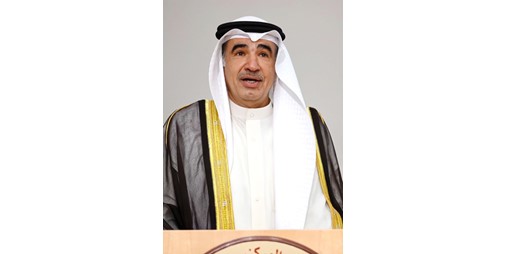
Said Saud Al-Babtain, Chairman of the Foundation’s Board of Trustees, in a statement to KUNA, the milestone represented by the award’s 20th iteration signifies an essential chapter in a cultural journey that has always believed in Arabic poetry as one of the profound manifestations of Arab identity and its living memory. The foundation views the award as a platform that brings together diverse poetic and critical experiences across generations and schools, providing a space for young voices to engage with established works in an ongoing creative dialogue between the past, present, and future.
Significance of the Award
The foundation emphasizes that fostering the Arabic language remains central to its mission, as it serves as a container for thought and creativity. Support for poets and critics extends beyond merely celebrating winners; it underscores a commitment to the continuous discovery of fresh talents and safeguarding the achievements of Arabic culture. The diversity of geographic and artistic representation among this year’s nominees confirms the adaptability of Arabic poetry and its continuing relevance in contemporary consciousness.
This commitment to diversity was evidenced in the latest award cycle, showcasing a variety of triggers and themes presented by poets and critics from different generational backgrounds. Al-Babtain noted the enduring vibrancy of Arabic poetry, which remains present in both awareness and sentiment despite changing conditions.
2023 Award Winners and Categories
The Creativity Award in Poetry Criticism, worth $80,000, was shared by Dr. Mohamed Saleh Al-Bouamerani from Tunisia for his book “Cognitive Stylistics and Emotional Responses in Poetry” and Dr. Abd al-Qadir Fidouh from Algeria for his work “Poetry and Questions of Civilization.” This acknowledgment reflects significant contributions to the critical engagement with poetry today.
In the category of Best Poetry Collection, the $40,000 award was jointly awarded to Egyptian poet Hassan Shahab Al-Din for his collection “A Planet and Fifty Galaxies” and Yemeni poet Jabir Baadani for “The Skirt Dancer.” Both collections exhibit remarkable innovation and depth.
Further highlighting young talents, Nigerian poet Nasser Al-Maliki won the award for Best Poetry Collection for Youth under the age of 35, receiving $20,000 for his work “As If I Am Him.” Additionally, for the Best Poem category, worth $20,000, the award was shared by Iraqi poet Ali Al-Imara for his poem “The Hesitations of Imru’ al-Qais on the Road” and Egyptian poet Saad Al-Qilai for “The Misguided Party.”
Moreover, recognizing emerging voices, the $10,000 award for the Best Poem among young poets was jointly awarded to Egyptian poet Hazem Mustafa for “Solitude” and Palestinian poet Somaya Al-Wadi for “Diaries of Ordinary Bombing.” The prestigious honorary award for innovation in poetry, valued at $100,000, was awarded to Syrian poet Abdelqader Al-Hosni for his distinguished poetic journey and creative contributions.
The Future of Arabic Poetry
The Abdulaziz Saud Al-Babtain Cultural Foundation continues to emphasize its vital role in nurturing and advancing the Arabic literary scene. The diversity of this year’s winners is indicative of a thriving artistic landscape that achieves a delicate balance between tradition and innovation, bridging generations of poets and critics. The foundation’s ongoing commitment reflects a broader aspiration to cultivate a rich cultural environment while fostering new talents across the Arab world.
Looking ahead, readers can anticipate the foundation’s next initiatives aimed at further supporting the arts and encouraging the exploration of uncharted literary territories. By investing in the future of Arabic poetry, the foundation not only preserves cultural heritage but also paves the way for a dynamic and inclusive literary future.