

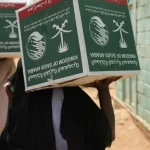




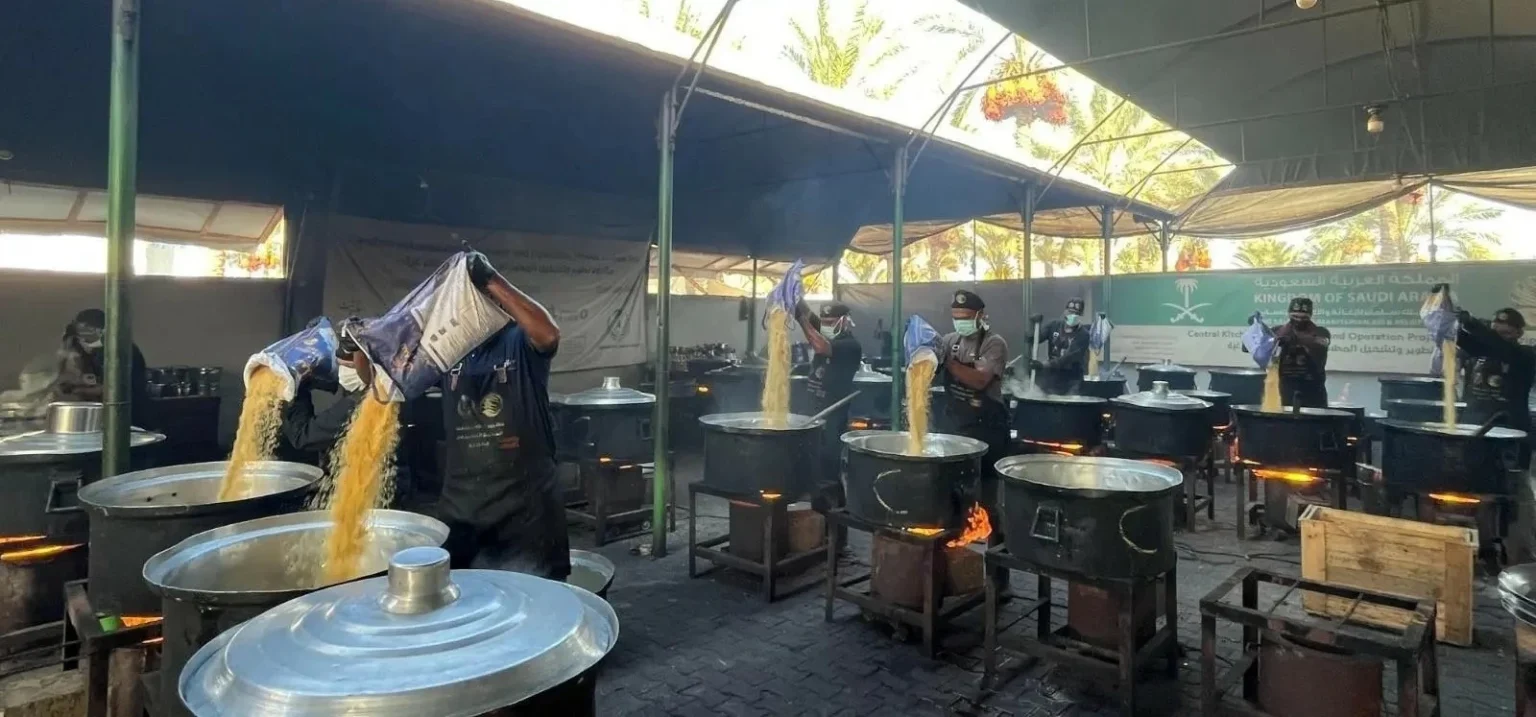

The King Salman Humanitarian Aid and Relief Center announced the distribution of 25,000 hot meals to needy families in central and southern areas of the Gaza Strip, benefitting an estimated 25,000 individuals as part of the Saudi popular campaign to assist the Palestinian people. The delivery, carried out by the center’s central kitchen, aimed to provide immediate food relief to displaced and vulnerable households.
Officials said the distributions were conducted yesterday and targeted communities facing acute shortages of basic services. The operation is presented as one component of broader relief efforts coordinated by Saudi humanitarian agencies and local partners in the Gaza Strip.
King Salman Humanitarian Aid and Relief Center leads large-scale hot meal distribution
The King Salman Humanitarian Aid and Relief Center coordinated the central kitchen operation that prepared and handed out 25,000 hot meals to residents across central and southern Gaza. According to official statements, distribution points were set up to reach families in neighborhoods and shelters where access to regular food supplies remains disrupted.
Furthermore, the center said teams worked with local volunteers and municipal authorities to identify high-need households and ensure safe, orderly distribution. The Saudi relief campaign that funded the operation is described by organizers as ongoing, with additional support planned as conditions evolve.
Humanitarian context in the Gaza Strip and immediate needs
The Gaza Strip continues to face significant humanitarian needs amid disruptions to food, water, and medical services, aid agencies say. Reports from humanitarian organizations indicate that many families rely on emergency food assistance, and hot meals help meet urgent nutritional requirements for children, elderly people, and displaced households.
Meanwhile, the distribution of hot meals is intended to address short-term gaps while broader aid deliveries and recovery planning proceed. International relief groups and local partners have repeatedly warned that sustained support will be necessary to prevent worsening food insecurity in the coming weeks.
Logistics, coordination and operational approach
Operationally, the King Salman Humanitarian Aid and Relief Center’s central kitchen model assembles large batches of cooked food for rapid distribution, officials said. The approach reduces reliance on local cooking resources that are often scarce or unsafe to use in conflict-affected areas and enables faster delivery to concentrated population centers.
Additionally, the center reported working with local authorities, civil defense teams, and community groups to map safe distribution routes and to prioritize households most in need. This coordination is meant to minimize duplication of aid and to align with other humanitarian actors operating in the Gaza Strip.
Volunteer involvement and local partnerships
Local volunteers and municipal staff participated in packaging and distributing meals, which helped the center reach a wider set of recipients. The involvement of community actors also supports transparency and accountability, providing local verification of needs and distribution outcomes.
According to observers, such partnerships are critical in environments where infrastructure and supply chains are fragmented, and they help humanitarian organizations adapt deliveries to changing security and access conditions.
Impact assessment and related humanitarian efforts
While the immediate benefit of 25,000 hot meals provides temporary relief, humanitarian analysts caution that repeated distributions are necessary to sustain food access for displaced populations. The Saudi relief campaign and allied donors are expected to monitor needs and adjust support based on field assessments and reporting from partner organizations.
Furthermore, the distribution underscores the role of large relief centers in responding quickly to spikes in food demand. The King Salman Humanitarian Aid and Relief Center’s activities complement other international and local humanitarian aid, according to statements from the center and participating partners.
What to watch next
Officials indicated that further distributions are planned as part of the ongoing Saudi popular campaign, though schedules and quantities will depend on security conditions and supply availability. Observers and aid monitoring bodies will likely track subsequent deliveries, coordination with UN and NGO actors, and overall impact on food security in the Gaza Strip.
Therefore, readers should watch for updated statements from humanitarian organizations and the center for timelines on follow-up distributions and for assessments that measure needs, reach, and any shifts in delivery strategy over the coming weeks.