








Bahrain medical training programs reviewed during Salmaniya visit
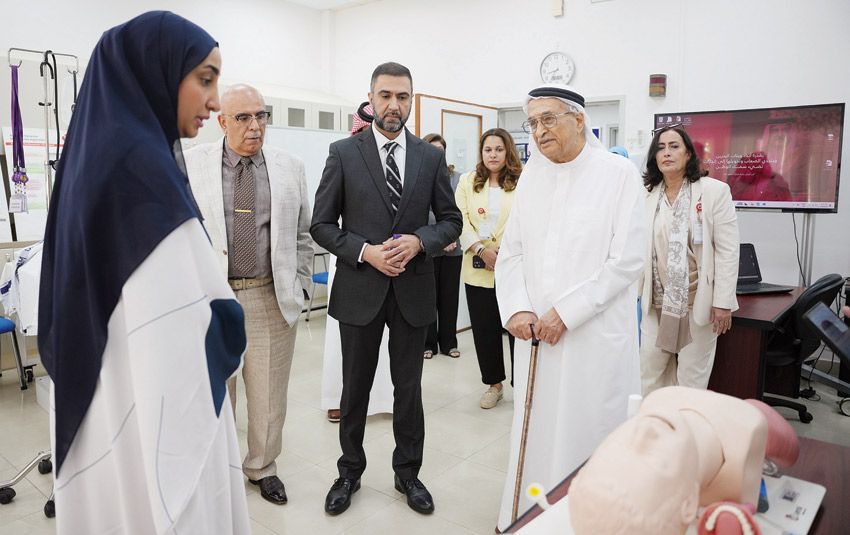
Sheikh Mohammed bin Abdullah Al Khalifa, chairman of the Supreme Council of Health, visited the Yusuf Bin Ahmed Kanoo Training and Education Center at Salmaniya Medical Complex on Tuesday to review Bahrain medical training programs and related initiatives. During the visit he met with Dr. Mariam Adhbi Al-Jalahma, the executive president of Government Hospitals, and senior training officials to receive briefings on current education and fellowship activities.
The delegation examined recent progress in internship and residency pathways, as well as plans to expand digital learning and strengthen clinical supervision across public hospitals, officials said. The review focused on how these efforts are contributing to national workforce readiness and service quality.
Overview of current training and capacity-building efforts
Officials presented statistics and summaries of the Government Hospitals’ training portfolio, highlighting the number of trainees, scholarships, and in-house courses administered across specialities. The briefing underscored sustained investment in human capital as a central element of health system strengthening in Bahrain, according to the Supreme Council of Health.
Furthermore, the report outlined collaboration between training units and clinical departments to align curricula with international benchmarks, improve assessment methods, and ensure consistent supervision. Therefore, the intent is to produce clinicians who meet high professional and scientific standards while remaining responsive to local health needs.
Residency programs and internship reforms
The chairman reviewed the structure and evaluation mechanisms of the internship year and the role it plays in preparing newly graduated physicians for practice. Officials described formal assessment tools and mentoring frameworks designed to enhance clinical skills, decision-making, and professional behaviour during this transitional year.
In parallel, updates on residency programs were highlighted, including curricular revisions and steps taken to strengthen academic and clinical oversight. These residency programs are being adapted to include clearer competency milestones, standardized assessments, and enhanced faculty engagement to ensure trainees meet both national licensing expectations and international training standards.
New digital training platform for residency programs
A key element of the visit was a demonstration of a new electronic training platform for doctors enrolled in residency programs. The platform is intended to organize educational content, streamline tracking of requirements, and facilitate access to assessments and feedback, officials said.
Features and expected benefits
The digital training platform integrates e-learning modules, assessment logs, and supervisor evaluations to create a consolidated trainee record. Additionally, it aims to reduce administrative burden, improve transparency in progression decisions, and support remote learning when clinical rotations are limited.
By adopting this digital approach, the Government Hospitals expect to enhance the quality and efficiency of clinical education and to provide residents with more consistent learning experiences across sites. Meanwhile, trainers will have better tools for monitoring progress and documenting competency attainment.
Why the visit matters for workforce development
The chairman emphasized continued investment in lifelong medical education as essential to sustaining a skilled national workforce. Strengthening Bahrain medical training programs is framed as a strategic priority for maintaining service quality and meeting future health system demands, officials said.
Moreover, improved training pathways and the introduction of digital learning tools are expected to accelerate capacity building by standardizing learning outcomes and supporting scalable supervision models. Therefore, these initiatives may help retain talent locally and reduce dependency on external training placements over time.
Implementation challenges and next steps
While officials noted progress, they also identified ongoing challenges such as ensuring uniform faculty readiness, aligning hospital workloads with protected learning time, and maintaining robust evaluation standards. Addressing these issues will require coordinated governance, resource allocation, and continuous monitoring, according to the briefing.
Next steps outlined during the visit include phased roll-out of the electronic training platform across residency sites, continued curriculum refinement, and strengthened ties with academic partners to support assessment validation. Observers should watch for official timelines and pilot results as the platform is implemented.
Implications for patients and the health sector
Officials argued that better-trained clinicians and more consistent residency supervision will translate into safer, higher-quality care for patients. Enhanced clinical education is expected to contribute to more reliable diagnostic decision-making, improved procedural competence, and clearer care coordination across hospital teams.
Furthermore, investments in training infrastructure and digital tools signal a broader institutional commitment to workforce sustainability, which may influence recruitment, retention, and long-term planning in the public health sector.
Conclusion and what to watch next
The Salmaniya visit underlined a focused effort to modernize Bahrain medical training programs through curricular reforms, strengthened supervision, and digital innovation. Authorities indicated that pilot implementations and ongoing monitoring will determine how quickly these measures scale across government hospitals.
Readers should watch for official updates on the electronic platform roll-out, public disclosures of residency program outcomes, and any announced timelines for broader adoption. These developments will be key indicators of progress in national clinical education and workforce preparedness.