






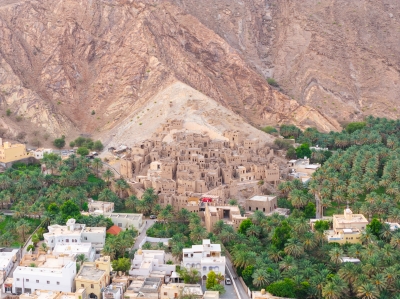

Al-Sibani Alley poised for cultural destination status in Birkat al-Mawz
Local leaders and residents in Birkat al-Mawz, Nizwa, are preparing an integrated plan to restore Al-Sibani Alley and position it as a sustainable cultural tourism destination, officials said. The proposal, which references the alley’s traditional layout and the adjacent Falaj al-Khatmeen irrigation system, has been presented to the Ministry of Heritage and Tourism for consideration.
Located on a rocky slope above palm groves and banana plantations, Al-Sibani Alley preserves multi-level homes, a defensive tower and communal spaces that together illustrate traditional Omani life and water management.
Al-Sibani Alley and its historical setting
Al-Sibani Alley dates back to the 17th century and developed alongside the construction of Falaj al-Khatmeen and the nearby Bayt al-Radidah fort, according to local historians. The alley’s compact, terraced houses and narrow lanes create a fortress-like appearance when viewed from the valley below, reflecting defensive and environmental planning.
Residents and heritage advocates describe the site as a microcosm of traditional Omani architecture, featuring stone and mudbrick dwellings often arranged in two stories, with some upper-level doorways opening directly onto alleys above. Therefore, Al-Sibani Alley provides a tangible record of vernacular building techniques and communal arrangements.
Falaj al-Khatmeen, water management and agricultural heritage
Falaj al-Khatmeen is a defining element of the site and runs through the heart of the alley, cooling houses in summer and supporting agriculture in the valley below. UNESCO has recognized Omani aflaj systems for their historical and technical importance, and Falaj al-Khatmeen is cited locally as a well-preserved example of integrated water distribution.
The alley grew as part of a larger oasis economy in Birkat al-Mawz, with date storage houses, animal pens and gardens linked to the falaj network. Consequently, any conservation plan emphasizes the interdependence of built heritage and the surrounding agricultural landscape.
Conservation plans and heritage tourism development
Local development officials said they have prepared an investment study that outlines restoration, management and visitor-readiness measures for Al-Sibani Alley. The study recommends repairing vulnerable structures, conserving the falaj channel, and developing a heritage walking route to interpret water systems and social life to visitors.
Proposed interventions include adaptive reuse of structurally sound houses as small heritage guesthouses, creation of guided tours focused on traditional Omani architecture and water culture, and development of small-scale craft and food offerings tied to local families. Residents emphasize that projects must retain the alley’s identity and avoid invasive alterations.
Community role and economic implications
Community members and local leaders argue that heritage tourism can create income opportunities while encouraging upkeep of communal assets. The proposed model favors community ownership and local employment in conservation, interpretation, and hospitality services, officials said.
Furthermore, officials note that a carefully managed tourism plan could diversify the local economy, support date and livestock producers by creating new markets, and fund ongoing maintenance of public features such as mosques, public cisterns and meeting spaces.
Preservation challenges and infrastructure needs
Conservation specialists caution that restoring Al-Sibani Alley will require technical surveys, phased interventions, and measures to protect fragile materials from increased visitor pressure. Salt crystallization, rainwater runoff, and unregulated foot traffic are typical threats in similar settings and must be addressed through preventive conservation.
Basic infrastructure improvements—such as discreet signage, visitor information, controlled access points and waste management—are recommended to protect both the alley’s fabric and resident quality of life. Therefore, planners propose pilot projects to test visitor flows and interpretive methods before broader promotion.
Balancing authenticity with accessibility
Maintaining authenticity is central to the development approach advocated by heritage professionals and residents. That means prioritizing minimal intervention, reversible repairs, and use of traditional materials and techniques where feasible, they said.
At the same time, accessibility measures for a wider public—such as clear walking routes and multilingual interpretation—are part of the proposal, with the caveat that such measures should not undermine the site’s character. This balance is essential to build a culturally respectful and sustainable heritage tourism offer.
What to watch next: approvals, surveys and pilot projects
The immediate next step is the ministry review of the submitted investment study, followed by technical surveys and community consultations, Mohammed bin Saud bin Said Al-Riyami, a local development official, said. If approved, stakeholders expect phased restoration work and pilot heritage-tour programs to begin within a defined timeline.
Observers should watch for announcements about conservation grants, formal partnerships with heritage organizations, and the schedule for initial public access trials. Meanwhile, local residents continue to advocate for a development path that secures livelihoods while preserving the cultural and environmental values of Al-Sibani Alley.
Conclusion: long-term stewardship and sustainable tourism prospects
Al-Sibani Alley represents a concentrated example of traditional Omani architecture, falaj-based water management and oasis agriculture. With careful planning, community leadership and technical conservation, the alley could become a respected heritage tourism site that supports local economies without sacrificing authenticity.
Stakeholders expect the ministry’s response to the investment proposal to shape the next 12–24 months of activity, including surveys, pilot restorations and the launch of initial heritage routes. Readers should watch for formal approvals and early conservation milestones as indicators of progress.