





Bahrain road safety highlighted at United Nations meeting
Bahrain road safety was a central topic when the Kingdom participated in the United Nations General Assembly meeting on improving global road safety. The session, held under the theme of scaling up and accelerating commitments to halve road traffic deaths and injuries by 2030, included statements from Bahraini officials and international envoys. Officials stressed national plans and partnerships aimed at reducing fatalities.
Who spoke and what was announced
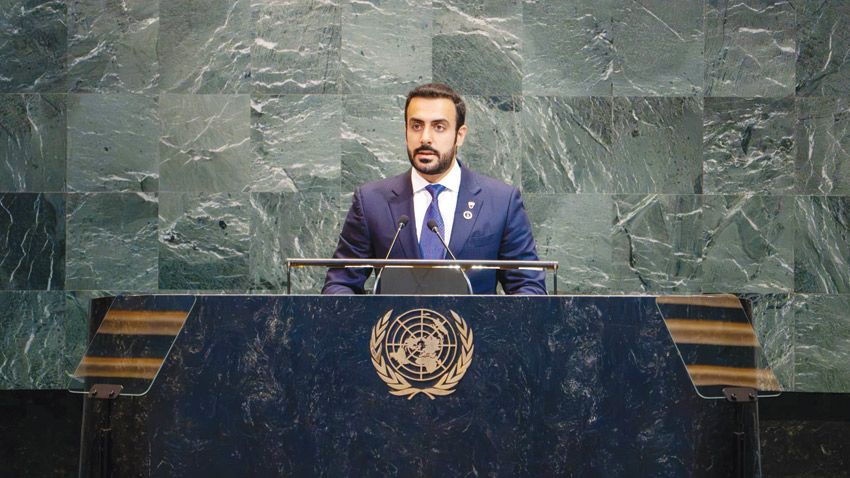
Major Hamad Khalil Al Mir, the security attaché at Bahrain’s Embassy to the United States, delivered Bahrain’s statement during the session. He reiterated that, under the guidance of King Hamad bin Isa Al Khalifa and with support from Crown Prince Salman bin Hamad Al Khalifa, Bahrain is prioritizing sustainable development goals linked to road safety. Furthermore, Jean Todt, the United Nations Secretary-General’s Special Envoy for Road Safety, and the President of the General Assembly addressed the human and economic toll of traffic crashes.
Key national measures driving traffic safety improvements
Bahrain’s national strategy, as outlined by authorities, emphasizes stronger law enforcement, upgraded road infrastructure, and expanded public awareness and education programs. The country’s traffic authority and the Ministry of Interior, led by Minister Sheikh Rashid bin Abdullah Al Khalifa, have coordinated enforcement campaigns targeting speeding, impaired driving, and seatbelt use. Additionally, community partnerships and programs run with the Bahraini Motor Federation aim to channel motorsport activity into safer, regulated environments for youth.
Enforcement and infrastructure
Officials said enhanced enforcement of traffic laws has been coupled with targeted engineering projects to improve road design and safety features. These interventions include safer crossings, better signage, and upgrades to high-risk junctions. Therefore, authorities argue that combining enforcement and infrastructure investment yields measurable improvements in road user behavior and crash outcomes.
Reported outcomes and evidence of road accident reduction
According to Bahraini officials, these combined measures have contributed to a reported 50 percent reduction in traffic accidents in recent years. The security attaché described this decline as the result of coordinated policy, data-driven enforcement, and community engagement. However, international speakers at the meeting emphasized the need for robust, comparable data and independent monitoring to verify trends across jurisdictions.
Furthermore, the meeting highlighted that the global challenge remains large: more than 1.2 million deaths and around 50 million injuries occur annually from road crashes, figures cited by United Nations representatives. These statistics underscore why traffic safety remains a priority across health, development, and transport sectors worldwide.
International cooperation and the United Nations road safety meeting
Delegates at the United Nations road safety meeting agreed on the importance of scaling up international support for evidence-based measures. Participants called for accelerated implementation of proven interventions such as speed management, drink-driving countermeasures, mandatory seatbelt and helmet laws, safer vehicle standards, and improved post-crash care. Officials also stressed enhanced data systems to better track progress toward the 2030 target.
Meanwhile, Bahrain’s delegation urged stronger global partnerships for knowledge exchange and technical assistance. The Bahraini statement noted that sharing best practices and lessons learned can help other countries implement effective policies faster and improve overall outcomes for road users.
Public awareness campaigns and community engagement
Public education and targeted awareness campaigns form a pillar of Bahrain’s approach to road safety. Authorities highlighted school-based programs, media outreach, and community volunteer initiatives designed to shift attitudes toward seatbelt use, helmet wearing, and safe speeds. The Bahraini Motor Federation’s role in promoting safe motorsport venues was also cited as an example of diverting risky behavior away from public roads.
Therefore, officials say that combining education with enforcement and engineering helps create a safer road culture over time. Observers at the UN meeting emphasized that sustained community engagement is critical to maintaining and extending gains in road safety.
Implications and what to watch next
The United Nations session reaffirmed global commitment to halving road deaths by 2030 and encouraged countries to scale up proven interventions. For Bahrain, the next steps will likely include continued investments in road infrastructure, improved crash data collection, and regional cooperation on vehicle safety standards. Stakeholders should watch for published national progress reports and independent evaluations that document the reported reductions in crashes.
Furthermore, international follow-up events and technical workshops are expected over the coming year to support implementation and data harmonization. These platforms will be essential for translating high-level commitments into measurable outcomes at national and local levels.
Conclusion and forward-looking timeline
Bahrain reiterated its commitment to advancing road safety through coordinated national plans, law enforcement, infrastructure upgrades, and community engagement. Officials claim significant progress to date, and international partners at the United Nations meeting urged ongoing collaboration and evidence-based action. Observers should look for detailed national progress updates and regional cooperation initiatives through 2026 as indicators of whether current policies will sustain the reported road accident reduction and meet the 2030 target.