


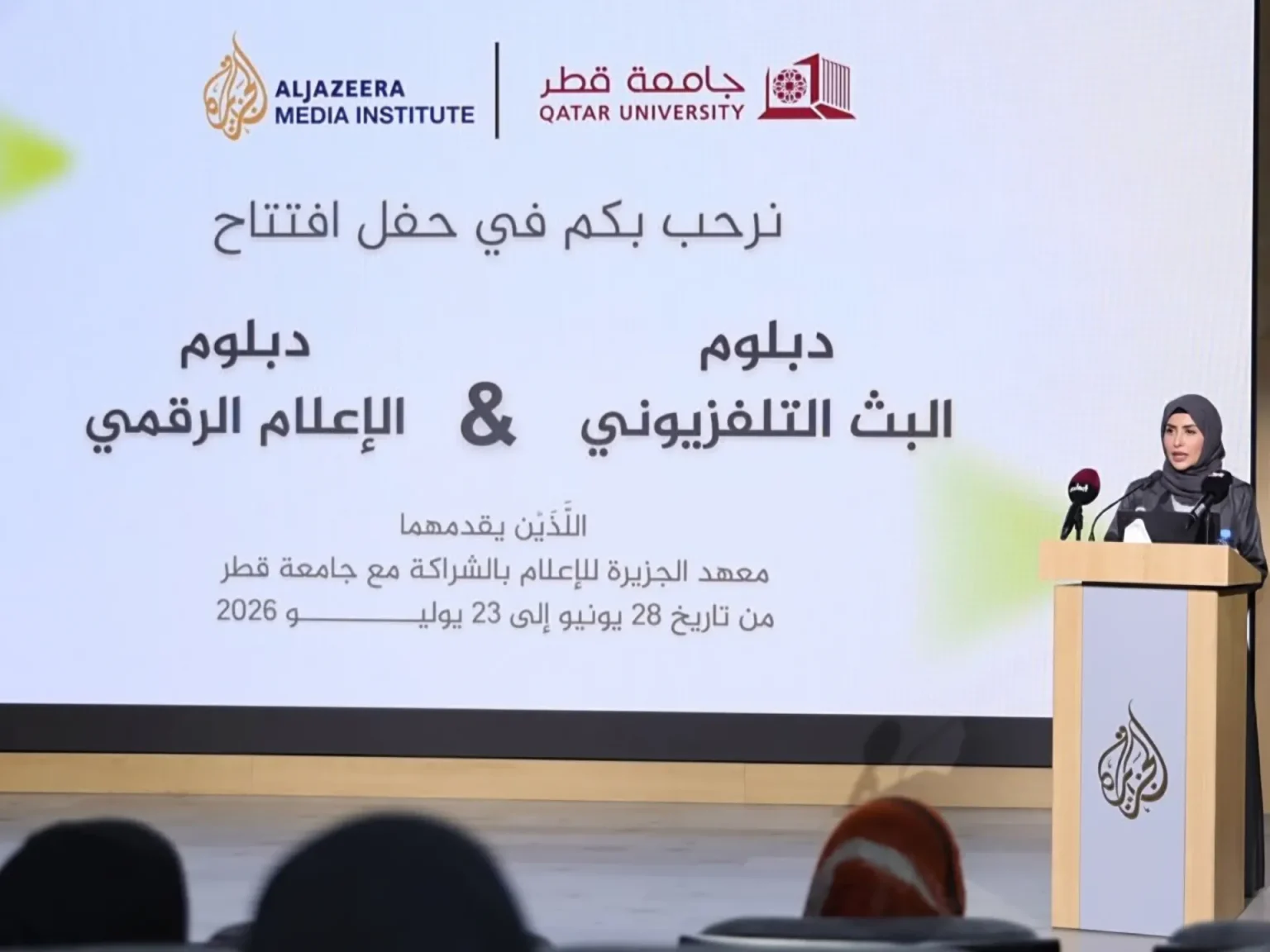

Al Jazeera Media Institute diploma launched with Qatar University
The Al Jazeera Media Institute diploma program in Digital Media and Television Broadcasting was launched in a ceremony at the institute last Sunday, in partnership with Qatar University. The joint initiative aims to bridge academic study and professional practice by offering practical training to more than 30 journalism and media students from the College of Arts and Sciences, Qatar University.
Program launch and strategic partnership
Officials from the Al Jazeera Media Institute and Qatar University attended the launch, which organizers described as the start of a strategic partnership to close the gap between classroom learning and newsroom realities. Iman Al-Amri, director of the Al Jazeera Media Institute, called the collaboration a quality practical opportunity for students to test skills in professional environments that mirror newsrooms and production platforms.
Dr. Hossam Wahba, director of media initiatives at the institute, said the dual diplomas reflect a shared vision to deliver targeted media training that responds to fast-moving developments in digital and broadcast journalism. The program will initially enroll more than 30 trainees from Qatar University’s media department, officials said.
Main curriculum for the Al Jazeera Media Institute diploma
The Al Jazeera Media Institute diploma curriculum is divided into two parallel tracks: a digital media diploma and a television broadcasting diploma. Each track combines theory with hands-on modules taught by institute and university specialists, according to the organizers. The structure is designed to equip participants with practical production skills and strategic planning tools for modern media outlets.
The digital media diploma includes five core modules: writing for digital platforms, visual composition, content production using artificial intelligence tools, strategic digital content planning, and mobile journalism with digital storytelling graduation projects. Trainers named for the digital track include Yusra Al-Usri, Dr. Hossam Wahba, Yahya Salim, Hiba Eidros, and Abdullah Al-Shheimi.
The television broadcasting diploma covers basics of television broadcasting, visual composition, audio engineering, television directing, and live studio editing with final projects. Lead trainers for broadcast modules include Ali Haji, Mohammad Hussein, and Mohammad Hussein Abdel-Moneim, who, organizers said, will emphasize studio workflows and real-time production techniques.
Practical training, mentorship and industry exposure
The program places emphasis on experiential learning inside functioning production spaces. Students will work in simulated newsrooms and studios, receive mentoring from experienced professionals, and build networks intended to ease their transition into the market. According to institute officials, supervised projects will replicate editorial decision-making and technical constraints common in contemporary newsrooms.
Additionally, the initiative will expose participants to emerging tools such as generative AI for content creation and mobile reporting technologies. Organizers said this combination aims to prepare trainees for cross-platform roles where digital media diploma holders and broadcast specialists must collaborate on integrated storytelling.
Academic integration and workforce readiness
Qatar University representatives described the partnership as a leading example of academic-practice integration. Dr. Saita Ali Al-Adhba, assistant dean for languages, media and translation at the College of Arts and Sciences, said the program allows students to move from theoretical coursework to applied practice and build competencies needed for employment. The college expects the diploma pathway to help graduates enter the media sector with greater confidence and technical readiness.
Officials emphasized assessment by project work and portfolio development rather than purely exam-based grading. Furthermore, organizers noted that industry-standard evaluation will help participating students demonstrate tangible skills to potential employers, supporting both local and regional recruitment needs.
Regional context and implications for media training
The launch comes amid a regional push to strengthen media education and professional development as newsrooms evolve under digital transformation. Media educators say short, intensive diploma programs can complement university degrees by focusing on up-to-date production techniques and emerging technologies, including AI-assisted content workflows and mobile reporting strategies.
Industry analysts and educators have argued that such partnerships can expand talent pipelines while updating curricula faster than traditional degree programs. Meanwhile, media organizations benefit from a stream of candidates familiar with current newsroom software, studio systems, and digital publishing standards, officials from both institutions said.
What to watch next
Program organizers indicated the next steps include the start of classroom and studio modules in the coming weeks, followed by mid-course assessments and public-facing project showcases. Observers should watch for the first cohort’s graduation projects and any announced internship placements that could signal the partnership’s impact on employment outcomes.
Longer term, Al Jazeera Media Institute and Qatar University suggested they may expand intake and consider additional specializations if the pilot proves successful. Stakeholders said future evaluations will consider graduate placement rates, employer feedback, and curriculum adjustments linked to technological and editorial trends.
Conclusion and outlook
The joint diploma effort represents a targeted attempt to align academic media education with industry practice through hands-on training and mentorship. As participants progress through the digital media diploma and television broadcasting diploma tracks, the initiative aims to deliver measurable skills and professional networks that support workforce entry. Observers should monitor graduate projects and placement results as the clearest indicators of the program’s early success.