





Egyptian president receives Quartet foreign ministers
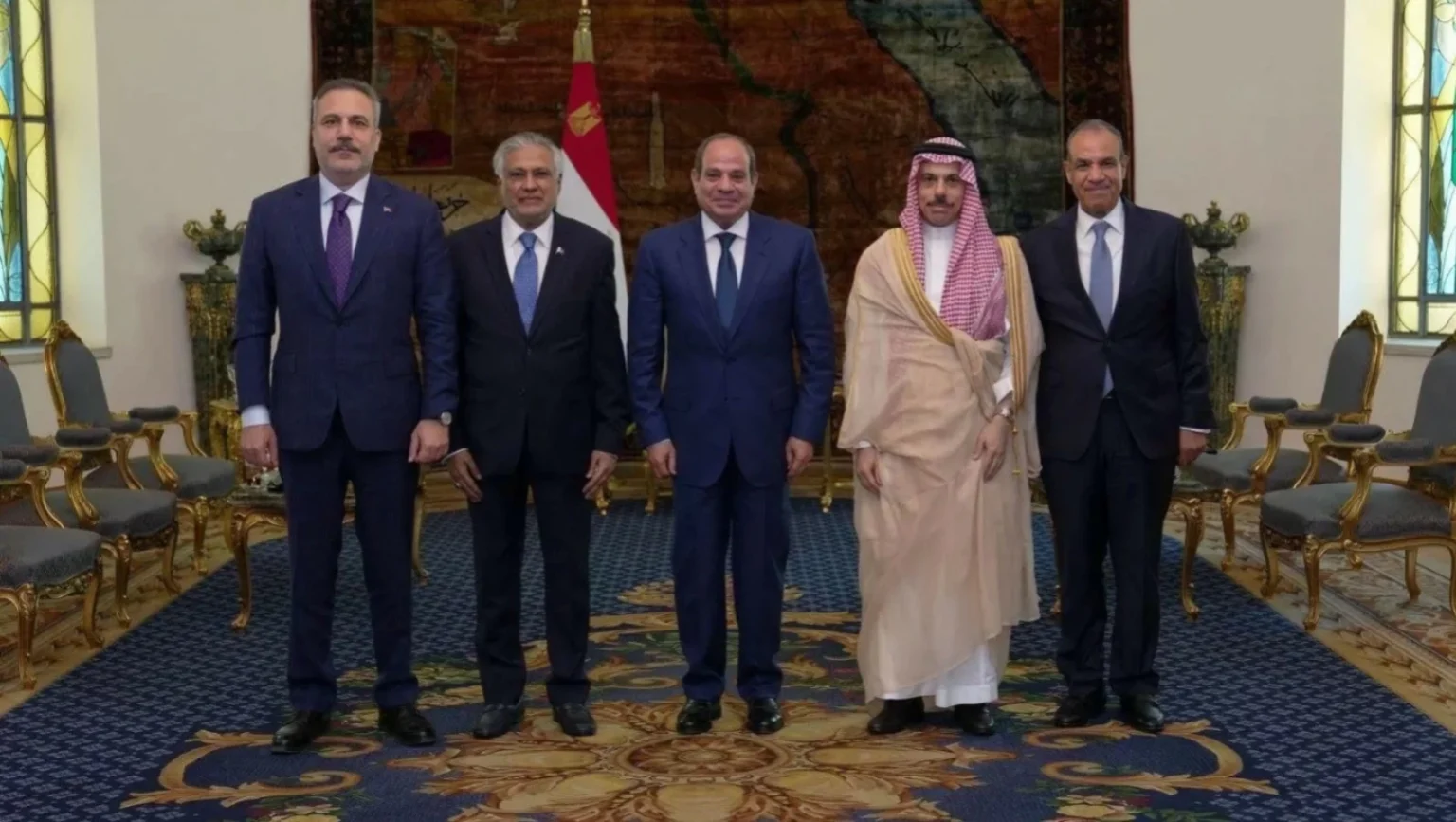
This week Egyptian President Abdel Fattah el-Sisi met with the foreign minister and the foreign ministers of the Quartet in Cairo, underscoring Egypt’s central role in regional diplomacy. Egyptian president receives Quartet foreign ministers was the focus of the meeting, according to a statement from the presidency, which said leaders discussed urgent regional issues and coordination among the countries involved.
Who attended and where the meeting took place
The meeting took place at the presidential palace in Cairo and included Egypt’s foreign minister alongside foreign ministers representing the quartet grouping, officials said. The gathering brought together senior diplomats for closed-door talks on immediate diplomatic priorities and mediation efforts, according to the Egyptian presidency statement.
Agenda: priorities and immediate objectives
Officials said the agenda centered on de-escalation, humanitarian access, and mechanisms for international mediation. Furthermore, the ministers reviewed steps to coordinate diplomatic channels and support ceasefire efforts where applicable, with an emphasis on humanitarian corridors and civilian protection, the presidency added.
Coordination on humanitarian response
The ministers discussed humanitarian assistance coordination and practical measures to facilitate aid deliveries. In addition, they examined diplomatic avenues to address civilian needs and restore basic services, with the aim of reducing suffering and stabilizing affected areas, officials said.
Why the meeting matters for Middle East diplomacy
The meeting signals Egypt’s intent to strengthen its role as a regional mediator and to serve as a convening power among key partners. Middle East diplomacy has increasingly relied on informal groupings and back-channel talks, and this gathering reflects efforts to unify positions and increase pressure for negotiated outcomes, analysts noted.
How the discussions fit into international mediation efforts
According to diplomatic sources, talks sought practical measures that could support ongoing mediation and peacebuilding efforts. Meanwhile, participants reviewed coordination with international organizations and discussed how to align bilateral and multilateral initiatives to maximize impact.
Balancing national interests and collective goals
Delegations weighed how national priorities intersect with collective goals on conflict reduction and humanitarian relief. Therefore, the ministers emphasized maintaining diplomatic flexibility while pursuing a common agenda on issues such as ceasefires and aid access, officials said.
Statements and official reactions
The Egyptian presidency released a summary statement highlighting consensus on the need for increased diplomatic engagement. In addition, participating foreign ministries issued separate readouts that underscored mutual interest in stabilizing the situation and supporting civilian protection, diplomats said.
Implications for regional stability and international actors
For neighboring states and international partners, the meeting offers a potential platform for coordinated action and messaging. Furthermore, it could shape how external powers engage with regional initiatives and influence the timing of subsequent diplomatic moves.
Possible impact on ceasefire negotiations
While the meeting did not produce a public agreement, it may affect the trajectory of ceasefire negotiations by harmonizing positions and preparing joint proposals. Therefore, observers should watch whether the ministers translate consensus into proposals presented to negotiating parties or international mediators.
Context: recent developments and background
Regional dynamics have driven repeated diplomatic efforts, with multiple actors pursuing de-escalation and humanitarian priorities. International mediation has often relied on regional conveners, and Egypt’s role as host of the meeting is consistent with past efforts to broker dialogue and provide logistical and political support.
What comes next: follow-up steps and timeline
Officials indicated follow-up consultations are likely, including technical meetings among senior officials and possible joint statements on specific measures. In the coming days, diplomats said they expect working-level teams to draft coordinated approaches that ministers can review in further sessions.
What readers should watch
Watch for announcements of concrete confidence-building measures, coordinated humanitarian access plans, or proposals sent to international organizations. Furthermore, any joint communique or agreement to present a unified position to external mediators would be a significant next step.
Conclusion: forward-looking assessment
The meeting where the Egyptian president receives Quartet foreign ministers underscores a concerted regional effort to address urgent diplomatic and humanitarian matters. Going forward, the effectiveness of this coordination will depend on follow-through, the alignment of national policies, and the willingness of negotiating parties to engage with proposed measures. Readers should monitor subsequent ministerial sessions and working-level outputs over the next weeks to assess whether the talks translate into tangible progress.