






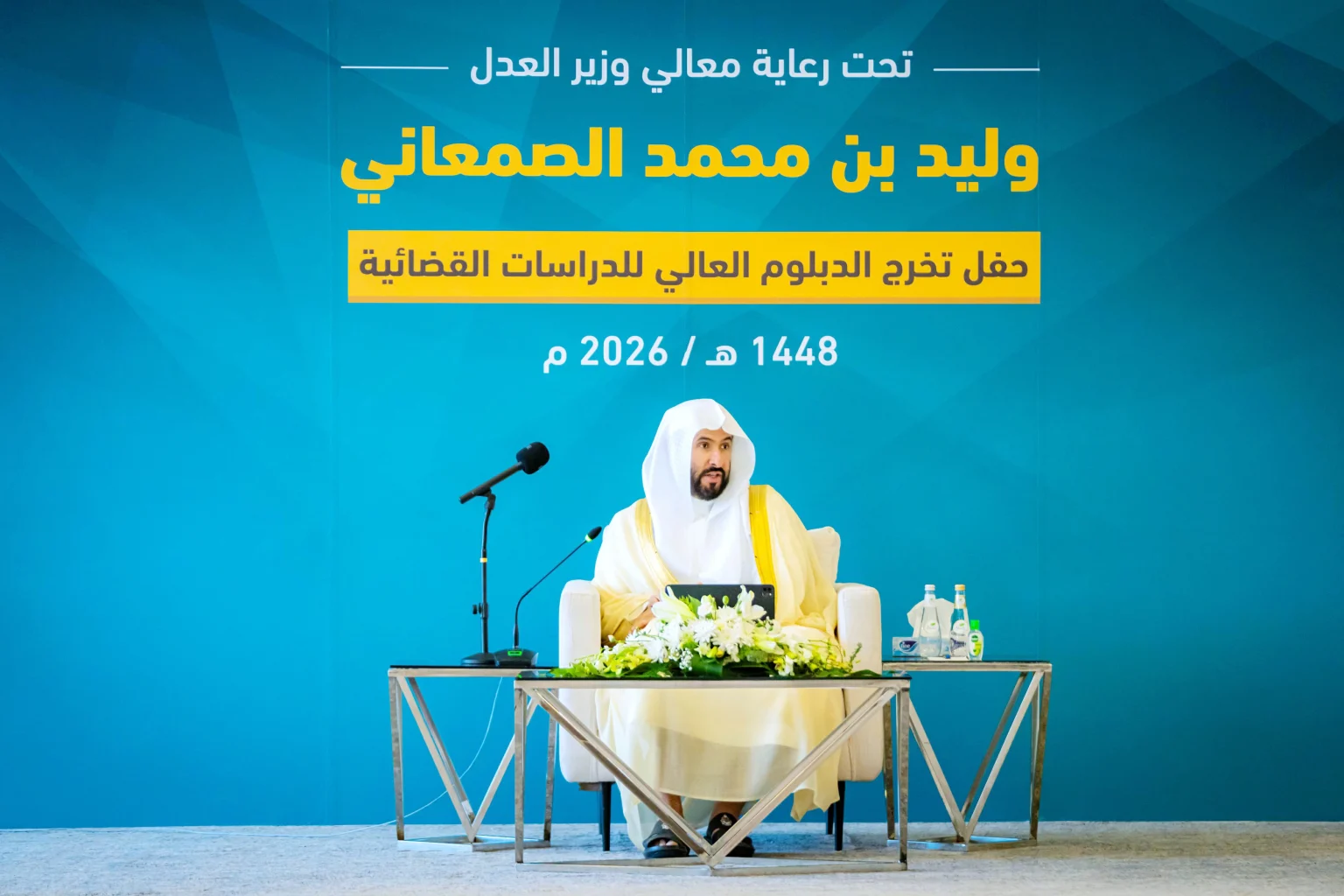

Judicial training program: Fifth Cohort Graduation
The Ministry of Justice in Saudi Arabia on Wednesday celebrated the graduation of the fifth cohort from the Higher Diploma in Judicial Studies, part of a long-term judicial training program designed to prepare new judicial cadres for the bench. The ceremony was presided over by Minister of Justice Walid Mohammed Al-Samaani and organized by the Judicial Training Center, according to an official statement.
Event overview and official recognition
The graduation event took place at the Judicial Training Center and recognized participants who completed an intensive curriculum aimed at equipping candidates with legal knowledge and procedural skills. The minister commended the continued support from King Salman bin Abdulaziz and the oversight of Crown Prince Mohammed bin Salman, citing their role in advancing the national justice agenda, officials said.
Minister Al-Samaani congratulated the graduates on completing a key professional milestone and urged them to view the diploma as the foundation for an ongoing judicial career. He emphasized that the role of a judge is both a public trust and a civic responsibility that requires lifelong learning and ethical conduct, the ministry stated.
Curriculum focus and objectives
The judicial training program combines doctrinal study, practical exercises, and supervised courtroom training to cultivate judicial competence and professional judgment. The curriculum emphasizes legal reasoning, case management, and the drafting of well-reasoned rulings, officials added, with the aim of raising the overall quality of judicial outputs.
Training directors said the Higher Diploma in Judicial Studies also addresses contemporary challenges such as evidence evaluation, procedural fairness, and appellate reasoning. Therefore, graduates are expected to enter the judicial pipeline with a baseline of skills that support consistent, defensible decision-making.
Ministerial priorities: quality, independence, and integrity
In remarks to graduates, Minister Al-Samaani underscored that the current phase of judicial development prioritizes the quality and impact of judicial decisions rather than speed of recruitment alone. He warned that the measure of progress lies in the clarity, coherence, and reliability of judgments, the ministry noted.
The minister also called on new judges to uphold neutrality, integrity, and professional responsibility. Meanwhile, he stressed that judicial independence and the judge’s ethical obligation remain central to public confidence in the courts, according to the official release.
Technology, AI, and judicial digitalization
Officials highlighted a strategic focus on judicial digitalization and the selective use of artificial intelligence and modern technologies to assist judges. The ministry indicated that technological tools are intended to streamline administrative tasks, support research and case management, and enable judges to concentrate on legal evaluation and decision-writing.
However, leaders cautioned that technology serves as a supporting mechanism and cannot replace judicial expertise, independence, or discretion. Therefore, continued investment in judicial education and hands-on training remains the primary means of strengthening judicial competence.
Training methods and institutional supports
The Judicial Training Center employs a blend of classroom instruction, moot courts, supervised internships, and mentorship by experienced judges. According to training officials, this mixed approach is intended to reinforce theoretical knowledge with real-world application, promoting a smooth transition into judicial roles.
In addition, the ministry is coordinating legislative updates and institutional reforms to ensure that training is aligned with evolving procedural rules and international practices. This alignment aims to make judicial rulings more consistent with contemporary legal standards and public expectations.
Implications for legal reform and public trust
Observers say the continued intake and qualification of trained judges contribute to broader legal reform objectives by professionalizing the bench and improving case disposition quality. Enhanced judicial competence can reduce appeal rates tied to procedural errors and strengthen citizens’ trust in judicial outcomes, experts suggest.
Furthermore, the combination of rigorous training and targeted digital tools could shorten case backlogs and improve access to justice if implemented alongside transparent performance measures, officials noted. Therefore, the graduation ceremony is part of a larger effort to modernize the justice system.
What to watch next
The ministry indicated that future steps will include ongoing professional development programs for sitting judges, expanded use of technology in case processing, and continued monitoring of training outcomes. Stakeholders should watch for announcements on new training cycles and pilot projects integrating AI-assisted legal research and case management tools, officials said.
Additionally, the ministry plans to evaluate the long-term impact of the Higher Diploma in Judicial Studies on judicial performance metrics, including decision quality and case duration. Therefore, observers and legal professionals can expect periodic reports or updates as the initiatives mature.
Forward-looking conclusion
The graduation of the fifth cohort from the Higher Diploma in Judicial Studies marks a step toward strengthening judicial capacity in Saudi Arabia through a structured judicial training program and complementary reforms. As graduates move into judicial roles, the ministry’s emphasis on quality rulings, judicial independence, and responsible use of technology will shape the next phase of judicial development.
Readers should watch for subsequent cohorts, expanded judicial education initiatives, and pilot technology programs to assess how these efforts translate into measurable improvements in the justice system. For more information, see the Ministry of Justice statements and upcoming ministry updates.