






Omani Army catering exercise underway in the UK
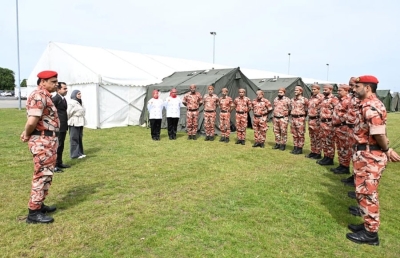
The Omani Army catering exercise began June 15 and will run through June 20 at a British military facility near Grantham, officials said. The exercise brings together 36 field catering teams from armed forces around the world to test and refine food service, supply and administrative procedures under challenging conditions. The Omani contingent is focusing on boosting operational readiness and logistical resilience.
Who is participating and where the exercise takes place
The multinational event is hosted by the United Kingdom and involves military catering and logistics personnel from multiple countries. Omani officials confirmed their national contingent joined the exercise to exchange best practices and to benchmark procedures against partners. Meanwhile, organizers said the venue near Grantham offers training infrastructure capable of simulating field conditions and high-tempo operations.
Main goals of the Omani Army catering exercise
The main objective of the Omani Army catering exercise is to enhance the proficiency of field catering teams and administrative units in supporting deployed forces. Omani authorities emphasized improving menu planning, large-scale food preparation, distribution, and hygiene controls under stress. Additionally, the training seeks to increase adaptability when supply lines or routine conditions are disrupted.
Training activities and methods
Participants are conducting a sequence of practical drills, tabletop exercises and scenario-based evaluations. These activities include mass feeding operations, rapid setup and breakdown of kitchen facilities, ration management, and emergency resupply procedures. Furthermore, trainers are integrating administrative workflows to assess how logistics records, ordering systems and personnel management perform during surges.
Why this exercise matters for military logistics training
Field catering is a core element of military logistics, directly affecting troop morale, health and sustainability. Therefore, exercises like this provide measurable opportunities to improve throughput, reduce waste and enhance food safety. The exercise also helps identify weaknesses in procurement and inventory systems, which is essential for forces that must operate away from established supply chains.
Collaboration and knowledge exchange
Joint participation allows Omani teams to learn from the procedures and technologies used by other militaries. According to participating officials, the exchange covers menu development for diverse climates, use of mobile kitchen units, and rapid-deployment sanitation equipment. In addition, cross-national dialogue helps harmonize multinational support when units from different countries operate together.
Expected outcomes and administrative improvements
Organizers expect the exercise will produce after-action reports outlining strengths and areas for improvement. For the Omani contingent, anticipated outcomes include refined standard operating procedures for field feeding, updated training curricula for catering staff, and enhanced protocols for emergency food distribution. These administrative improvements aim to raise overall system readiness.
Challenges addressed during the exercise
Field catering teams face multiple challenges such as limited water, fluctuating temperatures and constrained fuel for cooking equipment. Therefore, the exercise places participants in simulated scenarios where they must maintain food quality and safety with restricted resources. Additionally, teams practice responding to sudden increases in personnel numbers and to disruptions in supply chains.
Implications for broader defence readiness
Improved field catering capabilities contribute to wider operational effectiveness by enabling sustained deployments and multinational cooperation. Military leaders often note that reliable food services reduce non-combat attrition and improve unit cohesion. Consequently, gains made during the exercise may feed into larger logistics reforms and contingency planning across participating armed forces.
Secondary skills and technology integration
Beyond traditional culinary and supply tasks, the exercise showcases the role of administrative systems and data management. Participants are testing record-keeping tools, digital requisition methods and traceability systems that help track rations from supply point to kitchen. These technologies can streamline requisitions and reduce errors in large-scale operations.
Next steps and where to watch for results
The exercise concludes on June 20, after which participating nations are expected to compile observations and technical assessments. Officials indicated that follow-up activities may include workshops to implement recommended changes and bilateral exchanges to sustain lessons learned. Observers should watch for published after-action reviews or statements from defence ministries in the coming weeks.
Conclusion: practical gains and future cooperation
The Omani Army catering exercise offers practical improvements for field catering teams and broader military logistics training. By testing procedures with multinational partners, Oman aims to strengthen administrative systems and operational readiness. Looking ahead, readers should watch for formal reports and any announced training updates or further cooperative exercises that build on the lessons from this event.