






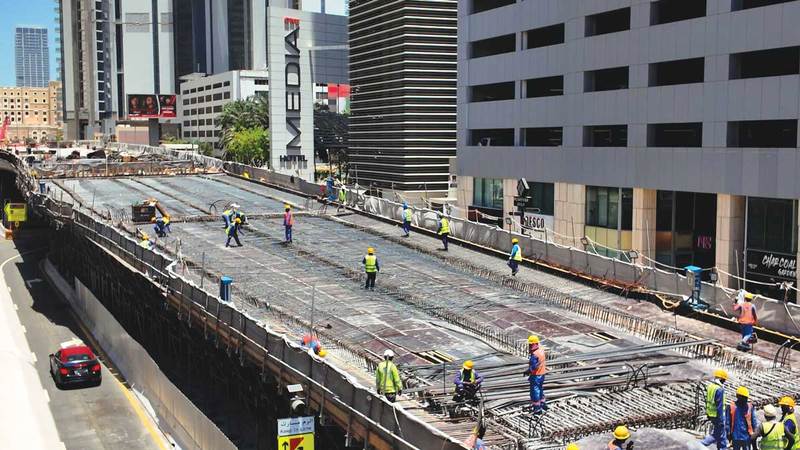

Dubai Harbour bridge project reaches 90% completion
The Roads and Transport Authority (RTA) in Dubai has completed 90 percent of the Dubai Harbour bridge project, a 1,500-meter elevated link with two lanes in each direction that will provide a direct entrance and exit between Sheikh Zayed Road and Dubai Harbour, officials said. According to the RTA, the bridge aims to boost connectivity to one of the emirate’s newest marine and tourism hubs.
Project details and construction scale
The Dubai Harbour bridge project spans 1.5 kilometres and has been constructed using more than 45,000 cubic metres of concrete and 8,273 tonnes of reinforcement steel, RTA figures show. Work is being carried out by 12 teams and involves some 1,400 engineers and labourers, who have logged over four million man-hours since the project began, the authority stated.
Furthermore, project managers report that safety performance indicators remain high, with stringent occupational safety measures in place on site. According to official statements, the total throughput capacity of the bridge will reach about 6,000 vehicles per hour in both directions when fully opened.
Construction milestones and schedule
RTA sources indicate that traffic will be permitted to use the bridge from Sheikh Zayed Road into Dubai Harbour in June, with inbound traffic movements from both the Deira and Jebel Ali approaches included. In July, the authority expects to open traffic from Dubai Harbour onto Al Naseem Street, as well as the movement toward the intersection of King Salman bin Abdulaziz Al Saud Street with Al Naseem Street.
Traffic impact and connectivity improvements
The project is designed to streamline traffic flow to and from Dubai Harbour, reducing current travel times significantly. Officials say journey times could fall from about 12 minutes to as little as three minutes for the new direct connection, which will relieve pressure on surrounding surface roads and intersections.
Moreover, the RTA has included surface improvements at four key junctions along the bridge route to raise the overall efficiency of the network. These measures, combined with the bridge’s capacity, are expected to improve traffic flow for commuters, freight operators and visitors to the waterfront destination.
Strategic context and urban integration
Dubai Harbour sits between major landmarks such as Bluewaters Island and Palm Jumeirah and is close to well-known sites like the Burj Al Arab. The area has been developed as a mixed-use destination with residential, retail and leisure amenities and hosts one of the largest yacht marinas in the region. In addition, a large residential development of roughly 24 towers and some 7,500 apartments is under construction along a 1.5-kilometre development corridor nearby.
Therefore, the Dubai Harbour bridge project is part of a broader infrastructure push by RTA Dubai to support rapid urban growth and tourism demand. By strengthening direct links to Sheikh Zayed Road, the project aims to integrate the new waterfront precinct with the emirate’s arterial road network and support anticipated increases in visitor numbers and local mobility.
Operational benefits and user experience
Once fully operational, the bridge is expected to reduce congestion on alternative routes and shorten overall travel times for residents and tourists accessing Dubai Harbour. According to the RTA, the new link will supply a direct, grade-separated route that minimizes signalised intersections and conflict points, thereby improving reliability for daily commutes and event traffic.
Additionally, the bridge’s design accommodates future traffic growth and aligns with the authority’s wider traffic management strategies. Traffic modelling carried out by RTA planners suggests measurable gains in peak-hour performance, although officials note that actual results will depend on broader network conditions and complementary measures such as signal optimisation and public transport integration.
What to watch next
Authorities have signalled two near-term milestones: the opening of inbound traffic from Sheikh Zayed Road into Dubai Harbour in June and the opening of outbound movements toward Al Naseem Street and the King Salman Street intersection in July. Stakeholders and road users should monitor RTA updates for confirmed dates, temporary traffic arrangements and any staged openings that may affect commute patterns.
Looking ahead, observers will be watching how the bridge interacts with adjacent development projects in the Dubai Harbour precinct and whether projected travel-time savings are realised once full traffic volumes return. For additional information and live updates, the Roads and Transport Authority’s official channels provide the latest schedules and traffic advisories.