




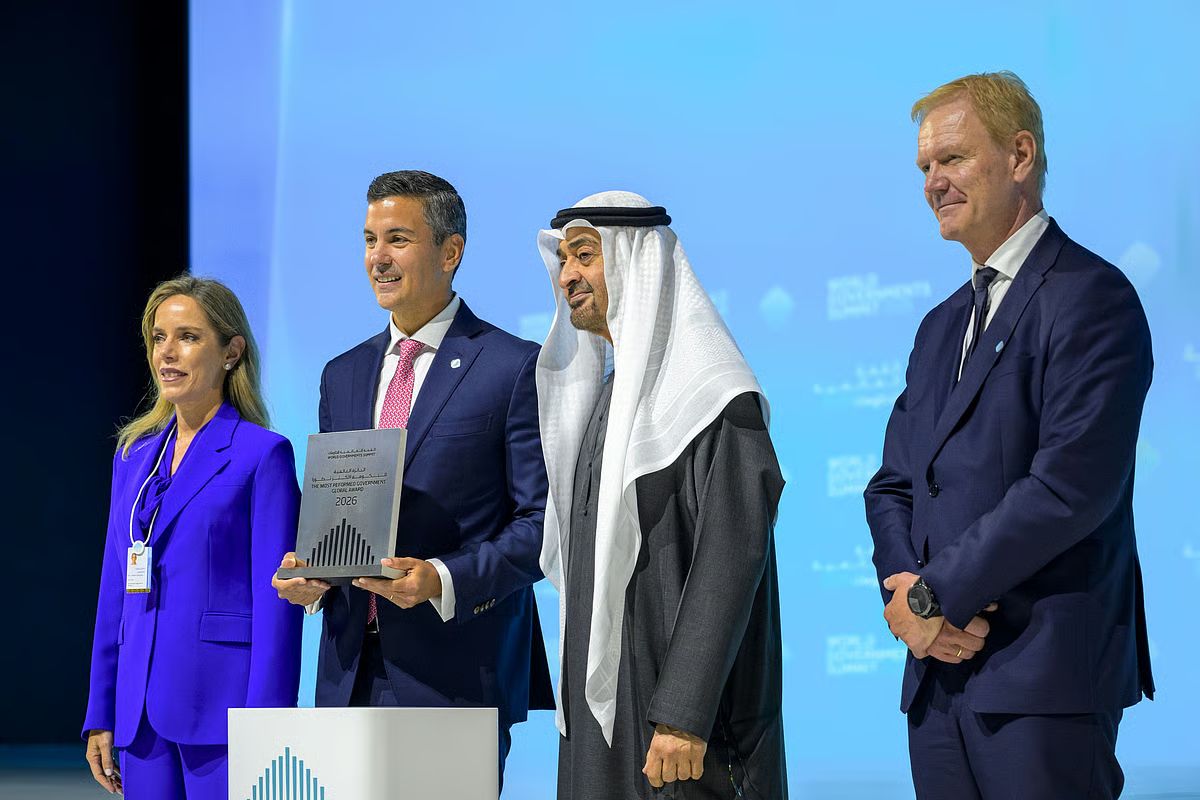

The 2024 World Governments Summit, held in Dubai from February 11-13, concluded with a focus on government innovation and future-readiness. The annual event brought together global leaders, policymakers, and experts to discuss pressing challenges and showcase groundbreaking solutions. This year’s summit highlighted advancements in areas like artificial intelligence, sustainable development, and proactive governance, alongside the presentation of the prestigious World Governments Summit awards.
The summit, hosted by the United Arab Emirates government, featured over 200 sessions and workshops, attracting more than 4,000 attendees from 140 countries, according to organizers. Discussions centered on leveraging technology to improve public services and address global issues. The event also served as a platform to recognize exceptional achievements in government work through its annual awards program.
The Significance of the World Governments Summit Awards
A core component of the World Governments Summit is its awards program, designed to identify and celebrate best practices in governance. These awards aren’t simply symbolic; they aim to disseminate successful models and encourage wider adoption of innovative approaches. The awards cover a broad spectrum of categories, reflecting the multifaceted nature of effective government.
Award Categories and Recent Winners
The awards recognize excellence in several key areas. These include the Best Minister, acknowledging leadership and impactful policy implementation. The Best Teacher award highlights dedication to education and student development. Furthermore, awards are given for the best technological solutions, edge-of-government innovations, and initiatives that enhance future-readiness.
This year’s awards also placed significant emphasis on sustainability. Projects and practices demonstrating a commitment to environmental responsibility and long-term resource management were prominently featured. The UAE Ministry of Climate Change and Environment, for example, presented several initiatives focused on reducing carbon emissions and promoting renewable energy sources.
Focus on Artificial Intelligence and Proactive Governance
Artificial intelligence (AI) emerged as a dominant theme throughout the summit. Discussions explored the potential of AI to transform public services, improve decision-making, and enhance citizen engagement. Several governments showcased AI-powered solutions for areas like healthcare, transportation, and urban planning. However, concerns regarding ethical considerations and data privacy were also addressed.
The concept of proactive governance – anticipating and addressing future challenges before they arise – was another key focus. Speakers emphasized the need for governments to move beyond reactive approaches and embrace foresight and strategic planning. This includes investing in data analytics, scenario planning, and collaborative partnerships.
Additionally, the summit addressed the growing importance of digital transformation. Many nations are actively working to digitize government services, making them more accessible and efficient for citizens. This transition requires significant investment in infrastructure, cybersecurity, and digital skills training, according to a report released by the World Economic Forum during the event.
Sustainability and the Future of Government
The World Governments Summit increasingly emphasizes the integration of sustainability into all aspects of government policy. This reflects a growing global consensus on the urgency of addressing climate change and promoting environmental stewardship. The summit showcased innovative approaches to sustainable urban development, renewable energy, and resource management.
In contrast to traditional approaches, many presentations highlighted the need for a more holistic view of sustainability, encompassing economic, social, and environmental considerations. This requires collaboration across government agencies, as well as engagement with the private sector and civil society. The summit also explored the role of government in fostering a circular economy, reducing waste, and promoting responsible consumption.
Meanwhile, discussions on future-readiness extended beyond technology to encompass social and economic resilience. Governments are increasingly recognizing the need to prepare for a rapidly changing world, characterized by demographic shifts, geopolitical instability, and technological disruption. This requires investing in education, healthcare, and social safety nets.
Implications and Future Outlook
The World Governments Summit serves as a crucial platform for knowledge sharing and collaboration among governments worldwide. The insights and best practices exchanged during the event are likely to influence policy decisions and shape the future of governance. The emphasis on government innovation and proactive strategies suggests a growing recognition of the need for governments to adapt to a complex and rapidly evolving world.
Looking ahead, the UAE government has announced plans to host the next World Governments Summit in February 2025. Organizers have indicated that the focus will likely be on scaling up successful innovations and addressing emerging challenges, such as the responsible deployment of generative AI. The specific themes and agenda will be finalized in the coming months, and further details will be released closer to the event date. The continued success of the summit will depend on its ability to attract diverse perspectives and foster meaningful dialogue among global leaders.