





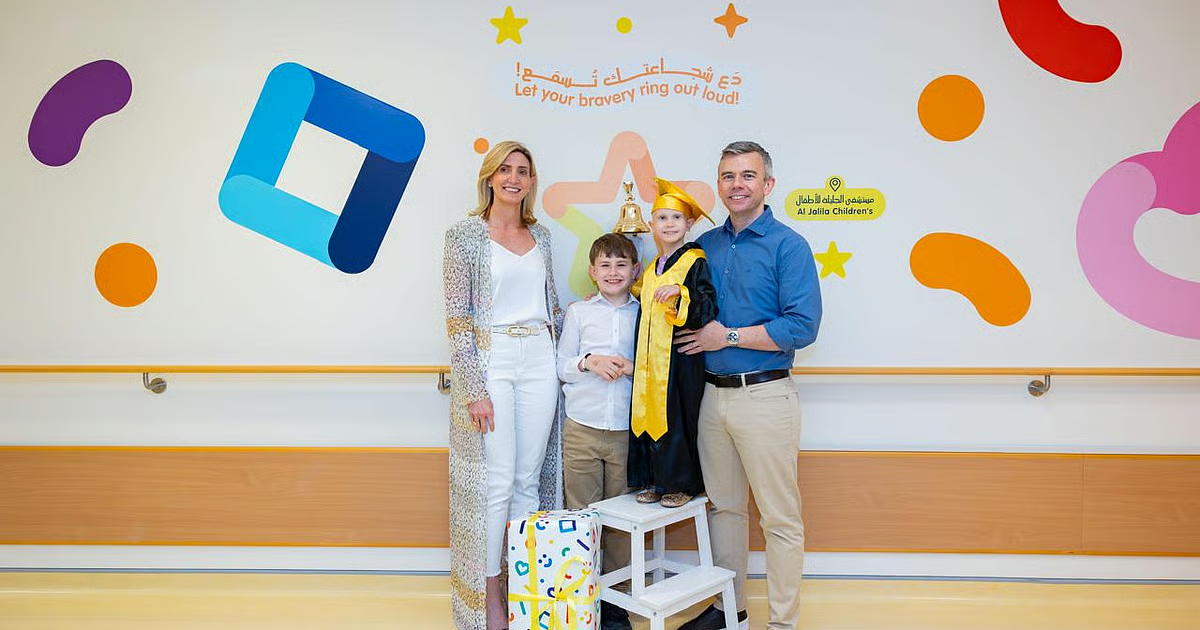

Dubai Health recently announced the successful recovery of a young patient, Alexis, following complex medical treatment at its Women and Children’s Campus. The case underscores the growing capabilities of the United Arab Emirates’ healthcare system and its dedication to comprehensive pediatric care. Dr. Mohamed Al Awadhi, Executive Director of the campus, emphasized the integrated approach taken in Alexis’s treatment, highlighting the facility’s commitment to addressing the holistic needs of child patients.
The recovery, details of which were released this week, involved a multidisciplinary team and a focus on not only the medical aspects of Alexis’s condition but also her emotional and social well-being. Dubai Health, a key component of the UAE’s healthcare infrastructure, has been steadily expanding its specialized services for women and children. This success story serves as a testament to those investments and the expertise cultivated within the region.
The Importance of Integrated Pediatric Care
The successful treatment of Alexis highlights a broader trend in modern healthcare: the move towards integrated care models. This approach recognizes that a patient’s physical health is inextricably linked to their mental and social circumstances. Dubai Health’s commitment to this philosophy, as articulated by Dr. Al Awadhi, is central to its mission.
Multidisciplinary Collaboration
Central to Alexis’s recovery was the close collaboration between various medical specialists. This included surgeons, nurses, therapists, and social workers, all working in concert to develop and implement a tailored treatment plan. Such coordination is often cited as a critical factor in positive patient outcomes, particularly in complex cases.
Addressing Emotional and Social Needs
Beyond the purely medical interventions, the team at Dubai Health prioritized Alexis’s emotional and social support. This is especially important for young patients facing prolonged or challenging treatments. Providing a child-friendly environment and involving family members in the care process are key elements of this holistic approach.
The UAE has significantly invested in its healthcare sector in recent years, aiming to become a regional and international hub for medical tourism and innovation. This investment extends to specialized facilities like the Dubai Health Women and Children’s Campus, which are equipped with state-of-the-art technology and staffed by highly trained professionals. The country’s national strategies emphasize preventative healthcare and the well-being of its citizens, with a particular focus on maternal and child health.
While specific details of Alexis’s condition have not been publicly released to protect patient privacy, the case demonstrates the ability of Dubai Health to handle complex medical challenges. The hospital has a growing reputation for excellence in areas such as neonatal intensive care, pediatric surgery, and developmental pediatrics. This success is attracting patients from across the UAE and increasingly, from neighboring countries.
The emphasis on a “Patient First” approach, as mentioned by Dr. Al Awadhi, is a recurring theme in Dubai Health’s communications. This philosophy translates into personalized care plans, attentive monitoring, and a commitment to open communication with patients and their families. It also reflects a broader shift in healthcare towards patient-centered models of delivery.
The availability of advanced healthcare services in the UAE is contributing to improved health indicators for both women and children. According to data from the World Health Organization, the UAE has made significant progress in reducing infant and maternal mortality rates. However, challenges remain, including the rising prevalence of chronic diseases and the need to ensure equitable access to care for all residents.
The Dubai Health Women and Children’s Campus is continually expanding its capabilities and services. Recent initiatives include the introduction of new minimally invasive surgical techniques and the development of specialized programs for children with rare diseases. These efforts are aimed at further enhancing the quality of care and attracting leading medical professionals to the region.
The success of Alexis’s recovery is not an isolated incident. Dubai Health regularly reports positive outcomes for its patients, demonstrating the effectiveness of its integrated care model. The hospital’s commitment to research and innovation also plays a vital role in improving treatment protocols and advancing medical knowledge. This dedication to continuous improvement is essential for maintaining a high standard of medical treatment.
Looking ahead, Dubai Health is expected to continue its expansion and investment in specialized services. The hospital is currently evaluating the feasibility of adding new programs in areas such as pediatric cardiology and oncology. The timeline for these potential additions remains uncertain, dependent on factors such as funding availability and the recruitment of qualified staff. Further developments in the UAE’s national healthcare strategy will also influence the direction of Dubai Health’s growth.
The ongoing development of the UAE’s healthcare infrastructure, exemplified by the success at Dubai Health, will likely continue to attract international attention and investment. Monitoring the hospital’s future initiatives and the broader trends in regional healthcare will be crucial for understanding the evolving landscape of healthcare in Dubai and the wider UAE.