






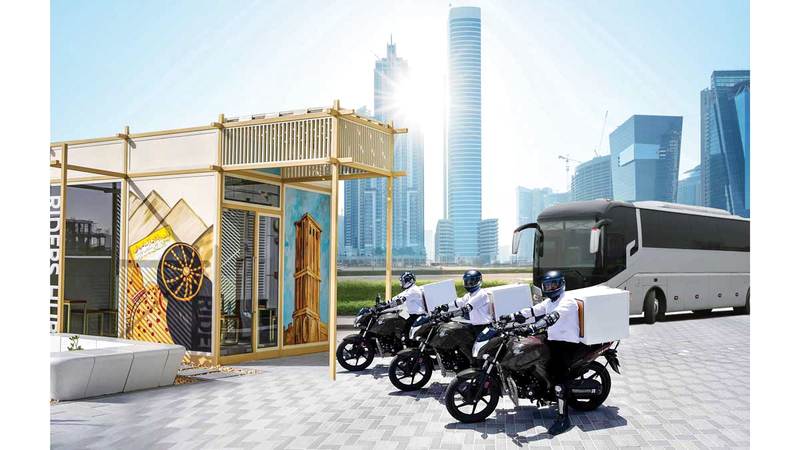

Rest areas for delivery workers deployed nationwide during heat stress policy
The Ministry of Human Resources and Emiratisation announced the provision of more than 12,000 air-conditioned rest areas for delivery workers across the United Arab Emirates, officials said. The rest areas for delivery workers are available from June 15 through September 15 to support the government’s heat stress policy, which bars outdoor work daily from 12:30 p.m. to 3 p.m.
The facilities are provided in coordination with government entities and private partners, the ministry stated, and are intended to give couriers and other delivery staff a cool, safe place to pause during the daily ban hours. The announcement applies to workers who perform tasks outdoors in the logistics and delivery sector and complements wider worker protection measures for the peak summer months.
How the air-conditioned rest areas will operate under the heat stress policy
According to the ministry, the air-conditioned rest areas are positioned to be accessible via interactive maps on delivery apps so workers can locate the nearest facility quickly. Meanwhile, companies employing delivery staff can coordinate schedules to allow workers the option to work or rest during the restricted hours, the ministry said.
Furthermore, the initiative includes contributions from municipal and transport authorities, fuel companies, delivery platforms, restaurants, shopping malls, retailers, and cloud kitchens. Officials emphasized that the network of rest areas is part of a comprehensive approach combining awareness campaigns and inspections to improve compliance with occupational health and safety rules.
Main keyword: Rest areas for delivery workers and the wider safety framework
The installation of rest areas for delivery workers is the fourth consecutive annual rollout of such facilities, reflecting an ongoing commitment to worker protection and occupational health standards. The ministry highlighted that the measure aligns with the UAE’s broader efforts to institutionalize safe working conditions and corporate social responsibility across sectors that operate outdoors.
Delivery and logistics work often requires staff to be mobile rather than based at a single site, and some items demand rapid, precise delivery. Therefore, the ministry noted that strategically located rest areas and real-time mapping help workers minimize time spent exposed to sun and high temperatures while maintaining service standards.
Partners, scope and expected impact on the delivery sector
Participating entities include the Roads and Transport Authority in Dubai, Abu Dhabi Mobility under the Department of Municipalities and Transport, economic departments across the emirates, and Emarat (Emirates General Petroleum Corporation), the ministry said. Delivery platforms and a broad array of food and retail partners also contributed locations and logistical support.
Officials expect the rest areas and associated awareness and inspection programs to reduce heat-related risks for delivery workers and to strengthen compliance with the heat stress policy. In addition, the initiative aims to sustain productivity by protecting workers’ health, thereby supporting uninterrupted service for businesses and consumers.
Inspection and awareness measures
In parallel with physical rest areas, the ministry indicated that inspectors will monitor adherence to the daily work ban during the hottest hours, and that educational outreach will inform employers and workers of best practices to prevent heat-related illness. Therefore, companies operating delivery fleets should anticipate increased oversight during the June–September period.
Furthermore, the ministry advised that workers be given the choice to decline outdoor assignments during the banned hours where operationally feasible, and that this option should be clarified between workers and their employers prior to the enforcement period.
Why the policy matters: health, legal compliance and social responsibility
The heat stress policy, which restricts outdoor work between 12:30 p.m. and 3 p.m. from June 15 to September 15, targets the peak window for heat-related health risks. Heat exposure can cause dehydration, heat exhaustion, and heat stroke, and officials said the policy aims to reduce such incidents among outdoor workers, including delivery personnel.
Additionally, the move signals the public and private sectors’ shared responsibility for worker welfare. Companies that provide or promote access to air-conditioned rest areas demonstrate compliance with occupational safety expectations while enhancing their reputational standing and reducing potential liability.
Operational considerations for delivery companies and workers
Delivery operators should integrate the location of rest areas into routing and scheduling systems, and make practical arrangements with workers for breaks during restricted hours. Meanwhile, workers are advised to plan routes with rest area availability in mind, use app-based maps to find the nearest facility, and follow hydration and cooling best practices encouraged in ministry guidance.
Employers will also need to document compliance efforts and be prepared for inspections, the ministry indicated. Therefore, practical measures such as adjusted shift rosters, temporary task reassignment, and clear communication channels with workers are recommended to manage operations without compromising safety.
Looking ahead: monitoring, compliance and next steps
The ministry said the rest-area initiative will be implemented alongside education and inspection programs through the policy period, and officials will monitor compliance trends and health outcomes. Stakeholders and the public should watch for regular updates from the Ministry of Human Resources and Emiratisation and participating authorities on enforcement and any adjustments to the program.
Ultimately, the initiative aims to protect delivery workers while maintaining essential logistics services during the hottest months. Observers will be watching whether the combination of infrastructure, app-based guidance, and enforcement improves adherence to the heat stress policy and reduces heat-related incidents among outdoor workers.