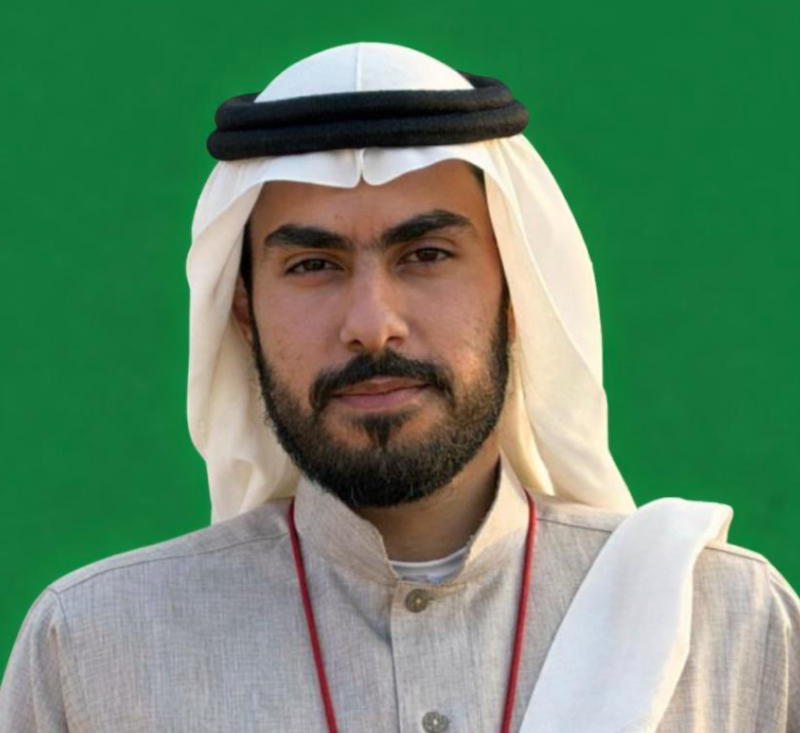

Boulder, Colorado – Faisal Darwish Al-Ghamdi has made history as the first Saudi student to be awarded the prestigious Larson Lab Award, recognizing his groundbreaking research in artificial intelligence. The award, presented by the University of Colorado Boulder, honors Al-Ghamdi’s work on applying AI and digital twin technologies to enhance energy efficiency and revolutionize building systems. This achievement highlights growing international collaboration in advanced technology and Saudi Arabia’s increasing investment in STEM education.
Al-Ghamdi, currently a graduate student at the University of Colorado Boulder while also serving as a faculty member at King Abdulaziz University, received the “Outstanding Graduate Student” distinction for his innovative approach to optimizing building performance. The Larson Lab Award specifically acknowledges research with significant potential for real-world impact. His work focuses on creating virtual replicas of physical structures, known as digital twins, to improve operational efficiency and reduce energy consumption.
The Power of Artificial Intelligence in Building Management
Al-Ghamdi’s research centers on the development and application of digital twins, which are dynamic, virtual representations of physical assets. These twins utilize real-time data from sensors and other sources to accurately simulate the performance of buildings and infrastructure. This allows for proactive identification of potential issues and optimization of systems like heating, ventilation, and air conditioning (HVAC), lighting, and security.
How Digital Twins Enhance Efficiency
The core benefit of digital twin technology lies in its ability to predict and prevent problems before they occur. By analyzing data streams, the virtual model can identify anomalies and inefficiencies that might otherwise go unnoticed. This predictive maintenance capability can significantly reduce operational costs and extend the lifespan of building components.
Additionally, digital twins facilitate data-driven decision-making. Building managers can use the simulations to test different scenarios and optimize settings for maximum energy efficiency and occupant comfort. This is particularly relevant as the construction industry increasingly focuses on sustainable building practices and reducing carbon footprints.
According to the U.S. Department of Energy, buildings account for approximately 40% of total energy consumption in the United States. Technologies like digital twins, powered by artificial intelligence, are seen as crucial tools for addressing this challenge and achieving national energy goals.
However, the widespread adoption of digital twin technology faces challenges. These include the high initial investment costs for sensor infrastructure and the need for skilled personnel to manage and interpret the data. Data security and privacy concerns also require careful consideration.
Saudi Arabia’s Vision 2030 and Technological Advancement
Al-Ghamdi’s achievement aligns with Saudi Arabia’s Vision 2030, a strategic framework aimed at diversifying the nation’s economy and reducing its reliance on oil. A key pillar of Vision 2030 is the development of a knowledge-based economy, with significant investment in education, research, and technology.
The Kingdom has been actively promoting STEM (Science, Technology, Engineering, and Mathematics) education and fostering collaborations with leading international universities. This commitment is evident in the increasing number of Saudi students pursuing advanced degrees abroad, particularly in fields like artificial intelligence and data science.
Meanwhile, Saudi Arabia is also investing heavily in smart city projects, such as NEOM, a planned futuristic city designed to be a hub for innovation and sustainable living. Digital twin technology is expected to play a central role in the development and management of NEOM and other smart city initiatives. The use of building automation systems will be critical to these projects.
In contrast to traditional building management approaches, digital twins offer a holistic and proactive solution. They move beyond reactive maintenance to predictive optimization, resulting in significant cost savings and environmental benefits. This shift is driven by advancements in sensor technology, data analytics, and machine learning.
The University of Colorado Boulder’s Larson Lab, where Al-Ghamdi conducts his research, is a leading center for innovation in building systems and energy efficiency. The lab’s focus on interdisciplinary collaboration and real-world applications has fostered a vibrant research environment. The lab’s work also extends to areas like renewable energy integration and grid modernization.
The implications of Al-Ghamdi’s research extend beyond individual buildings. The principles and methodologies developed can be applied to a wide range of infrastructure systems, including transportation networks, power grids, and water distribution systems. This broader application of artificial intelligence and digital twin technology could lead to significant improvements in overall system resilience and sustainability.
Looking ahead, Al-Ghamdi is expected to continue his research at the University of Colorado Boulder, focusing on refining his digital twin models and exploring new applications for the technology. The next phase of his work will likely involve pilot projects to demonstrate the real-world benefits of his research in operational building environments. Further research will be needed to address the scalability and interoperability challenges associated with widespread digital twin adoption. The long-term impact of his work remains to be seen, but it represents a significant step forward in the field of intelligent building systems.