






By using this site, you agree to the Privacy Policy and Terms of Use.
Accept
Gulf PressGulf Press
  • Home
  • Gulf News
  • World
  • Business
  • Technology
  • Sports
  • Lifestyle
Search
Countries
More Topics
  • Health
  • Entertainment
Site Links
  • Customize Interests
  • Bookmarks
  • Newsletter
  • Terms
  • Press Release
  • Advertise
  • Contact
© 2023 Gulf Press. All Rights Reserved.
Reading: Long lost Moon-forming planet formed in the inner Solar System, new analysis shows
Share
Notification Show More
Latest News
ICE Qatar event shines spotlight on nation’s sustainable development drive
Gulf
ABQ partners with the Oman Padel Committee
Business
Bahrain records five divorces a day, straining families and state support, says MP
Gulf
Kuwait Heart Assn elects new board of directors
Gulf
Special Envoy of Minister of Foreign Affairs meets UN Special Rapporteur on Human Rights in Afghanistan
Gulf
Aa
Gulf PressGulf Press
Aa
  • Gulf News
  • World
  • Business
  • Entertainment
  • Lifestyle
  • Sports
Search
  • Home
  • Gulf
  • Business
  • More News
    • World
    • Technology
    • Lifestyle
    • Entertainment
    • Sports
Have an existing account? Sign In
Follow US
  • Terms
  • Press Release
  • Advertise
  • Contact
© 2023 Gulf Press. All Rights Reserved.
Gulf Press > Lifestyle > Long lost Moon-forming planet formed in the inner Solar System, new analysis shows
Lifestyle

Long lost Moon-forming planet formed in the inner Solar System, new analysis shows

News Room
Last updated: 2025/11/24 at 5:02 AM
News Room
Share
5 Min Read
SHARE

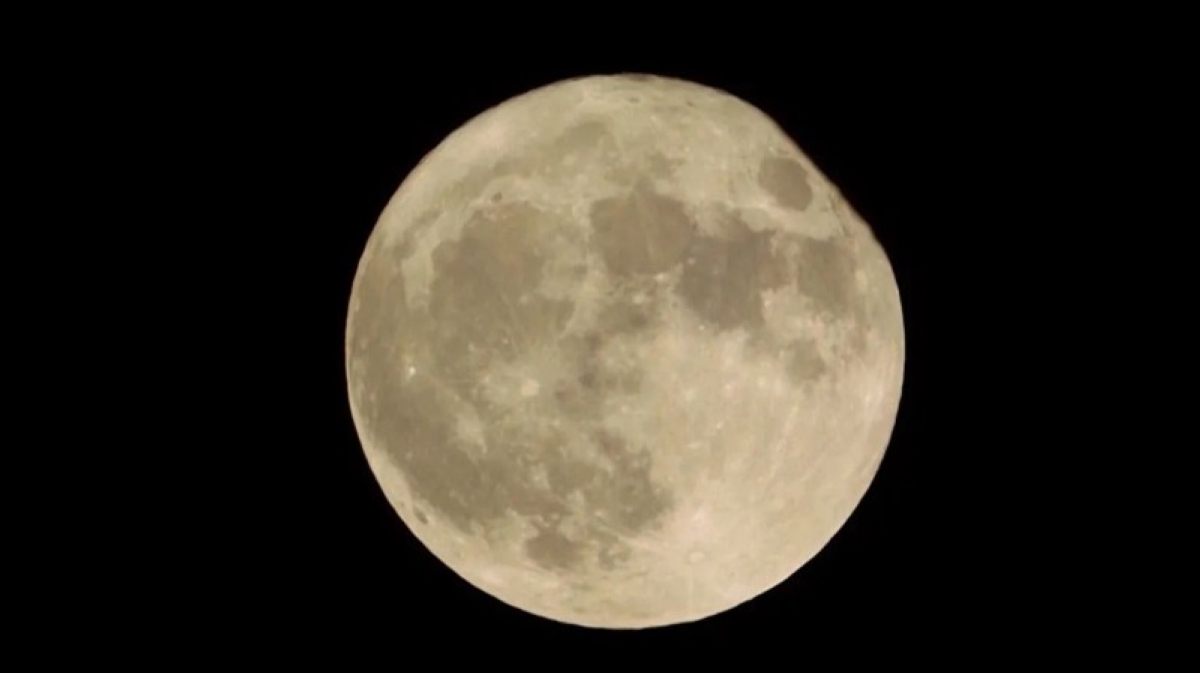
LONDON — New research suggests the ancient planet, Theia, believed to have collided with early Earth and formed the Moon, likely originated much closer to the Sun than previously estimated. An international team of astronomers has analyzed isotopes in lunar and terrestrial rocks to pinpoint Theia’s birthplace within our solar system. The findings, published recently, offer a refined understanding of the events that led to the formation of Earth’s natural satellite approximately 4.5 billion years ago.

The study, conducted by scientists in France, Germany, and the United States, focuses on the chemical composition of materials from the early solar system. According to Euronews, the research was able to “almost exactly pinpoint where this object came from.” This discovery contributes to the long-standing “giant impact theory” explaining the Moon’s origin.

Unraveling the Mystery of the Moon’s Formation

For decades, the prevailing theory has been that a Mars-sized object, Theia, collided with the proto-Earth. This catastrophic event ejected vast amounts of debris into space, which subsequently coalesced to form the Moon. However, the lack of direct evidence from Theia itself—which was largely vaporized in the impact—has left key questions unanswered about its composition and origin.

The core challenge lies in the similarity between Earth and Moon rocks. Scientists have long observed that the isotopic ratios of metals in both bodies are remarkably alike, making it difficult to distinguish between material originating from Earth and that contributed by the impactor, Theia. This new research attempts to overcome that difficulty through detailed isotopic analysis.

Isotopic Fingerprints and Planetary Origins

The team analyzed isotopes of iron, chromium, zirconium, and molybdenum present in samples of ancient Earth and lunar rocks. Isotopes are variations of an element with different numbers of neutrons, and their distribution can serve as a unique “fingerprint” of a material’s origin. Differences in isotope patterns arise due to varying temperatures and conditions prevalent in different regions of the early solar system.

By modeling hundreds of possible scenarios for the early Earth and Theia, researchers sought combinations that could accurately reproduce the observed isotope signatures. Their analysis indicates that Theia was not a randomly formed body. Instead, the study suggests it formed in the inner Solar System, closer to the Sun than the early Earth. This contrasts with some earlier hypotheses that posited a more distant origin for the impactor, potentially within the asteroid belt. This also provides new insight into planet formation.

The findings have implications for understanding the early stages of solar system evolution and the processes of planetary accretion. It supports the idea that the inner solar system was more dynamically active than previously appreciated, with significant mixing of materials. Studying the history of the Moon also allows scientists to infer conditions on early Earth, which was drastically different from the planet we know today.

The research also indirectly refines understanding of planetary differentiation – the process by which a planet’s interior separates into layers of different composition. The origin and composition of Theia strongly influence the degree of mixing between the proto-Earth and the impactor’s material, affecting the formation of Earth’s core and mantle.

Future research will likely focus on analyzing additional lunar samples, including those collected from more diverse regions of the Moon. Further refinement of the models used in this study, incorporating new data and improved understanding of early solar system dynamics, is also expected. While this study provides a strong indication of Theia’s origin, uncertainties remain regarding the precise details of the collision and the subsequent evolution of the Earth-Moon system.

Scientists will continue to search for subtle isotopic variations that might reveal more about Theia’s unique characteristics and its role in shaping our planet. The ultimate goal is to build a complete, detailed picture of the events that led to the formation of the Earth and its Moon, offering vital clues about the origins of habitable worlds throughout the universe.


Sign Up For Daily Newsletter

Be keep up! Get the latest breaking news delivered straight to your inbox.
I have read and agree to the terms & conditions
By signing up, you agree to our Terms of Use and acknowledge the data practices in our Privacy Policy. You may unsubscribe at any time.
News Room November 24, 2025
Share this Article
Facebook Twitter Copy Link Print
Previous Article Awqaf Ministry honours winners of sixth ‘Waqf & Image’ photography competition
Next Article 4 legal reasons a Saudi company can’t hire you
Leave a comment Leave a comment

Leave a Reply Cancel reply

Your email address will not be published. Required fields are marked *

Stay Connected

235.3k Followers Like
69.1k Followers Follow
56.4k Followers Follow
136k Subscribers Subscribe
- Advertisement -
Ad imageAd image

Latest News

ICE Qatar event shines spotlight on nation’s sustainable development drive
Gulf December 5, 2025
ABQ partners with the Oman Padel Committee
Business December 5, 2025
Bahrain records five divorces a day, straining families and state support, says MP
Gulf December 5, 2025
Kuwait Heart Assn elects new board of directors
Gulf December 5, 2025

You Might also Like

Lifestyle

Indian scientists spot Milky Way-like galaxy from 12 billion years ago

December 4, 2025
Lifestyle

Eurovision faces crucial decision over Israel

December 4, 2025
Lifestyle

Orange juice found to affect thousands of genes in immune cells, study says

December 3, 2025
Lifestyle

Iranian director given jail sentence while on trip to collect US awards

December 2, 2025
Lifestyle

Measles cases are surging, making global elimination a ‘distant goal,’ WHO says

November 28, 2025
Lifestyle

Warner settles lawsuit with AI music firm and launches joint venture

November 26, 2025
Lifestyle

Robert Irwin wins Dancing with the Stars, a decade after sister’s victory

November 26, 2025
Lifestyle

Report finds hazardous chemicals in Shein clothing, including children’s items

November 25, 2025
//

Gulf Press is your one-stop website for the latest news and updates about Arabian Gulf and the world, follow us now to get the news that matters to you.

Quick Link

  • Privacy Policy
  • Terms of ue
  • Advertise
  • Contact

How Topics

  • Gulf News
  • International
  • Business
  • Lifestyle

Sign Up for Our Newsletter

Subscribe to our newsletter to get our latest news instantly!

I have read and agree to the terms & conditions
Gulf PressGulf Press
Follow US

© 2023 Gulf Press. All Rights Reserved.

Join Us!

Subscribe to our newsletter and never miss our latest news, podcasts etc..

I have read and agree to the terms & conditions
Zero spam, Unsubscribe at any time.

Removed from reading list

Undo
Welcome Back!

Sign in to your account

Lost your password?