
Jeddah, Saudi Arabia is poised for a series of spectacular astronomical events in the first quarter of 2026, following a recent total lunar eclipse that captivated observers across the Kingdom. The Jeddah Astronomical Society has released a detailed forecast outlining key occurrences, including planetary alignments and another total lunar eclipse. These events promise opportunities for both amateur and professional astronomers to witness remarkable celestial displays.
The upcoming quarter will feature several easily observable phenomena, beginning with Jupiter at opposition in January and culminating in the spring equinox in March. The planetary gathering expected in late February is particularly noteworthy, potentially visible to the naked eye. These events are expected to be visible throughout Saudi Arabia, with optimal viewing conditions dependent on local weather patterns.
Jupiter at Opposition and the Planetary Alignment
On January 10, 2026, Jupiter will reach opposition, meaning it will be directly opposite the Sun in Earth’s sky. This configuration results in the planet appearing exceptionally bright and large, making it a prime target for telescope viewing. According to the Jeddah Astronomical Society, Jupiter will be visible throughout the night, rising in the east as the sun sets and setting in the west as the sun rises.
However, the most visually striking event of February is anticipated to be a rare alignment of six planets. The society predicts that Mercury, Venus, Mars, Jupiter, Saturn, and Uranus will appear clustered near the western horizon shortly after sunset. While Uranus will require binoculars or a telescope to observe, the remaining planets should be visible to the naked eye under clear skies.
Factors Affecting Visibility
The visibility of the planetary alignment will depend heavily on atmospheric conditions and light pollution. Observers in areas with minimal light pollution will have the best chance of spotting all six planets. The report indicates that a clear, unobstructed western horizon is also crucial for optimal viewing.
Another Total Lunar Eclipse in March
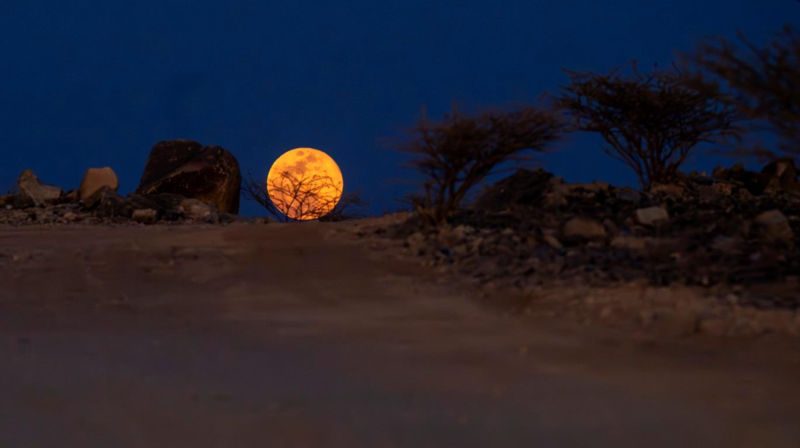
Continuing the trend of dramatic celestial events, a total lunar eclipse is scheduled for March 3, 2026. Like the eclipse earlier this month, this event will cause the Moon to take on a reddish hue, often referred to as a “Blood Moon.” The eclipse occurs when the Earth passes between the Sun and the Moon, casting a shadow on the lunar surface.
The duration of totality – the period when the Moon is fully within Earth’s shadow – is still being calculated, but preliminary estimates suggest it will be comparable to the recent eclipse. The Jeddah Astronomical Society notes that lunar eclipses are safe to view with the naked eye, unlike solar eclipses which require specialized eye protection.
Meanwhile, the spring equinox on March 20 marks the astronomical beginning of spring in the Northern Hemisphere. This occurs when the Sun crosses the celestial equator, resulting in roughly equal day and night lengths. The equinox is a significant event in many cultures and is often associated with renewal and rebirth.
Aurora Borealis Potential
Interestingly, the equinoxes are often associated with increased geomagnetic activity, potentially leading to more frequent and intense displays of the aurora borealis (Northern Lights). While Saudi Arabia is not typically within the auroral oval, strong geomagnetic storms could make the aurora visible at higher latitudes within the Kingdom. This is a secondary effect, and its occurrence is not guaranteed.
The recent lunar eclipse, coupled with the alignment of Jupiter and other planets, has sparked increased interest in astronomy among the public. The Jeddah Astronomical Society has reported a surge in inquiries about observing events and learning more about the night sky. This heightened awareness could lead to greater support for scientific research and education in the field of space exploration.
Looking ahead, the society will continue to monitor these events and provide updated forecasts as the dates approach. Precise timings and visibility conditions will be refined as more data becomes available. Observers are encouraged to check local weather forecasts and light pollution maps to maximize their chances of witnessing these spectacular celestial phenomena. The potential for increased auroral activity remains a key area to watch in the weeks surrounding the spring equinox.