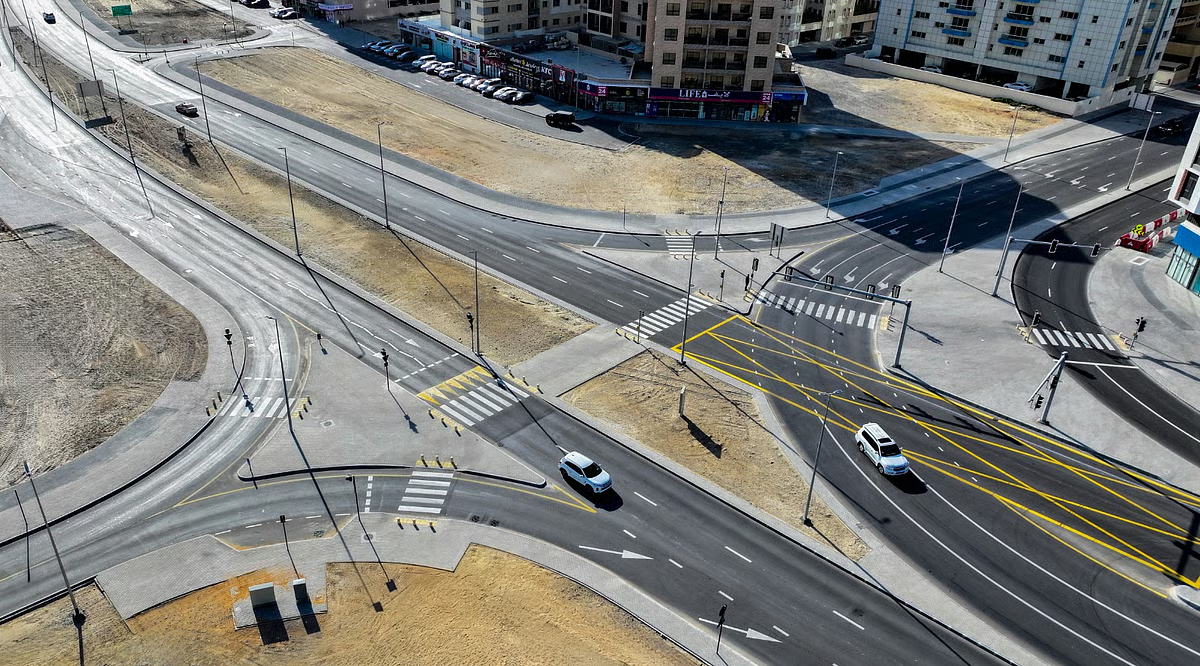

Dubai road users will experience further improvements to traffic flow in the Al Warqa’a area following the Roads and Transport Authority’s (RTA) announcement of a new phase of upgrades to the Al Warqa’a 1 intersection. These enhancements, expected to be completed by the end of 2024, build upon earlier completed work in June 2024 and will further integrate the Al Warqa’a district with key roadways like Sheikh Mohammed bin Zayed Road. The ongoing Al Warqa’a road improvements aim to alleviate congestion and improve accessibility for residents and commuters.
The RTA detailed the plans in a recent statement, emphasizing the project’s focus on optimizing traffic signals and increasing road capacity. This follows a June 2024 project that connected Al Warqa’a to Sheikh Mohammed bin Zayed Road via new entry and exit points, along with improvements spanning eight kilometers along 13th Street in Al Warqa’a 1. The latest phase focuses on the core intersection itself, signifying a continued commitment to infrastructure development in the rapidly growing area.
Ongoing Development of Al Warqa’a Road Improvements
Dubai has experienced significant population growth and urban expansion in recent years, particularly in residential areas like Al Warqa’a. This growth necessitates continual investment in the road network to maintain efficient transportation and support economic activity. The RTA routinely assesses traffic patterns and identifies areas requiring upgrades to prevent bottlenecks and ensure smooth commutes.
The current project is a direct response to observed traffic demand. While detailed traffic analysis reports haven’t been publicly released, officials have indicated congestion during peak hours was a primary driver for the improvements. The project aims to increase capacity at the Al Warqa’a 1 intersection, reducing wait times and improving overall traffic flow.
Details of the New Phase
The planned upgrades include refinements to the intersection’s geometry, and adjustments to traffic signal timings. These adjustments, according to the RTA, will be data-driven, utilizing real-time traffic data to dynamically optimize signal phases. The goal is to maximize the number of vehicles able to pass through the intersection during each cycle.
Furthermore, the RTA intends to improve pedestrian and cyclist facilities near the intersection. This includes dedicated crossing points and potential expansions of existing pathways, promoting multi-modal transportation options. Investment in these features reflects Dubai’s broader commitment to sustainable urban development.
The earlier work completed in June 2024 involved a substantial lengthening of entry and exit ramps onto Sheikh Mohammed bin Zayed Road. This provided a more gradual merging of traffic, diminishing the potential for sudden slowdowns that could impact the main highway. It also involved the resurfacing and widening of sections of 13th Street. The RTA highlighted that these improvements were designed to serve the increasing number of residents in Al Warqa’a.
The Al Warqa’a area has seen a surge in real estate development, attracting families and individuals. This leads to increased reliance on private vehicles and public transport, thereby strainning existing infrastructure. Addressing this anticipated demand is crucial for maintaining quality of life for area residents and supporting broader city objectives related to traffic management.
Local residents have generally welcomed the planned road improvements. While construction inevitably causes temporary disruptions, the long-term benefits of reduced congestion and improved accessibility are widely anticipated. The RTA has a history of minimizing disruption during infrastructure projects, often employing phased construction techniques and providing clear communication to the public.
The RTA’s commitment to proactive infrastructure development extends beyond Al Warqa’a. Numerous other projects are underway across Dubai, including expansions to the metro network, upgrades to major highways, and the implementation of intelligent transport systems. These initiatives collectively contribute to Dubai’s vision of becoming a world-class, sustainable city with a highly efficient transportation network. The broader context of these projects is the preparation for events like Expo City Dubai and continued economic growth, requiring robust transport infrastructure.
The most recent phase of road construction has been planned to coincide with periods of lower traffic volume where possible. However, some delays are anticipated during peak hours. The RTA advises commuters to plan their journeys accordingly and consider alternative routes during the construction period. Regular updates on the progress of the project will be provided through official RTA channels, including its website and social media platforms.
Looking ahead, the RTA has not yet announced any further phases of work in the Al Warqa’a area beyond the current project scheduled for completion by the end of 2024. However, given the ongoing development and population growth in the district, future upgrades remain a distinct possibility. Monitoring traffic patterns in the area after the completion of the current project will likely inform any subsequent decisions regarding further improvements. The effectiveness of the new signal timings and increased capacity will be key metrics for evaluation.