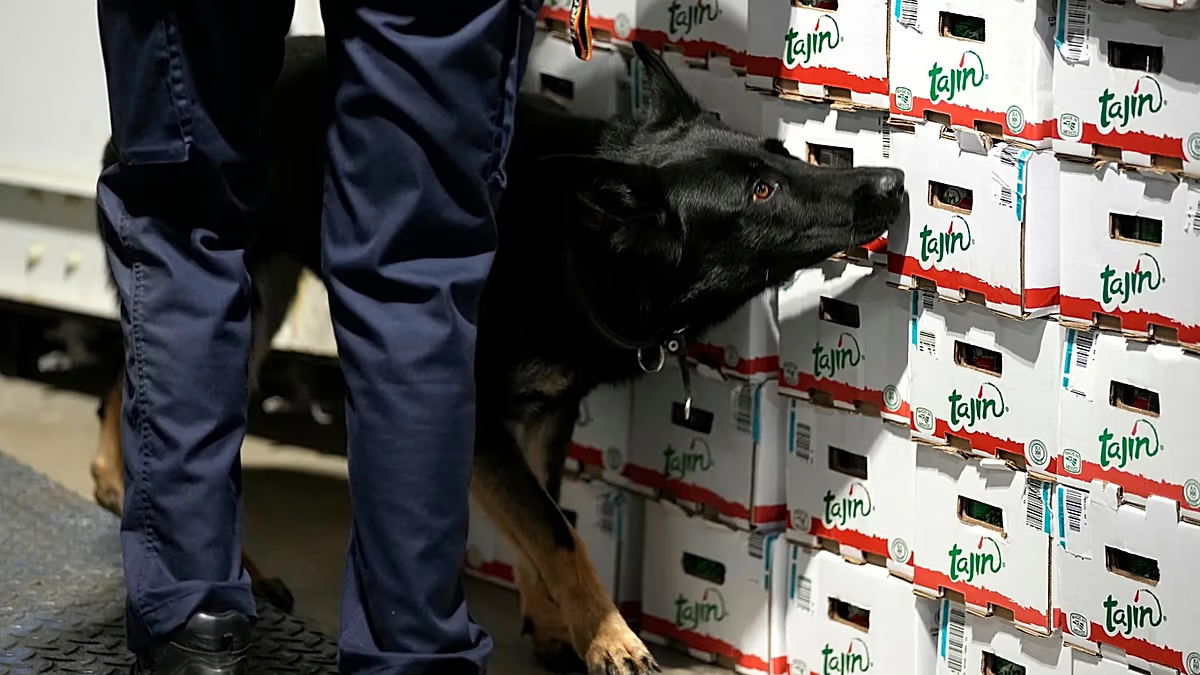

The European Commission unveiled a comprehensive plan on December 4, 2025, to combat drug trafficking across the European Union. This legislative package addresses a growing crisis fueled by rising illegal drug use and the increasing sophistication of criminal networks involved in the trade. The initiative aims to disrupt these networks and mitigate the harms associated with drug trafficking, including violence, corruption, and economic exploitation.
According to EU Home Affairs Commissioner Magnus Brunner, the situation has reached a “crisis point,” with approximately 7,500 deaths annually in Europe linked to drug use. Recent seizures highlight the scale of the problem: 419 tonnes of cocaine were intercepted in 2023, and authorities are dismantling over 500 illegal synthetic drug labs each year. The package includes a new EU Drugs Strategy and a detailed Action Plan with 19 key operational measures.
Combating Drug Trafficking: A Multi-Faceted Approach
The core of the Commission’s strategy centers on strengthening international cooperation. This involves working more closely with third countries to target drug production and transit routes. Simultaneously, the plan emphasizes enhancing coordination between EU member states’ law enforcement, judicial, and customs agencies to build a unified front against transnational crime.
However, officials recognize that criminals constantly adapt their tactics. Brunner stressed the need for ongoing adaptation of countermeasures to address evolving trafficking routes and methods. Consequently, the Commission is investing in innovation, announcing the launch of an “innovation campus” in 2026 dedicated to testing cutting-edge technologies designed to dismantle drug trafficking operations.
Leveraging Technology to Disrupt Criminal Networks
The innovation campus will focus on deploying advanced technological assets, including aerial surveillance, high-resolution satellite imagery, and drones. These resources will be provided by the European border and coast guard agency, Frontex. The intent is to provide real-time intelligence and bolster detection capabilities at key points in the trafficking chain.
Beyond physical surveillance, the strategy acknowledges the growing role of the internet in drug-related crime. A new EU-wide platform will connect experts across Europe to specifically address online recruitment for drug trafficking, particularly among young people. This follows emerging trends showing increased use of social media and dark web marketplaces, as reported by the European Union Agency for Drugs (EMCDDA).
Enhanced Intelligence Sharing and Substance Identification
The Commission’s plan also calls for a new EU-wide substance database. This will help national authorities to quickly and accurately identify emerging synthetic drugs, which pose a significant challenge due to their rapid evolution and often unknown properties. Furthermore, the role of Europol will be critical in streamlining intelligence sharing and coordinating joint investigations between member states.
Commissioner Brunner conveyed confidence in the collaborative effort, stating the Commission is “very much aligned” with EU member states and focused on supporting their efforts. The plan aims to provide resources and frameworks to enable more effective action against drug trafficking organizations. The EU also continues to focus on drug prevention measures alongside its law enforcement initiatives.
The proposed legislation and action plan now move to the European Parliament and Council for further debate and approval. Key to success will be securing consensus among member states and adequate funding for the proposed initiatives. Stakeholders should monitor the legislative process closely for potential amendments and their impacts. Businesses and organizations operating in affected regions should also anticipate increased scrutiny and potential regulatory changes.