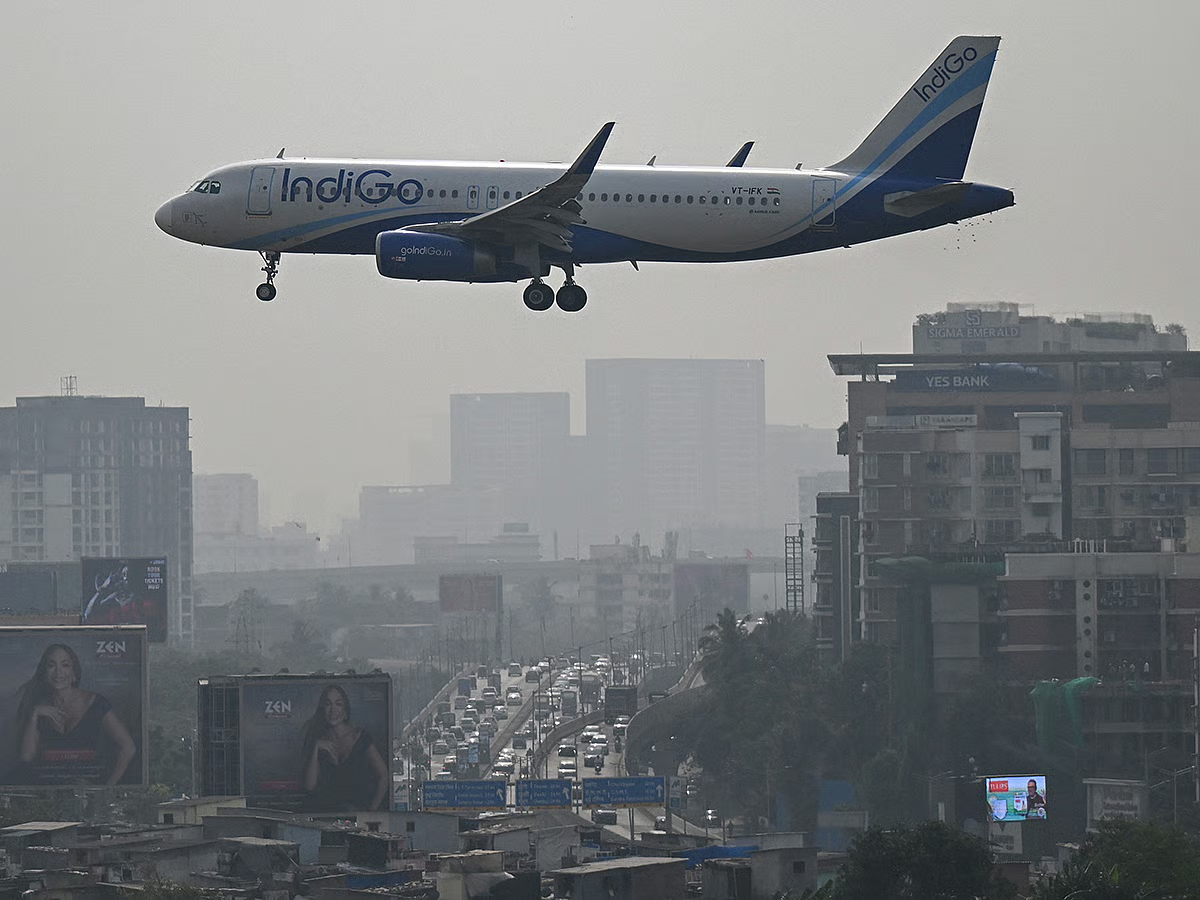

Chennai International Airport experienced significant flight cancellations on Saturday, impacting travel plans for thousands of passengers. A total of 48 flights to and from key domestic cities were cancelled due to ongoing runway maintenance, causing widespread disruption and prompting airlines to advise passengers to check their flight status. The cancellations affected major hubs like Mumbai and Delhi, as well as regional destinations.
The disruptions began early Saturday morning and continued throughout the day, with cancellations reported for flights to Bengaluru, Hyderabad, Coimbatore, Ahmedabad, Visakhapatnam, Andaman, Lucknow, Pune, and Guwahati. Services to Kochi, Bhubaneswar, Patna, Thiruvananthapuram, and Kolkata were also suspended. Passengers are facing difficulties in rescheduling their travel or obtaining refunds.
Understanding the Chennai Airport Flight Cancellations
The primary cause of the widespread flight cancellations is pre-planned runway resurfacing and associated maintenance work at Chennai Airport. This work is essential to ensure the long-term safety and operational efficiency of the airport, according to a statement released by the Airports Authority of India (AAI). The AAI had previously announced a six-day closure of the main runway for these upgrades, beginning February 17th.
However, the impact has been more substantial than initially anticipated, with a larger number of flights affected. This is partially due to the cascading effect of cancellations, where the grounding of one flight leads to delays and cancellations for others throughout the day. The situation is further complicated by the limited availability of alternative routes and airport slots.
Impact on Regional Connectivity
While the main runway is closed, ATR aircraft – smaller, turboprop planes – are continuing to operate on regional routes. These include flights to Madurai, Thoothukudi, Tiruchirappalli, Salem, Vijayawada, and Bengaluru. However, passengers on these flights are subject to a service charge of Rs 1,500 per ticket, reportedly to cover the added operational costs of utilizing alternative arrangements.
This partial operation aims to maintain some level of connectivity to smaller cities, but it represents a reduced capacity compared to normal operations. The additional fee has also drawn some criticism from passengers seeking more affordable travel options. Data from flight tracking websites indicates significant load factors on these remaining regional flights.
Affected Flights and Passenger Assistance
Several prominent flights were cancelled on Saturday. Morning cancellations included Flight 6081 to Bengaluru, Flight 495 to Hyderabad, Flight 6225 to Mumbai, and Flight 456 to Delhi. The afternoon and evening saw further disruptions, with Flight 2761 to Delhi and Flight 6158 to Hyderabad among the impacted services.
Airlines operating at Chennai Airport are actively working to mitigate the disruption, offering passengers the option to reschedule their flights or request full refunds. Passengers are strongly encouraged to contact their respective airlines directly or check updated flight schedules online through the airline’s website or app. The Ministry of Civil Aviation has urged airlines to prioritize passenger convenience during this period.
The disruption also highlights the challenges of maintaining airport infrastructure while simultaneously catering to growing passenger demand. Chennai Airport is a vital hub for both domestic and international travel in South India and any significant closure has a broad impact on connectivity. Analysis of passenger traffic patterns reveals a particularly high demand on routes connecting Chennai to major metropolitan areas.
Additionally, the airline industry continues to grapple with broader issues following the pandemic, including staff shortages and supply chain constraints. These factors may exacerbate the impact of the runway closure, leading to longer wait times for assistance and increased difficulty in securing alternative flights. The industry’s recovery remains uneven across different regions and airline segments.
Meanwhile, the AAI is working to expedite the runway maintenance process. The initial schedule anticipates the main runway will reopen for full operations on February 23rd. However, officials have cautioned that the timeline is subject to change based on weather conditions and the progress of the work. Any delays in the completion of the resurfacing could lead to further flight cancellations and extended disruption.
In contrast to scheduled flights, cargo operations are reported to be operating with minimal disruptions, benefiting from the continued availability of secondary runways and nighttime operational flexibility. This distinction underscores the varying needs and priorities of passenger and freight transportation.
Looking ahead, passengers traveling to or from Chennai Airport in the coming days should closely monitor their flight status and allow ample time for potential delays. The AAI is expected to provide regular updates on the runway maintenance progress and any adjustments to the reopening schedule. The situation emphasizes the importance of proactive travel planning and staying informed about airport conditions. The next few days will be critical in assessing the overall impact of these flight cancellations and the effectiveness of the mitigation efforts.