







Kuwait’s Progress in Family Mediation and Reform
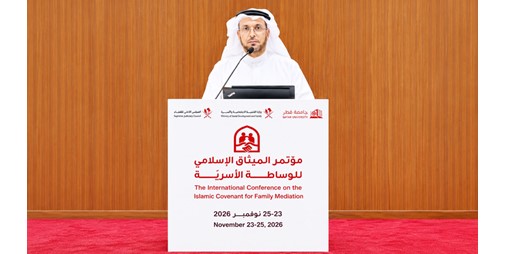
Dr. Hamoud Al-Qashaan, a family and marriage guidance professor at Kuwait University, recently praised the significant strides Kuwait has made in enhancing its family mediation and reform system. In a statement to the Kuwait News Agency (KUNA), his remarks followed his participation in the “International Conference on the Islamic Charter for Family Mediation,” organized by the Colleges of Sharia and Islamic Studies and Law at Qatar University, in collaboration with the Supreme Judicial Council and the Ministry of Social Development of Qatar.
During the conference, Dr. Al-Qashaan presented a research paper titled “The Family Reconciliation Charter: Between Reality and Aspiration – An Examination of the Components and Skills of Family Reconciliation with Kuwait as a Model.” He highlighted the evolution of Kuwait’s family reform experience and discussed the legislative and professional transformations associated with it.
The Historical Evolution of Family Mediation in Kuwait
As a presiding judge in personal status cases within Kuwait’s courts, Dr. Al-Qashaan emphasized that the roots of Kuwait’s institutional family mediation efforts date back to 1992. This initiative began with the establishment of a social consultation and family reform department within the Ministry of Justice. Their services expanded significantly over time, thanks in part to support from the General Secretariat of Awqaf.
He noted that Kuwait has taken extensive measures to refine its approach to marital dispute resolution. The integration of a presiding judge alongside arbitrators in conflict cases allows for leveraging their expertise to assess and understand the causes of disputes effectively.
Legislative Innovations in Personal Status Cases
Furthermore, the Kuwaiti government has made substantial advancements in updating the legislative framework concerning personal status matters. These updates aim to streamline procedures and improve the resolution process for family-related disputes. According to Dr. Al-Qashaan, these reforms underscore the commitment of the Ministry of Justice to evolve the legal landscape concerning family-related issues.
These innovations reflect a comprehensive strategy to enhance the quality of mediation and reconciliation services. By focusing on effective dispute resolution processes, Kuwait aims to foster healthier family dynamics and minimize long-lasting conflicts. The ongoing legal enhancements showcase Kuwait’s dedication to developing a just and equitable judicial system.
Implications for Family and Society
The emphasis on family mediation not only aims to resolve conflicts but also addresses the underlying issues that contribute to marital disputes. By promoting a culture of understanding and dialogue, Kuwait’s initiative supports families in finding amicable resolutions. This approach can have broader societal implications, potentially leading to a reduction in divorce rates and fostering a more cohesive community.
As Kuwait continues its journey towards reforming family law, observers are keenly watching the potential outcomes of these changes. The anticipated next steps will likely involve further legislative amendments and enhancements in training for mediators and legal professionals, ensuring that they are well-equipped to handle sensitive family matters effectively.
Conclusion: Future Directions in Family Mediation
Looking ahead, the ongoing development of Kuwait’s family mediation system presents opportunities for further improvement and success. Stakeholders and family policy experts advocate for continued investment in both education and infrastructure to support these initiatives. The recent legislative reforms signal a promising future for family law in Kuwait, with the potential to positively impact families and society as a whole.
Kuwait’s commitment to evolving its family legal framework serves as a model for other nations facing similar challenges in family disputes. With continued efforts, the nation is on a clear path toward establishing an effective family mediation system that can benefit individuals and families across the region.