








Kuwait Elected to the UN Human Rights Council
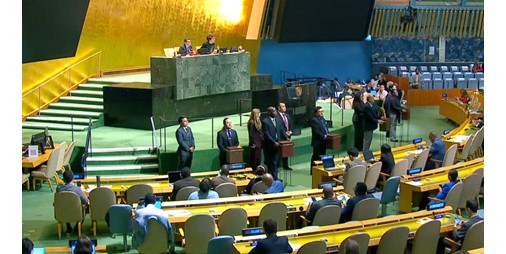
The United Nations General Assembly has elected 15 countries, including Kuwait, to the Human Rights Council for a three-year term starting January 1, 2024. Kuwait secured 173 votes during the secret ballot held among nations from the Asia-Pacific region, while Jordan received 171 votes. This marks Kuwait’s second consecutive term on the council.
Other newly elected countries include Nepal, Ukraine, the Democratic Republic of the Congo, Nigeria, Brazil, and Germany. Kuwait’s current term will end on December 31, 2023, transitioning seamlessly into its new term that lasts until the end of 2029.
Understanding the UN Human Rights Council
The Human Rights Council consists of 47 member countries, elected directly by the UN General Assembly through secret ballots. The council’s structure emphasizes equitable geographical distribution, with specific allocations: 13 seats for African nations, 13 for Asia-Pacific countries, 6 for Eastern European states, 8 for Latin American and Caribbean nations, and 7 for Western Europe and other regions. This framework aims to ensure a diverse representation of global perspectives on human rights issues.
Based in Geneva, the Human Rights Council serves as an intergovernmental body responsible for promoting and protecting human rights worldwide. Its mandate includes addressing human rights violations, discussing global human rights issues, and recommending effective strategies to combat abuses.
Kuwait’s Role in Promoting Human Rights
Kuwait’s re-election reflects its ongoing commitment to human rights and its active participation in international diplomacy. Officials from Kuwait have highlighted the importance of this council in overseeing and advocating for human rights on a global scale. The success in the recent election is seen as a reaffirmation of Kuwait’s efforts in contributing to international dialogues aimed at enhancing and protecting human dignity.
This new term will empower Kuwait to continue its initiatives, which may involve spearheading discussions on pressing human rights concerns, while also collaborating with other member states to foster greater respect and adherence to human rights norms. It also demonstrates Kuwait’s strategic role within the Asia-Pacific group, influencing regional policies on human rights matters.
Looking Ahead: Challenges and Opportunities
As Kuwait prepares for its new term on the Human Rights Council, the nation faces both opportunities and challenges. The council is expected to address numerous pressing issues, including the fight against discrimination, the protection of refugees, and responses to authoritarian practices observed in various regions. Kuwait will need to navigate these complexities while advocating for meaningful policies that uphold the principles of human rights.
Future discussions at the council are likely to involve critical dialogue on the ongoing impacts of international conflicts, social justice movements, and environmental issues relating to human rights. Observers will be watching closely to see how Kuwait will leverage its position to influence positive change in these areas and work collaboratively with other member states.
Ultimately, Kuwait’s election to the Human Rights Council is a significant development, highlighting its role in the global human rights landscape. As the new term begins, stakeholders will be keenly interested in the strategies and initiatives that Kuwait will pursue to advance human rights for all.