






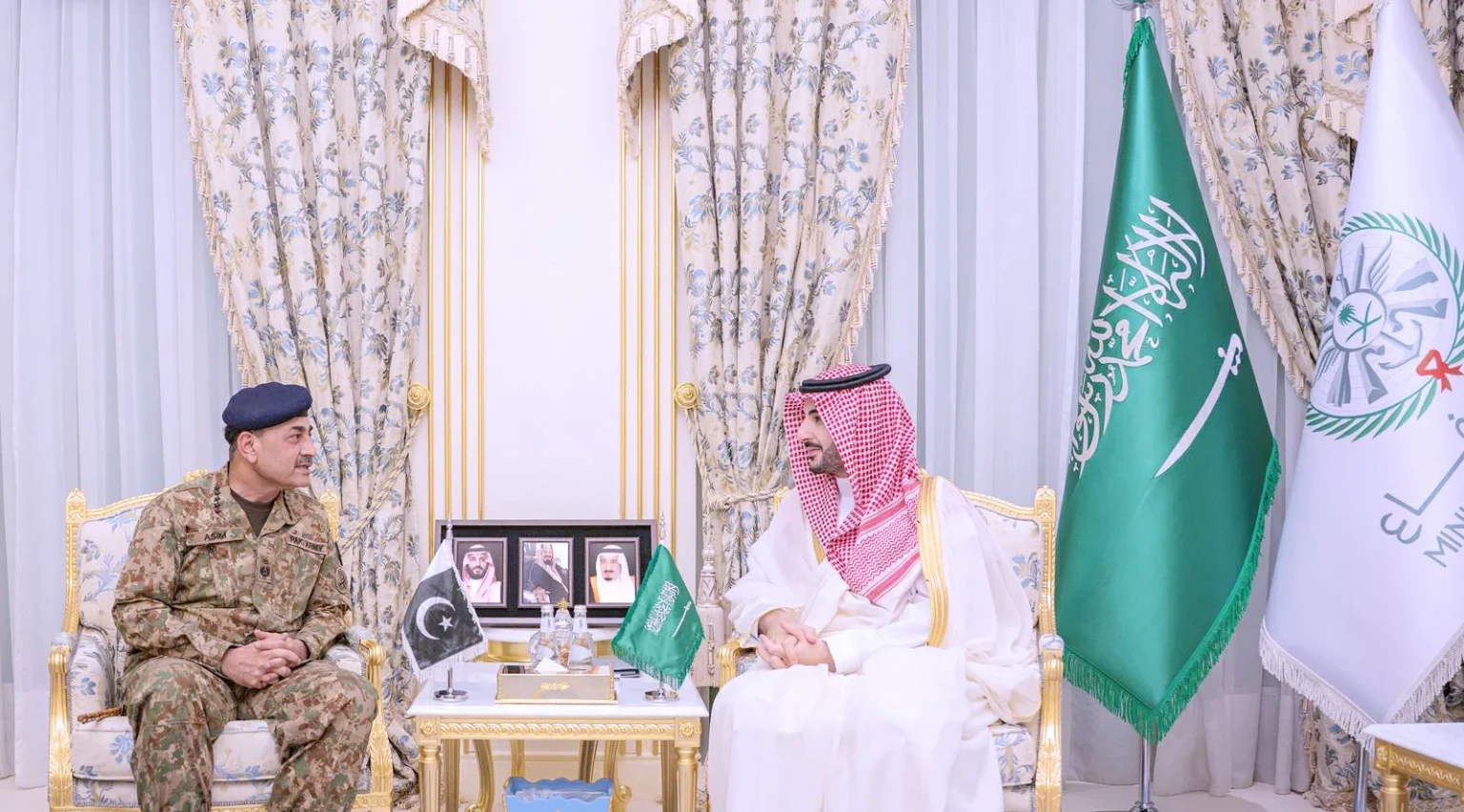

Minister of Defense of Saudi Arabia Discusses Joint Defense Against Attacks
In Riyadh, Saudi Minister of Defense Prince Khalid bin Salman bin Abdulaziz met with General Asim Munir, the Chief of Army Staff of Pakistan, to address the recent attacks targeting Mecca and other civil and economic facilities in the Kingdom. This meeting underscored their commitment to continued collaboration in countering such aggressions, which fall under the framework of the Joint Defense Agreement of Mecca.
Both sides praised the outcomes of the recent meeting of the chiefs of staff from the countries involved in the Mecca Joint Defense Agreement, emphasizing the importance of sustained coordination and joint efforts in combating these attacks.
Strategic Collaboration for Enhanced Security
The discussion between Prince Khalid and General Munir highlighted the pressing need for enhanced security measures in light of the recent attacks. These incidents have raised concerns not only in Saudi Arabia but also in the broader region regarding the protection of vital infrastructure and the safety of citizens.
Officials stated that the collaborative efforts aim to strengthen military cooperation through shared intelligence and strategic planning. This partnership is anticipated to bolster the regional defense capabilities in the face of evolving threats.
The meeting was attended by key officials, including the Minister of State and National Security Advisor Dr. Musaad bin Mohammed Al-Aiban, Chief of General Staff Lt. Gen. Fayyad Hamed Al-Ruwaili, and the Defense Minister’s advisor on intelligence issues, Hisham Abdulaziz bin Saif. The Pakistani delegation also included several high-ranking officials, signaling the significance of this bilateral engagement.
Responses to Growing Threats in the Region
The coordinated response to recent threats targeting Mecca reflects the broader regional context of escalating tensions. Observers highlight that attacks on significant locations such as Mecca not only risk the safety of residents but also threaten the spiritual significance of the sacred city. Hence, officials are actively seeking measures to prevent future occurrences and safeguard the integrity of crucial infrastructure.
In a statement following the meeting, officials indicated that intelligence sharing and tactical planning efforts will be key components of their ongoing collaboration. This is expected to create a proactive defense posture among the allied nations and enhance the effectiveness of their military operations.
Future Directions and Importance of Coordination
Looking ahead, the officials reiterated the necessity of continuous dialogue and cooperation among armed forces within the framework established by the Joint Defense Agreement of Mecca. The aim is to not only ensure immediate safety but to build long-term strategies that deter future conflicts.
With both nations committed to collaborating on defense matters, observers believe this could lead to a more stable and secure environment in the region. The next steps involve implementing the action points discussed during the meeting, with a focus on increasing joint military exercises and refining collective response protocols.
In conclusion, the ongoing partnership between Saudi Arabia and Pakistan is pivotal as they navigate the complexities of regional security dynamics. Stakeholders will be watching closely to see how these discussions materialize into concrete actions and what the implications will be for the broader security landscape in the Middle East.