







Government Initiatives to Enhance Public Services
In a significant move towards modernization, the government has revamped 150 services across 22 governmental agencies from January 15 to September 10, 2026. This effort aims to improve the quality of public services and enhance institutional performance efficiency. This article will delve into the various initiatives undertaken, emphasizing the modernization of government services and the integration of technological advancements.
Key Service Improvements and Innovations
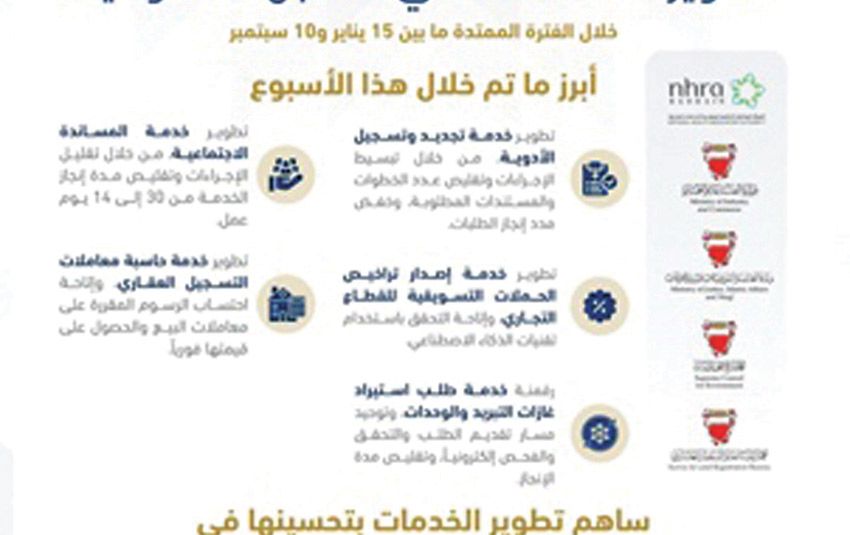
Among the most notable advancements is the enhancement of the drug registration and renewal process at the National Health Regulatory Authority. The new system simplifies procedures, reduces the number of required documents, and shortens processing times significantly. Additionally, the Ministry of Industry and Commerce has revamped its service for granting marketing campaign licenses using artificial intelligence, allowing for quicker verifications and approvals.
Moreover, the digitization of the import request for refrigeration gases and units at the Supreme Council for the Environment marks a substantial shift towards streamlined operations. This initiative consolidates the request, verification, and payment processes, enabling a more efficient user experience while reducing completion times. Furthermore, the efforts extend to the Ministry of Justice, Islamic Affairs, and Endowments, which has optimized social support services by decreasing procedures and speeding up processing from 30 to just 14 working days.
Significant Reduction in Procedures and Documentation
The development of these services reflects a commitment to improving user experience through increased accessibility and reduced bureaucratic hurdles. For instance, the implementation of a new calculator for real estate registration transactions at the Lands and Real Estate Registration Authority allows users to instantly calculate applicable fees. This not only improves service delivery but also promotes transparency within governmental processes.
Overall, service enhancements have resulted in a 100% transformation towards electronic service delivery. Agencies have collectively reduced service level agreements by a minimum of 25%, streamlined service requests to a maximum of four steps, and halved the documentation needed to access services. Additionally, there is a marked improvement in user experience, with simplified procedures and quicker access to vital information.
Technological Integration for Better Services
The shift towards electronic solutions has not only optimized the application process but has also allowed for the conversion of traditional application forms into electronic formats. This transition aligns with the government’s digital vision, emphasizing the uniformity of service information across all communication channels.
As part of the overarching strategy, substantial efforts have been made to enhance the interface and overall experience for users. Streamlining the application process fosters a more user-friendly environment, catering to the diverse needs of the public while ensuring that governmental services are accessed with ease and efficiency.
Future Prospects of Government Service Development
Continuous monitoring and feedback mechanisms will also be vital in assessing the efficacy of these developments, ensuring that the services not only adapt to current needs but also anticipate future demands. As the government forges ahead with this modernization agenda, stakeholders should watch for additional announcements and updates regarding service enhancements and technological integrations in the months to come.