






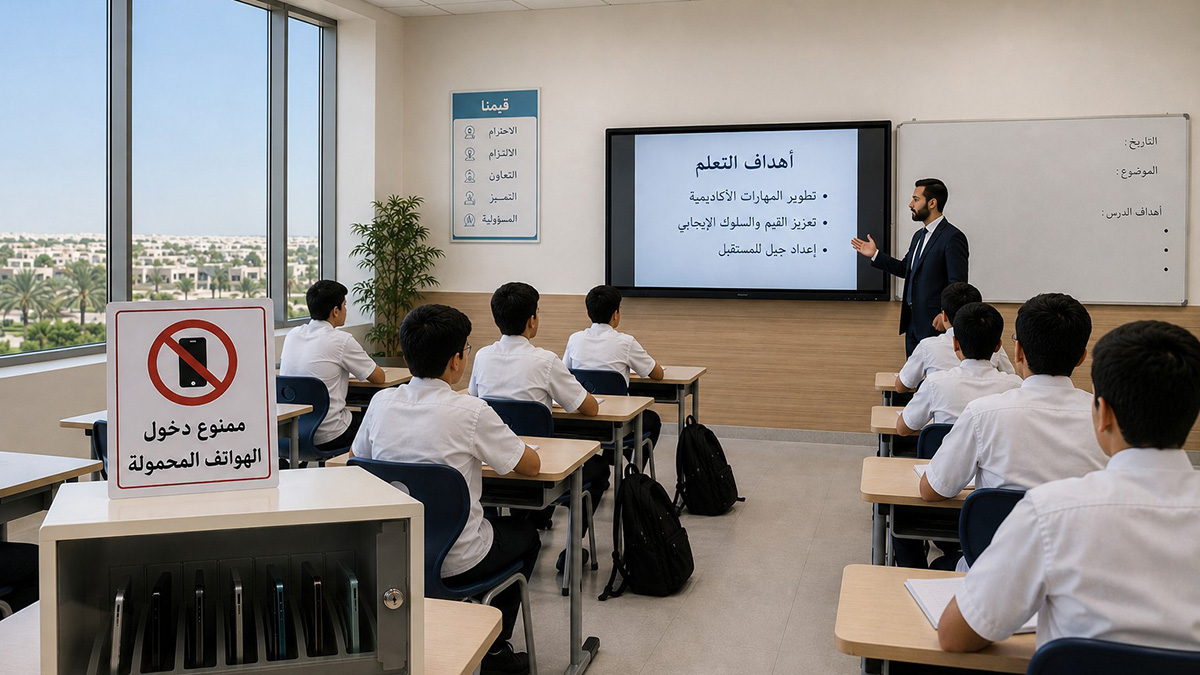

Schools Implement Strict Measures to Ensure Student Discipline
Public and private schools have activated a series of operational plans to ensure student discipline and regular attendance. Central to these efforts is the reinforced ban on mobile phones within the school environment, monitoring attendance for every class, and providing early notifications to parents. This initiative aims to improve learning outcomes and foster responsibility among students.
Attendance Regulations and Smartphone Ban
Since the commencement of the new school year, schools have communicated attendance regulations to students and their families through official messages. Officials emphasize that regular attendance is fundamental to continuous learning and academic achievement. Attendance is particularly monitored around weekends, holidays, and crucial periods such as pre-examination and the final weeks of the academic term.
Unexcused absences are limited to five days per semester and a maximum of 15 days per academic year. School directors have outlined six essential steps to enhance discipline and protect instructional time, with the prohibition of mobile phones being a key focus, as it represents a significant distraction for students.
Clear Processes for Managing Mobile Phone Usage
Dr. Michael Bartlett, the General Director of Dubai Modern Education School, stated that merely declaring that phones are prohibited is ineffective. There must be clear, coherent guidelines understood by students, parents, and teachers alike. The process of confiscation starts with documenting the violation, securing the device, informing the student and their guardian, and then returning the device according to established protocols. Repeated violations will have broader administrative consequences.
Ghadir Abushamth, the Principal of GEMS Gulf International School, noted that tightening restrictions on mobile devices does not eliminate technology from classrooms. Instead, it distinguishes personal usage from structured academic applications. Computers, tablets, and educational platforms remain vital as learning tools when used under teacher supervision and for specific academic purposes.
Monitoring Attendance to Prevent Absenteeism
Samer Sarhan, the Principal of Al-Maarifa School, stressed the importance of rigorous monitoring of mobile phones to prevent misuse. The school policies seek to safeguard students, encourage positive behavior, and create a secure educational atmosphere, free from activities that could disrupt the learning process. Non-educational use of phones will incur penalties as detailed in the school’s regulations, along with notifying the parents about the infractions.
Each phone confiscated from a student is subject to school policy, which may result in the device being held for a month on a first offense and potentially until the end of the school year for repetitive breaches. Monitoring attendance for each class offers administration immediate insight into student regularity, revealing absentee patterns before they develop into habitual behaviors that endanger academic performance.
Early Intervention Strategies for Student Behavior
As noted by educator Ribal Ghassan Al-Ata, teachers serve as the first line of observation in classrooms, tasked with recording attendance and ensuring compliance with device regulations. Successful implementation of these measures requires swift electronic processes that do not detract from instructional time. A centralized mechanism should manage observed issues after being reported.
The Student Affairs Official, Hana Yahya, emphasized a structured approach to managing chronic absenteeism and phone misuse, with procedures starting from documenting the behavior and notifying the family, transitioning to administrative intervention if necessary. Distinguishing between justified and unjustified absences is crucial to address intentional absenteeism or skipping classes effectively.
Looking Ahead: Updated School Schedule Set to Launch
The Ministry of Education has recently approved a comprehensive schedule for full-day attendance across educational stages, from kindergarten to higher grades. The new timetable will take effect next Monday, outlining class times, breaks, and the morning assembly. Schools have been given the flexibility to organize breaks while remaining consistent with the established start and finish times for each student level.
As educators implement these new attendance and discipline policies, the focus will remain on cultivating a constructive learning environment. Observers should anticipate how these measures influence student engagement and academic outcomes as the academic year progresses.