





Oasis of Innovation summer program concludes in Musandam Governorate
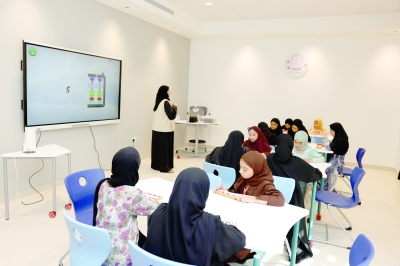
The Directorate General of Education in Musandam, through its Department of Scientific Innovation and Artificial Intelligence, recently concluded the summer program Oasis of Innovation at the Musandam Centre for Culture and Innovation. The multi-week program welcomed more than 100 students from across the governorate, aged 6 to 16, and focused on hands-on STEM education and emerging digital technologies.
The initiative aimed to combine theoretical knowledge with practical experience in robotics, artificial intelligence and other modern technologies to prepare students for future academic and career paths. Officials said the program prioritized active learning, teamwork and creativity to turn scientific curiosity into practical projects and solutions.
Program components and learning areas
The Oasis of Innovation schedule was divided to match different age groups, offering a range of modules designed for progressive skill development. Participants rotated through sessions in educational robotics, artificial intelligence, virtual reality and electronics, giving younger students foundational exposure while older students engaged in more complex tasks.
Additional modules included renewable energy, science experiments, engineering and design, and programming with micro:bit devices. The program also featured mental arithmetic training, drone flight exercises and applied workshops using several types of educational robots, according to organizers.
Teaching methods and facilities
Organizers emphasized an experiential approach that blended guided instruction with project-based work. Therefore, students were encouraged to identify problems, prototype solutions and collaborate on group projects that connected scientific concepts to everyday life.
The Musandam Centre for Culture and Innovation provided an integrated learning environment with dedicated rooms for virtual reality, robotics, innovation and renewable energy. Furthermore, the facility’s equipment and layout were intended to support practical, interactive lessons rather than lecture-style teaching, officials said.
Impact on students and talent development
Program leaders said one of the key objectives was to foster an innovation culture among young learners and to discover students with aptitude in scientific and technical fields. Dr. Adhari bint Masoud Al-Shihi, head of the Innovation and Science Olympiad Section at the department, noted that the initiative sought to channel curiosity into viable projects and to guide talented students toward national programs and science competitions.
Students reported measurable changes in interest and confidence. One participant described learning new skills in robotics programming and collaborative experimentation, and said the problem-solving emphasis increased her confidence and interest in science and engineering. Another student highlighted exposure to different educational robots, virtual reality technologies and drones, adding that the group project work strengthened his desire to pursue robotics and programming competitions.
Community response and educational context
Officials interpreted the strong turnout as an indicator of growing parental interest in scientific and technical education. The program aligns with broader educational priorities that encourage STEM education at early ages and emphasize digital literacy, computational thinking and creative problem solving.
Education specialists say such regional programs can play a role in diversifying future talent pipelines, particularly when they are connected to national competitions and longer-term mentorship opportunities. Therefore, the initiative’s emphasis on identifying and nurturing gifted students aims to create pathways into formal science olympiads and specialized training.
Next steps and what to watch
According to the Directorate General of Education in Musandam, follow-up activities will include identifying students for further support and guiding selected participants toward national programs and competitions. Families and educators should expect subsequent workshops, mentorship opportunities or trial events to help prepare students for higher levels of scientific and technological challenge.
Meanwhile, observers should watch for announcements from the Musandam Centre for Culture and Innovation about expanded programming or partnerships that could broaden access to similar STEM experiences. The report indicates that local demand may prompt additional sessions or targeted talent development tracks in coming months.
Oasis of Innovation and the broader education landscape
Programs such as Oasis of Innovation contribute to a regional shift toward hands-on, technology-driven learning models that supplement classroom curricula. Furthermore, the integration of robotics and artificial intelligence into youth education helps students develop transferable skills in problem solving, coding and systems thinking.
As schools and education authorities consider scalable models, officials said lessons from this summer program will inform future design choices, including age-appropriate sequencing, facility needs and links to national STEM initiatives. Therefore, the long-term value of these programs depends on sustained investment and coordination with broader educational goals.
Conclusion and outlook
The Oasis of Innovation summer program in Musandam provided practical STEM exposure to more than 100 students and created a framework for identifying emerging talent in science and technology. Organizers plan to follow up with selected students and to integrate successful elements into future activities, according to official statements.
Stakeholders and families should watch for details on next training cycles, mentorship placements and preparations for national competitions, which will indicate how regional efforts are feeding into the country’s larger STEM ecosystem. Continued monitoring will show whether the initiative leads to sustained participation and measurable advancement in student competencies.