






Integrated Water Resources Planning training launched in Bahrain
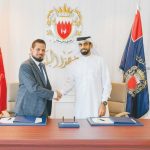
The Supreme Council for the Environment has launched a four-month training program on Integrated Water Resources Planning for Bahraini specialists, aiming to strengthen national water security and climate resilience. The program, supported by the Green Climate Fund and delivered with Gulf University, runs until 12 November and includes 20 early- to mid-career engineers and specialists from government agencies.
The course brings together institutional partners to build practical capacity in water management, according to officials. Trainers from Gulf University will lead technical modules designed to improve decision making under climate change and growing water demand.
Integrated Water Resources Planning: program design and participants
The training titled “Integrated Planning and Management of Water Resources” targets promising Bahraini professionals in administrative and technical roles. Twenty trainees were selected from multiple government entities to participate in a cohort-based curriculum delivered by six university instructors, the Supreme Council for the Environment stated.
The program schedule spans four months and emphasizes hands-on learning, practical modeling, and teamwork. Therefore, participants will work in groups on a comprehensive case study that mirrors national water sector challenges, with milestones for data collection, dynamic modeling, scenario development, and policy-oriented presentations.
Curriculum highlights and decision support tools
Program modules focus on modern analytical and decision support tools used in Integrated Water Resources Planning. Topics include system modeling and simulation, linear programming, neural networks, and probabilistic methods such as Monte Carlo simulation to assess uncertainty, according to the lead trainers.
Additionally, trainees will explore the application of emerging technologies — including artificial intelligence, blockchain, the Internet of Things, cybersecurity measures, and geographic information systems combined with AI — to improve monitoring, forecasting, and resource allocation. These tools are presented as practical ways to translate scientific analysis into actionable policy and operational decisions.
Institutional collaboration and policy relevance
Officials emphasized the importance of institutional integration among the Supreme Council for the Environment, the Permanent Technical Advisory Committee of the Water Resources Council, and other water sector stakeholders. Engineer Leila Ali Sbeil, Director of Climate Change and Sustainable Development at the Supreme Council for the Environment, said integrated approaches are essential for sustainable water management in Bahrain.
She noted that integrated planning strengthens environmental sustainability and supports national water security by using modern scientific tools to guide policy. During the program, participants will learn to quantify trade-offs between water, energy, food, and environmental objectives and to assess how policies affect supply-demand balances under different climate scenarios.
Practical exercises and applied research emphasis
The training is purposely practical: participants will form teams to develop an integrated case study from initial data gathering through to presenting justifiable solutions. Trainers require teams to demonstrate the full planning cycle, including dynamic modeling, scenario analysis, and stakeholder-oriented recommendations.
According to Dr. Waleed Khalil Zubari, professor of water resources at Gulf University and the program’s lead instructor, the initiative aims to prepare the next generation of water sector leaders. He explained that graduates should be able to model interdependencies among water, energy, food, and environment sectors and to propose effective interventions that balance supply and demand.
Implications for water security and climate adaptation
By embedding Integrated Water Resources Planning skills across government agencies, the program seeks to improve the resilience of Bahrain’s water systems to climate-related stressors. The curriculum’s focus on scenario-building and probabilistic modeling helps officials anticipate future pressures and design adaptive policies, analysts say.
Furthermore, the integration of advanced technologies such as GIS-AI and IoT-enabled monitoring can enhance real-time management and long-term planning, thereby reducing operational risks and supporting more cost-effective infrastructure and policy choices. Consequently, better-trained professionals are expected to contribute to more informed, evidence-based policy making across the water sector.
Secondary skills and capacity building
Aside from technical modeling, the course develops practical skills in teamwork, communication, and policy justification. Participants will present their findings to peers and instructors, building capacity to defend decisions and to translate technical results into policy briefs for senior officials.
Training organizers highlighted the role of applied research in linking academic methods to operational needs. The partnership with Gulf University is designed to support applied studies that can be scaled or adapted by government agencies after the program concludes.
Next steps and what to watch
The program will conclude on 12 November, when teams will present final case studies and recommendations to faculty and institutional partners. Observers should watch for follow-up measures, including whether participants are integrated into strategic planning roles, whether pilot projects adopt techniques learned in the course, and whether the training leads to broader institutional reforms in water governance.
Officials indicated that continued collaboration among the Supreme Council for the Environment, the Permanent Technical Advisory Committee of the Water Resources Council, and academic partners will be necessary to sustain gains. In the coming months, stakeholders will likely assess training outcomes and consider scaling similar capacity-building efforts to maintain progress on water security and climate adaptation.