






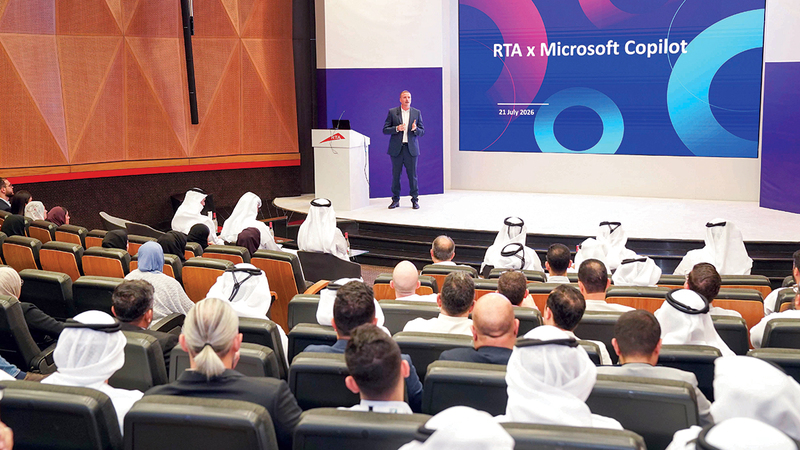

Microsoft 365 Copilot showcased at Dubai RTA AI event
The Roads and Transport Authority (RTA) in Dubai organized an event on modern technologies showcasing Microsoft 365 Copilot as part of its AI implementation strategy. Held recently at RTA premises and led by the AI and Data Science Center in the Institutional Technical Support Sector, the session introduced the digital assistant and related tools to senior leaders and staff. The initiative aligns with Dubai government plans to adopt generative AI to support institutional productivity and innovation.
Event overview and participants
The event was organized in collaboration with Microsoft and included representatives from multiple RTA departments. Officials said the program aimed to familiarize employees with the capabilities of an AI assistant within the Microsoft ecosystem and demonstrate practical workflows that integrate Copilot into everyday tasks. Attendees included sector heads, IT personnel, and business-unit staff who participated in live demonstrations and interactive sessions.
According to the authority, the activities formed part of ongoing efforts to implement AI across diverse business needs, from document preparation to decision support. Meanwhile, the AI and Data Science Center highlighted that the sessions were designed to translate strategy into operational use cases that can be adopted across RTA’s service and administrative functions.
Generative AI use cases and institutional benefits
Presentations focused on how generative AI tools can act as a smart partner for employees and managers, improving task efficiency and quality of institutional outputs. Demonstrators showed examples of automated report drafting, meeting summarization, data analysis assistance, and streamlined internal communications using Microsoft 365 Copilot.
Furthermore, officials explained that integrating the digital assistant into Microsoft 365 can speed up routine procedures, enhance document consistency, and support faster decision-making. The event emphasized that these benefits can translate into higher operational efficiency and improved service delivery for customers, according to RTA statements.
Practical demonstrations and training sessions
Interactive sessions allowed participants to use Copilot within common workplace scenarios, such as preparing policy briefings, extracting insights from datasets, and drafting stakeholder communications. Trainers guided employees on prompt design, verification of AI outputs, and blending AI-generated content with expert review to maintain accuracy.
In addition, the program included scenario-based exercises that demonstrated how generative AI can augment rather than replace human judgment. The authority noted that hands-on exposure helps staff understand practical constraints and determines where AI can add the most value in their daily workstreams.
Data governance, security and responsible use
Organizers underscored the importance of secure and responsible AI deployment, stating that governance frameworks and information security were central topics. Sessions addressed data protection, access controls, and alignment with RTA’s institutional policies to ensure compliance with regulatory requirements.
Speakers highlighted that any use of Microsoft 365 Copilot must be governed by clear procedures to prevent unwanted data exposure and to ensure model outputs are validated. Officials stressed that integrating generative AI requires a balanced approach that preserves data privacy while enabling innovation.
Technology integration and change management
RTA officials outlined steps for integrating the AI assistant into existing collaboration platforms and business processes, including pilot rollouts, user training pathways, and feedback loops for continuous improvement. The authority described the initiative as part of a broader digital transformation plan that couples technical deployment with organizational change management.
Therefore, the strategy includes establishing best practices for usage, escalation procedures for ambiguous outputs, and mechanisms to measure productivity gains. The approach is intended to bridge technical capability with institutional readiness and to cultivate a culture of responsible innovation.
Implications for Dubai’s AI strategy
The event reflects Dubai’s wider embrace of generative AI as a supporting tool for public and private sector modernization. Observers noted that practical demonstrations like this one help translate high-level AI policy into operational realities that can be evaluated and scaled. According to officials, adopting tools such as Microsoft 365 Copilot is consistent with government efforts to cultivate AI skills and to support future-facing industries.
Moreover, the RTA initiative contributes to a public-sector precedent for measured adoption, blending technology pilots with governance safeguards. This model may inform other government entities considering similar deployments and help define sector-specific requirements for safe AI use.
Next steps and expected timeline
RTA indicated that follow-up activities will include expanded pilot programs, training curricula for wider staff cohorts, and evaluation metrics to assess productivity improvements. Officials suggested that the authority will monitor pilot outcomes and iterate on governance controls before broader adoption.
Stakeholders should watch for announcements on phased rollouts and additional training workshops in the coming months as the authority refines its AI implementation plan. The timeline for scaling Copilot-enabled workflows will depend on pilot results and compliance with security reviews.
Conclusion and what to watch
The RTA’s event showcased how Microsoft 365 Copilot and related generative AI tools can support institutional work processes while stressing governance and human oversight. As officials continue to pilot integrations and measure impact, observers should look for published results on efficiency gains, security safeguards, and staff adoption rates. Meanwhile, further workshops and pilot expansions are expected in the near term as the authority advances its AI strategy.