







UAE national scholarship program expands intake as 244 students begin studies abroad
The UAE national scholarship program recorded 2,767 applications in 2026 and awarded 244 new scholarships this year, the Ministry of Higher Education and Scientific Research said. According to the ministry, the intake raises the total number of current scholars to 596, who are studying at leading institutions across 22 countries. The ministry also reported 116 graduates from the program so far this year.
Program intake, destinations and early outcomes
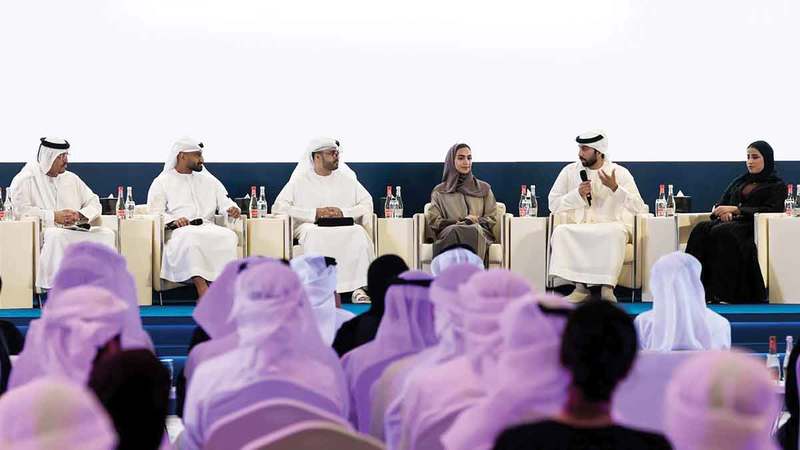
The ministry held an orientation forum for new scholars under the theme “From the UAE to the world: Determination and Ambition” to prepare students for study abroad and to outline the support services provided. Officials said the event aims to strengthen students’ academic and personal readiness and to ensure they represent the UAE effectively in international settings. The forum included briefings on administrative assistance, cultural acclimation and academic expectations.
Officials provided data showing scholars are distributed across a diverse range of host countries and academic environments. The ministry stated that the 596 continuing scholars are enrolled in programs spanning 22 countries, while 116 students have completed their programs and returned or graduated since the start of the year. These figures were presented as indicators of the program’s continuity and contribution to national capacity building.
How the national scholarship program aligns with national priorities
Undersecretary Ahmed Sultan Al-Shaibi told Emirates Today that recent reforms to the scholarship system emphasize alignment between scholarship outputs and national development objectives. The updates are intended to direct the UAE national scholarship program toward priority fields and to provide integrated support that enables scholars to focus on academic excellence and practical readiness. The ministry said the goal is to prepare a workforce equipped for strategic sectors and future challenges.
Rashid Al Kaabi, director of International Education Support and Scholarships, said the ministry is strengthening partnerships with public and private employers to improve graduate employability. He noted that the ministry has signed agreements with 11 national entities to reserve 160 scholarship slots in priority areas. These arrangements are meant to bridge international education and the domestic labor market, supporting a smoother transition from study to career.
Student choices reflect strategic specializations and global study trends
Scholar testimonials highlight a focus on fields tied to economic transformation. Omar Mohammed Al Housani, studying financial technology at the University of Sydney, said he chose fintech to combine his interest in technology and finance and to contribute to the UAE’s digital economy. Students said host-country environments offer exposure to advanced research and practical applications that can be adapted to the UAE context.
Other scholars include Hassan Ahmed Al Shehhi, who is pursuing aerospace engineering in Australia, and Khalid Mohammed Al Manhali, who is studying artificial intelligence in the United States. Ghaia Khalid Al Saadi is enrolled in mechanical engineering in Australia. Their statements, shared with Emirates Today, emphasized hands-on training, laboratory access and engagement with international experts as key benefits of overseas study. These personal accounts illustrate the program’s focus on engineering, technology, life sciences and related management fields.
Fields of study and sector relevance
The ministry highlighted priority disciplines: engineering and technology, social sciences and management, medicine and life sciences. Officials said these areas were chosen to address projected national needs and to support sectors identified in long-term economic plans. The selection process and scholarship allocations are designed to promote sector readiness and to supply qualified nationals for strategic roles.
New scholarship framework and support services
The ministry recently approved an updated scholarship framework intended to enhance the quality of the student experience from acceptance through graduation and return. The revised system, aligned with federal higher education and research legislation, focuses on directing scholarships to priority specializations, improving academic quality, and expanding administrative and social support for scholars abroad. The ministry described the framework as a comprehensive approach that accompanies students through their academic cycle.
Support measures announced include pre-departure orientation, ongoing academic monitoring, mental health and wellbeing resources, and reintegration guidance to facilitate graduates’ contribution to national development. Officials stressed that enhanced follow-up and employer linkages are critical to translating international qualifications into domestic impact.
Implications for higher education and the labor market
Education officials and analysts say the expansion and targeting of the scholarship program aim to strengthen the pipeline of national talent in advanced fields. By coordinating scholarship placements with employer demand and national priorities, the program seeks to reduce skills gaps in future sectors and to accelerate the absorptive capacity of the UAE labor market. Furthermore, international exposure is expected to broaden scholars’ perspectives and support innovation when they return.
At the same time, the ministry acknowledged the need for continued monitoring of outcomes, including graduate employment rates and sectoral impact, to ensure the program’s strategic value. The ministry indicated that partnerships with employers and academic institutions will be a focal point for measuring success.
What to watch next
Observers should watch for the implementation timeline of the new scholarship framework and the outcomes of the agreements with national entities that reserve 160 scholarship places. The ministry said it will continue to report on program metrics, including graduation rates, employment outcomes and sectoral placement, to demonstrate alignment with development targets. Additionally, follow-up reports on the experiences of scholars abroad will provide insight into how international education contributes to national competitiveness.
Overall, the UAE national scholarship program is being positioned as a strategic instrument to prepare skilled nationals for priority sectors and to support the country’s economic and social objectives. Officials said the next phases will emphasize quality assurance, employer engagement and measurable contributions to the national workforce.