






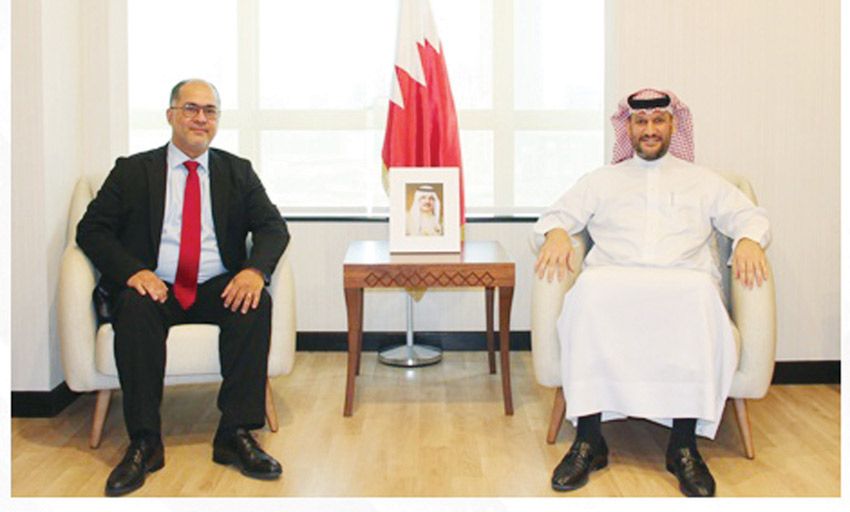

Bahrain Philippines anti-trafficking cooperation advances in recent meeting
Officials said Nebras Talib, Executive President of the Labour Market Regulatory Authority (LMRA), recently received Guines Jaime Ricardo Dacanay Gliyaga, Ambassador of the Republic of the Philippines to the Kingdom of Bahrain, to discuss Bahrain Philippines anti-trafficking cooperation. The meeting, held in Manama, focused on strengthening collaboration on labor market regulation and protecting migrant workers, according to official statements.
Details of the Bilateral Discussion
During the meeting, both sides reviewed mechanisms for referring and protecting potential victims of human trafficking and improving oversight of recruitment and employment practices. Furthermore, they emphasized coordinated action between Bahrain’s LMRA and the Philippine embassy to address vulnerabilities in the labor supply chain that can contribute to trafficking and labor exploitation.
Officials highlighted the role of the National Committee to Combat Trafficking in Persons and the Philippine diplomatic mission in ensuring timely case handling and victim support. Additionally, the parties discussed information-sharing protocols and the importance of consistent communication to expedite investigations and repatriation when necessary.
Policy Measures on Labor Market Regulation and Protection
Lebras Talib and Ambassador Dacanay explored concrete policy measures to enhance labor market regulation, including joint training for consular staff and LMRA inspectors, and refinement of complaint referral pathways. The conversations, according to sources, aimed to align enforcement actions with international standards and with existing bilateral agreements that govern labor recruitment.
Furthermore, they discussed strengthening pre-departure orientation and employer verification processes to reduce the risk of deceptive recruitment. Officials noted that improved labor market regulation can reduce gaps that traffickers exploit, while also facilitating legal, transparent migration channels for Filipino workers in Bahrain.
Implications for Migrant Worker Safeguards
The meeting underscored shared responsibility for safeguarding migrant workers, many of whom are Filipino nationals employed across Bahrain’s private and domestic sectors. Human trafficking and worker exploitation remain concerns in cross-border labor migration, and both sides pledged to advance protective measures focused on prevention, protection, and prosecution.
In practice, this may translate into more robust monitoring of recruitment agencies, faster processing of abuse complaints, and expanded access to medical, legal and psychosocial services for victims. According to participants, these steps are intended to increase trust among migrant communities and reduce irregular practices that lead to exploitation.
Bilateral Relations and Diplomatic Coordination
The exchange reflects broader efforts to deepen bilateral relations between Bahrain and the Philippines in labor and social protection spheres. Meanwhile, diplomatic coordination is expected to support ongoing labor market reform initiatives in Bahrain and respond to migration-related challenges affecting Filipino nationals.
Officials said regular high-level dialogues and technical working groups can help institutionalize the cooperation and ensure follow-through on agreed actions. Therefore, the meeting is being seen as part of a continuing process to professionalize consular assistance and to align enforcement priorities on both sides.
Context and Relevant Frameworks
Bahrain’s LMRA operates under national labor laws and international obligations to protect migrant workers, while the Philippine government maintains regulatory frameworks governing overseas employment and consular protection. The National Committee to Combat Trafficking in Persons coordinates multi-agency responses domestically, and embassy channels manage casework involving nationals abroad.
Given this context, experts say collaboration that links labor market regulation with diplomatic protection can enhance the overall response to human trafficking. Additionally, practical measures—such as shared databases and joint training—can increase the speed and effectiveness of interventions.
Expected Next Steps and Monitoring
Officials indicated that follow-up actions would likely include technical meetings to draft operational protocols and timelines for implementation. Furthermore, both parties plan to schedule joint workshops to train frontline staff on victim identification and referral procedures, according to the statements released after the meeting.
Stakeholders should watch for announcements about memoranda of understanding or working-level agreements that formalize the cooperation. Meanwhile, monitoring mechanisms and periodic reviews are expected to measure progress and adapt measures as needed.
What This Means for Stakeholders
For Filipino workers in Bahrain, enhanced cooperation between Bahrain and the Philippines could mean clearer complaint avenues and stronger protection against exploitation. Employers and recruitment agencies may face more stringent oversight, while civil society organizations could gain improved access to coordination channels for assisting victims of trafficking.
Moreover, labor-sending and receiving institutions can use data-driven insights from collaborative efforts to target prevention campaigns and to refine recruitment standards. Therefore, effective implementation of agreed steps will be critical to translating commitments into measurable improvements.
Conclusion and Outlook
The recent meeting between the LMRA executive and the Philippine ambassador demonstrates a mutual commitment to Bahrain Philippines anti-trafficking cooperation and to reinforcing labor market regulation. Going forward, observers should expect detailed technical planning, capacity-building activities, and potential formal agreements within the coming months.
Ultimately, progress will depend on sustained diplomatic engagement, transparent monitoring, and the willingness of both governments to prioritize victim-centered policies. Readers should watch for official updates on timelines and the publication of any joint protocols that institutionalize the cooperation.