






Strategic research projects open for registration in Oman
The Research Council and the Environment Authority announced the opening of registration for strategic research projects in Oman, with applications accepted until 14 June. The call invites proposals focused on priority environmental challenges, including invasive species, mesquite tree management and methods to monitor and combat the Dhofar stem borer.
Officials said the joint initiative seeks applied research that produces implementable tools and evidence to support policy and on-the-ground management. The announcement sets clear thematic priorities and encourages interdisciplinary teams and technological solutions.
Strategic research projects priorities in Oman
The programme’s stated priorities concentrate on three areas: control of invasive birds, innovative management of the mesquite tree, and integrated approaches to the Dhofar stem borer. According to the Environment Authority, these topics reflect pressing ecological and socio-economic impacts across several governorates.
Registration for strategic research projects is intended to attract studies that combine field surveys, laboratory work and technological applications such as artificial intelligence and remote sensing. Furthermore, officials emphasized the need for cost‑effective, scalable interventions that can be sustained by local agencies.
Invasive birds: scope, methods and research needs
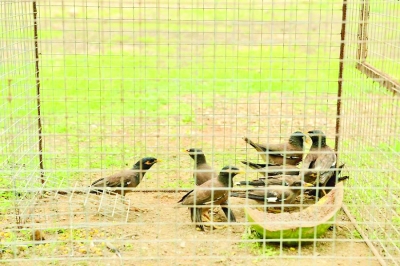
Invasive species, particularly non-native birds, are listed among the key environmental threats cited by the authorities because of their rapid reproduction and competition with native wildlife. The Indian house crow and the common myna are noted as especially adaptable species that have expanded in urban and peri-urban areas.
Since December 2022, the Environment Authority has run a national campaign to map distribution and study the behaviour and impacts of these birds, officials said. Campaign measures—such as targeted culling with air weapons, trapping, baiting, isolated feeding stations and nest interventions—have been tested and, the authority reports, have contributed to reducing numbers by more than 1.5 million birds over the last five years.
Researchers are encouraged to propose sustainable, species-specific solutions. Suggested research avenues include ecological biological control, species-targeted chemical agents, genetic approaches where appropriate and ethical, and AI-driven monitoring and nest-detection technologies. The programme seeks proposals that assess risks, regulatory considerations and ethical implications alongside effectiveness.
Mesquite tree management and restoration opportunities
The mesquite tree is identified as one of the most harmful invasive plants in Oman, contributing to rangeland degradation and altering native plant communities. The Environment Authority described mesquite as fast-growing, highly competitive and often unpalatable or toxic to livestock, which exacerbates pasture decline.
Research proposals should evaluate integrated management techniques that limit ecological damage while exploring potential economic uses of mesquite biomass. Officials said studies assessing biological control agents, mechanical removal strategies, ecosystem restoration approaches and feasibility of converting mesquite into sustainable resources will be prioritized.
Applicants are encouraged to include cost‑benefit analyses and community engagement plans that consider pastoral livelihoods and biodiversity recovery. Additionally, proposals that pilot restoration of native vegetation after mesquite removal will receive special consideration.
Dhofar stem borer: data gaps and integrated management
The insect known locally as the Dhofar stem borer poses an increasing threat to perennial trees and culturally important species in Dhofar, including wild fig, frankincense and other native trees. Authorities report rising incidence in mountainous and rural sites, with affected trees showing dieback, branch drying and, in some cases, mortality.
However, the scope and dynamics of the problem remain poorly quantified. The Environment Authority noted the absence of a comprehensive field database documenting tree populations, infestation rates, mortality statistics and environmental drivers. Consequently, the call for strategic research projects highlights the need for baseline surveys, long-term monitoring and spatial mapping of infestations.
Priority research should aim to identify host species most at risk, determine climatic and ecological factors linked to outbreaks, and validate early-detection indicators. Proposals that develop or test integrated pest management packages—combining biological, mechanical, chemical and habitat-management measures while minimizing non-target impacts—are particularly relevant.
Program process, expected outcomes and next steps
Applicants must submit proposals by the 14 June deadline and align project objectives with the stated priorities, the Research Council said. Review criteria will include scientific rigor, scalability, sustainability, stakeholder engagement and potential to inform policy or management practices.
Expected outcomes include validated monitoring tools, evidence-based control methods, economic assessments and pilot interventions that can be adopted by local agencies. Furthermore, the programme seeks to foster partnerships between academic institutions, government bodies and community stakeholders to ensure practical uptake.
Researchers and practitioners should watch for the announcement of funded projects and dissemination of interim findings; officials indicated phased implementation and follow-up evaluation will be part of the programme design.
Context and recent national research recognition
The call complements ongoing national efforts to strengthen environmental research capacity. Last year’s National Research Award included recognition of applied work in environmental analysis, with a winning study on a paper-based analytical device for phenolic content in olive oil by a Sultan Qaboos University researcher, the authorities noted.
Such recognition underscores the emphasis on practical, low-cost technologies that can be deployed in field and laboratory settings. Therefore, submissions to the strategic research projects programme that combine innovation with real-world applicability are likely to be competitive.
Conclusion and what to watch next
The joint call for strategic research projects sets a focused research agenda addressing invasive species, mesquite tree impacts and the Dhofar stem borer. Interested teams should submit full proposals by 14 June and design work that produces implementable outcomes, officials said.
Stakeholders should monitor announcements on funded projects, pilot results and any recommended policy actions. Continued reporting and data-sharing will be important to evaluate progress and inform long-term environmental management across Oman.