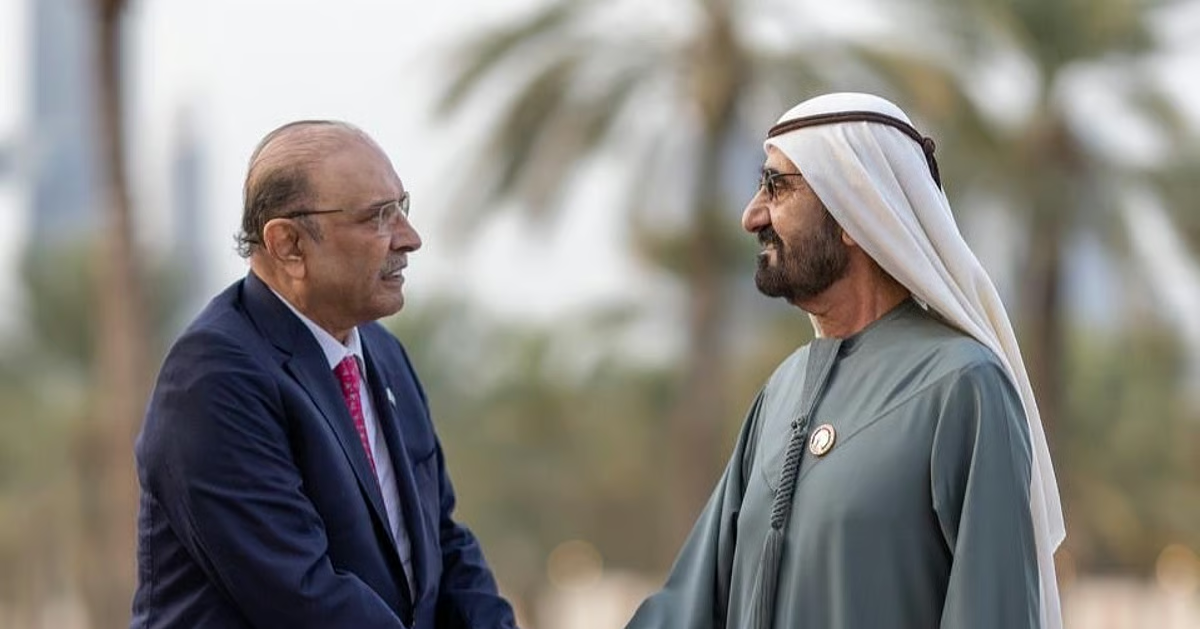

Dubai’s leadership convened a high-level meeting this week to discuss and refine strategies for economic development and financial stability within the emirate. The meeting, attended by Sheikh Hamdan bin Mohammed bin Rashid Al Maktoum and Sheikh Maktoum bin Mohammed bin Rashid Al Maktoum, focused on bolstering Dubai’s economy and ensuring its continued growth amidst global economic shifts. Discussions centered on fiscal policy, investment opportunities, and diversification efforts.
The meeting took place in Dubai earlier this week, with both Sheikh Hamdan, Crown Prince of Dubai, and Sheikh Maktoum, First Deputy Ruler of Dubai, participating. Both Sheikhs hold key ministerial positions – Defence and Finance respectively – underscoring the strategic importance of the discussions. Details released by the Dubai Media Office indicate a comprehensive review of current economic performance and future projections.
Strengthening Dubai’s Economy: Key Focus Areas
The primary objective of the meeting was to assess the current health of Dubai’s economy and to formulate plans for sustained expansion. According to reports, a significant portion of the discussion revolved around attracting foreign direct investment (FDI) and fostering a business-friendly environment. This aligns with the UAE’s broader national strategy to reduce reliance on oil revenue and diversify its economic base.
Fiscal Policy and Budgetary Planning
Sheikh Maktoum bin Mohammed, as Minister of Finance, led discussions on optimizing fiscal policy to support economic growth. The ministry said that maintaining fiscal discipline while investing in key sectors remains a priority. This includes careful management of government spending and exploring new revenue streams.
Additionally, the meeting addressed the importance of prudent debt management. The UAE government has historically maintained a conservative approach to borrowing, and this commitment appears to be continuing. This approach is seen as crucial for maintaining investor confidence and ensuring long-term financial stability.
Diversification and Sectoral Growth
Diversification remains a cornerstone of Dubai’s economic strategy. The emirate is actively seeking to expand its presence in sectors such as tourism, technology, and logistics. The meeting reportedly explored opportunities to further develop these industries and attract innovative companies.
However, the real estate sector, a traditional pillar of Dubai’s economy, also received attention. While acknowledging recent market fluctuations, officials expressed confidence in the long-term prospects of the sector, particularly with ongoing infrastructure projects and population growth. The focus is on sustainable development and avoiding the boom-and-bust cycles of the past.
Investment and Infrastructure
Investment in infrastructure continues to be a key driver of economic growth in Dubai. Ongoing projects, such as the expansion of Al Maktoum International Airport and the development of new transportation networks, are expected to create jobs and stimulate economic activity. The meeting likely reviewed the progress of these projects and discussed potential future investments.
Meanwhile, the leadership emphasized the importance of attracting private sector investment to complement government spending. Public-private partnerships (PPPs) are increasingly being utilized to finance infrastructure projects and leverage private sector expertise. This approach is seen as a way to accelerate development and share risk.
Implications for Business and Investment
The outcomes of this meeting signal a continued commitment to proactive economic management in Dubai. Businesses operating in the emirate can anticipate a stable and supportive regulatory environment. The focus on diversification and innovation suggests opportunities for companies in emerging sectors.
In contrast to some global economies facing recessionary pressures, Dubai appears determined to maintain its growth trajectory. The emphasis on fiscal discipline and strategic investment is intended to mitigate risks and ensure long-term sustainability. This proactive approach could further enhance Dubai’s attractiveness as a regional hub for business and finance.
The meeting also underscored the importance of financial technology (FinTech) and its role in modernizing the financial sector. Dubai has actively sought to become a global FinTech hub, and the leadership’s support for this sector is expected to continue. This includes initiatives to attract FinTech companies and promote innovation in financial services.
Furthermore, the discussions likely touched upon the impact of global economic trends, such as rising interest rates and geopolitical instability. Officials are reportedly monitoring these developments closely and preparing contingency plans to address potential challenges. Maintaining economic resilience is a key priority.
Looking ahead, the Executive Council of Dubai is expected to release more detailed plans and initiatives stemming from the meeting in the coming weeks. A comprehensive budget for the next fiscal year will likely reflect the priorities discussed, with a particular emphasis on diversification and sustainable growth. The implementation of these plans and their effectiveness in navigating the evolving global economic landscape will be crucial to watch in the coming months. The next key indicator will be the release of Q3 economic performance data, expected in November.