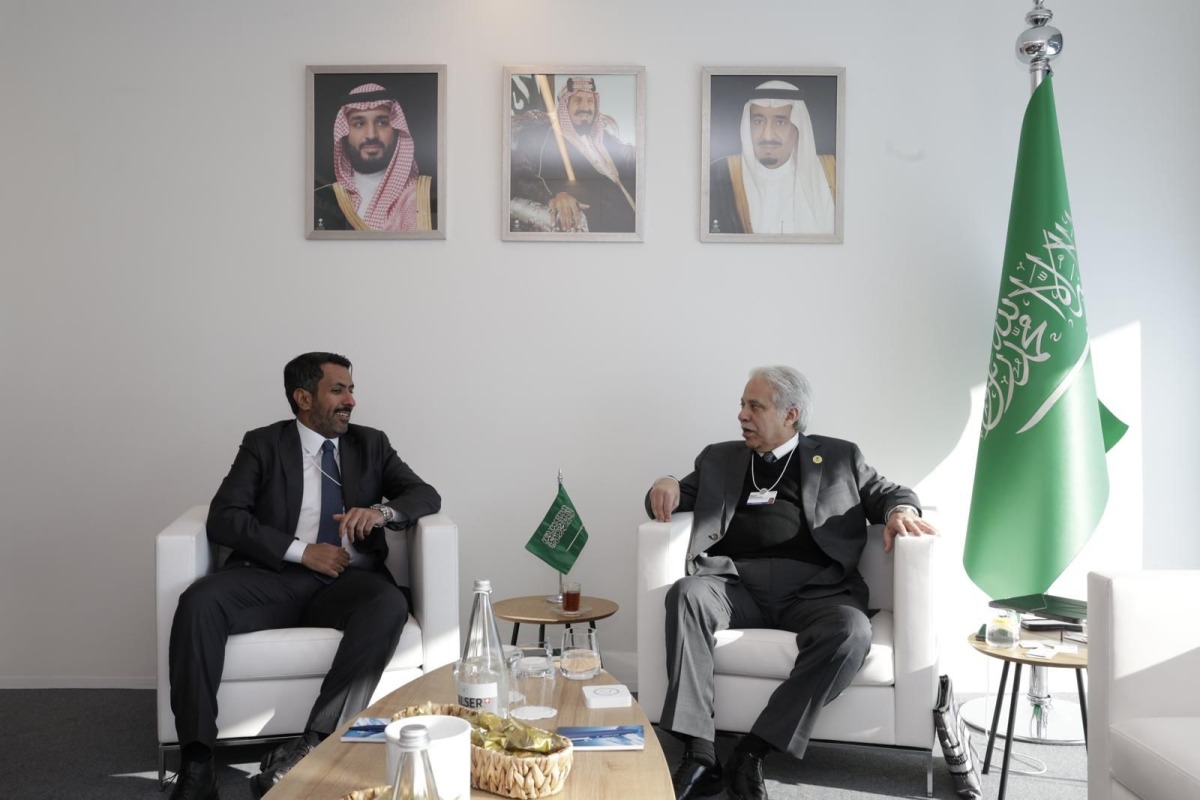

Qatar is actively strengthening economic ties with key global partners, as evidenced by recent discussions at the 2026 World Economic Forum in Davos, Switzerland. HE Sheikh Faisal bin Thani bin Faisal Al-Thani, Qatar’s Minister of Commerce and Industry, held a series of bilateral meetings focused on boosting trade, investment, and industrial collaboration. These meetings took place on the sidelines of the annual forum, a prominent gathering for political and business leaders.
The discussions involved ministers from Saudi Arabia, Kuwait, and Canada, covering a range of topics pertinent to regional and global economic development. The meetings underscore Qatar’s commitment to diversifying its economy and fostering stronger relationships with strategic allies. According to the Ministry of Commerce and Industry, the aim is to identify new opportunities for growth and address shared economic challenges.
Boosting Qatar’s Trade Relationships at Davos
HE Sheikh Faisal’s meetings with Saudi Arabian Commerce Minister HE Dr. Majid bin Abdullah Al Qasabi and Minister of Industry and Mineral Resources HE Bandar bin Ibrahim Alkhorayef centered on enhancing economic cooperation between the two nations. This follows a period of improved relations and a shared vision for regional prosperity. Discussions likely included updates on joint projects and potential areas for increased investment, particularly in sectors aligned with Saudi Arabia’s Vision 2030.
Similarly, the meeting with Kuwait’s Minister of Commerce and Industry, HE Khalifa bin Abdullah Al Ajil, focused on strengthening bilateral trade and exploring avenues for greater collaboration. Qatar and Kuwait have historically maintained close economic ties, and these discussions aim to build upon that foundation. The ministers likely addressed issues related to cross-border investment and the facilitation of commercial activities.
The conversation with Canadian Minister of Industry and Economic Development for Quebec Regions, HE Melanie Joly, highlighted Qatar’s interest in expanding partnerships with North American economies. This engagement could lead to increased Canadian investment in Qatar’s infrastructure and energy sectors, as well as opportunities for Qatari companies in Canada. The discussions also likely touched upon knowledge sharing and technological advancements.
Focus on the Metals Sector
Beyond bilateral meetings, HE Sheikh Faisal participated in a high-level session dedicated to “Strategic Partnerships and Investments in the Metals Sector.” This session addressed the critical role of metals in supporting global supply chains and driving sustainable industrial development. The participation signals Qatar’s growing interest in diversifying its investment portfolio beyond traditional energy sources.
The metals sector is facing increasing demand due to the global transition towards renewable energy and electric vehicles. Strengthening international cooperation in this area is seen as vital to ensuring a stable and sustainable supply of these essential materials. The session likely explored strategies for responsible sourcing, technological innovation, and investment in new metal production facilities.
Qatar’s involvement in discussions surrounding the metals sector aligns with its broader national strategy to become a hub for sustainable investment. The country is actively seeking opportunities to invest in industries that support the global energy transition and promote economic diversification. This includes exploring potential partnerships in the extraction, processing, and manufacturing of critical metals.
The World Economic Forum provides a crucial platform for Qatar to engage with global leaders and showcase its commitment to economic growth and international collaboration. These meetings are expected to pave the way for concrete initiatives and increased investment flows in the coming months. The focus on trade and investment reflects Qatar’s proactive approach to navigating the evolving global economic landscape.
Looking ahead, the Ministry of Commerce and Industry is expected to follow up on these discussions with more detailed negotiations and the development of specific action plans. The success of these efforts will depend on a number of factors, including global economic conditions and the willingness of partner countries to engage in meaningful collaboration. Monitoring the implementation of any agreements reached at Davos will be key to assessing the long-term impact on Qatar’s economy and its regional partnerships. Further announcements regarding specific investment projects and economic development initiatives are anticipated in the coming quarter, with a particular emphasis on foreign investment opportunities.
The World Economic Forum website offers additional information on the 2026 Annual Meeting and its key themes.