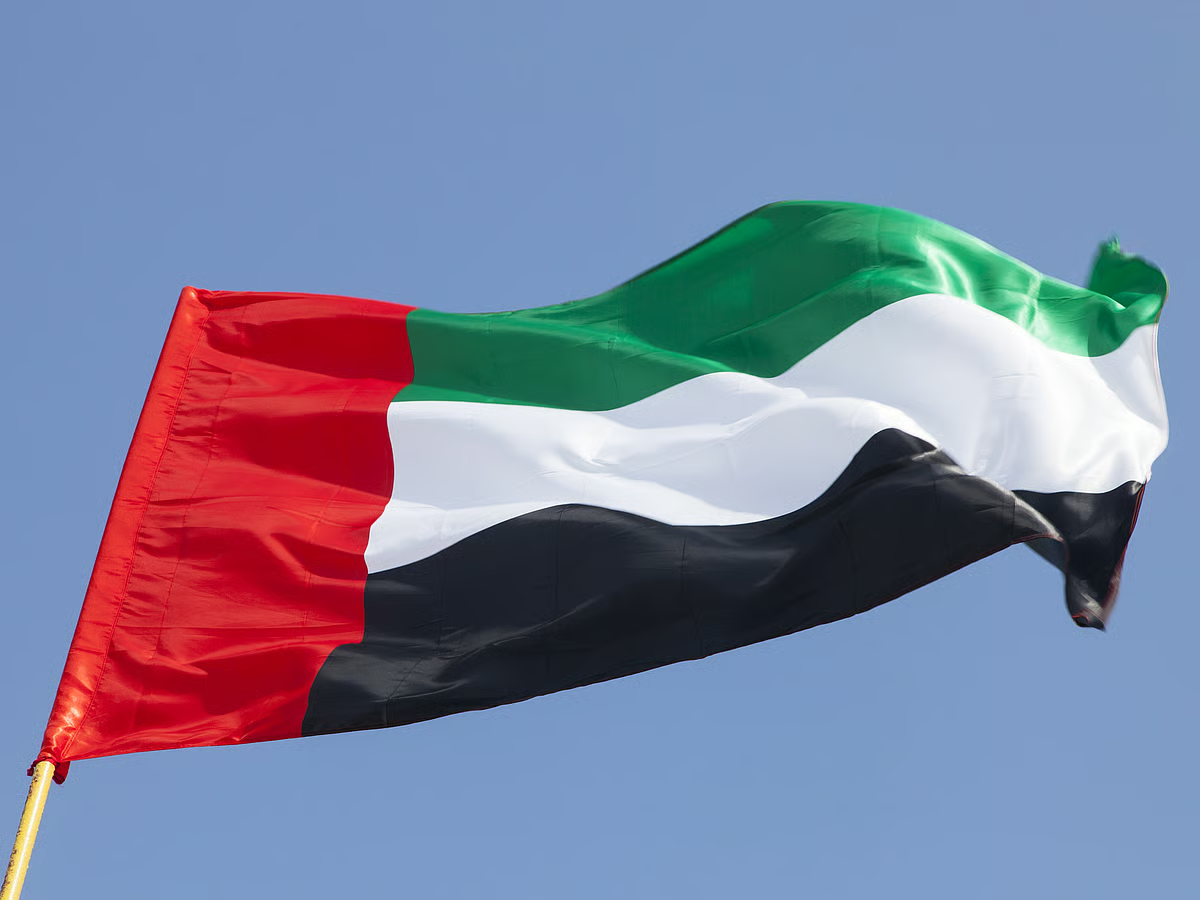

The United Arab Emirates has strongly condemned the recent terrorist attack in Kabul, Afghanistan, which resulted in multiple casualties. The attack, occurring on January 3, 2024, targeted a vehicle carrying employees of a private security company. The UAE reiterated its firm stance against all forms of violence and terrorism, expressing its deep concern over the escalating security situation in Afghanistan.
The incident, which took place in the western part of Kabul, left at least five people dead and dozens injured, according to reports from Afghan officials and international news agencies. The UAE Ministry of Foreign Affairs issued a statement offering condolences to the families of the victims and wishing a speedy recovery to those wounded. This condemnation underscores the UAE’s commitment to regional stability and its opposition to acts that threaten peace and security.
UAE Condemns Kabul Terrorist Attack, Reaffirms Anti-Terror Stance
The UAE’s swift and unequivocal condemnation of the terrorist attack reflects its long-held policy of opposing violence and extremism in all its forms. The country has consistently advocated for peaceful resolutions to conflicts and has actively participated in international efforts to counter terrorism financing and recruitment. This latest statement reinforces that commitment on the global stage.
Details of the Kabul Attack
Initial reports indicate the attack involved a magnetic bomb attached to a vehicle. The target was reportedly a convoy transporting employees of a private security firm, G4S, contracted to provide security for a foreign organization. The Taliban authorities have launched an investigation into the incident, but no group has yet claimed responsibility.
However, the attack occurred in a district of Kabul that has seen increased activity from Islamic State – Khorasan Province (ISIS-K), a regional affiliate of the Islamic State group. ISIS-K has previously claimed responsibility for numerous attacks in Afghanistan, often targeting minority groups, Taliban officials, and foreign interests. The Taliban have been engaged in ongoing operations to suppress ISIS-K, but the group remains a significant threat.
Meanwhile, the security situation in Afghanistan remains fragile despite the Taliban’s takeover in August 2021. The withdrawal of international forces led to a surge in violence and instability, and the country continues to grapple with a humanitarian crisis and economic challenges. The United Nations has warned of a deteriorating humanitarian situation, with millions of Afghans in need of assistance.
UAE’s Regional Role and Counter-Terrorism Efforts
The UAE plays a significant role in regional security initiatives, particularly in the Middle East and South Asia. Additionally, the country has been a strong supporter of international counter-terrorism efforts, including those focused on disrupting terrorist financing networks and preventing the flow of foreign fighters. The UAE’s condemnation of the Kabul attack aligns with its broader strategy of promoting stability and countering extremism.
In contrast to some regional actors, the UAE maintains a pragmatic approach to engagement with Afghanistan, focusing on humanitarian aid and diplomatic efforts. The UAE has provided assistance to Afghanistan through various channels, including the provision of medical supplies and support for education programs. This assistance is aimed at alleviating the humanitarian crisis and supporting the Afghan people.
The UAE’s foreign policy emphasizes the importance of multilateral cooperation in addressing global challenges, including terrorism. The country actively participates in international forums and works with partner nations to share intelligence and coordinate counter-terrorism strategies. This collaborative approach is seen as essential for effectively combating the threat of terrorism.
The incident in Kabul highlights the ongoing challenges facing Afghanistan and the need for continued international engagement. The Taliban government faces a complex security landscape, with threats from ISIS-K and other militant groups. The international community is grappling with how to engage with the Taliban while upholding human rights and preventing Afghanistan from becoming a safe haven for terrorists. Related concerns include the potential for regional instability and the flow of refugees.
The UAE’s condemnation of the terrorist attack serves as a reminder of the persistent threat posed by terrorism and the importance of international cooperation in addressing this challenge. The country’s commitment to regional stability and its support for counter-terrorism efforts underscore its role as a key partner in promoting peace and security.
Looking ahead, the Taliban are expected to continue their security operations against ISIS-K and other militant groups. The international community will be closely monitoring the situation in Afghanistan, assessing the Taliban’s ability to provide security and address the humanitarian crisis. Further developments regarding the investigation into the Kabul attack and any potential claims of responsibility are anticipated in the coming days. The long-term implications of the attack on regional stability and international engagement remain uncertain.