



European leaders are responding to escalating unrest in Iran, with growing calls for stronger sanctions and support for protesters as the death toll continues to rise. The situation is unfolding amid heightened geopolitical tensions, including a controversial push by the US to acquire Greenland, and potential ramifications for the NATO alliance. International concern is mounting over the Iranian regime’s brutal crackdown on demonstrations, prompting diplomatic action and a reassessment of EU-US trade relations.
US President Donald Trump has warned of “very strong action” if Iran proceeds with threats to execute protesters, while simultaneously dismissing Tehran’s offer of talks. Meanwhile, Gulf countries are reportedly urging the US to avoid military intervention. The death toll in Iran has surpassed 2500, according to activist groups, significantly exceeding previous uprisings.
Exclusive: European Parliament President Predicts Iranian Regime Collapse
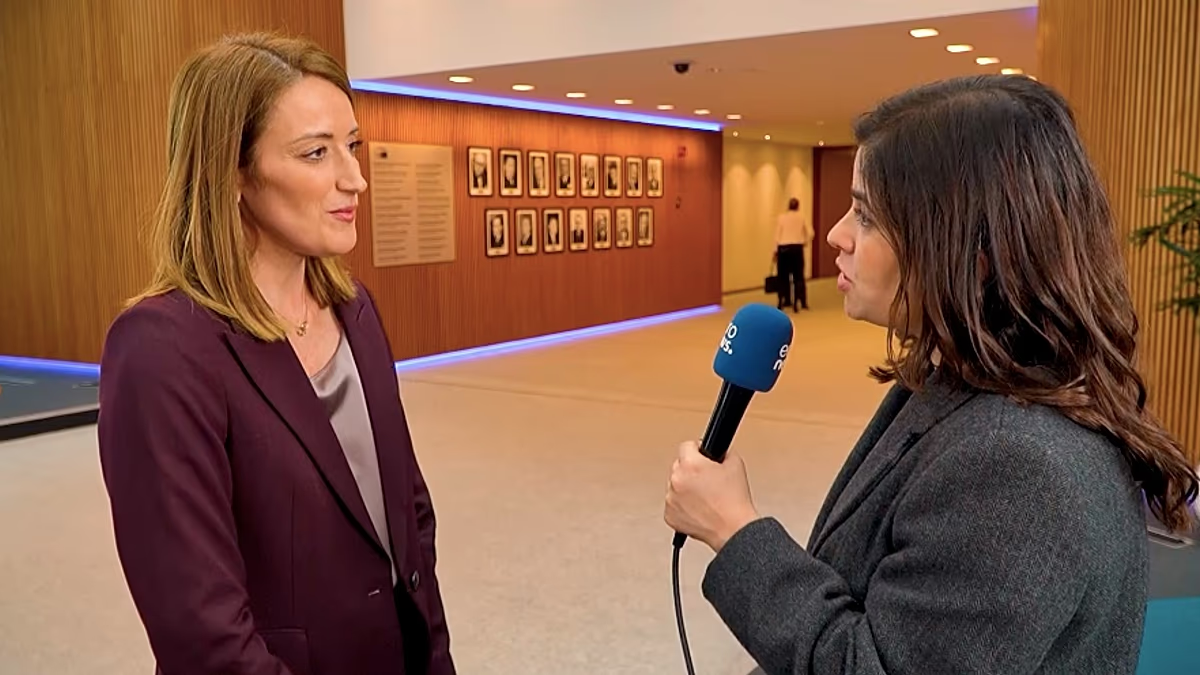
In an exclusive interview with Euronews, European Parliament President Roberta Metsola predicted the fall of the Iranian regime by 2026. She urged the European Union to capitalize on a “golden moment” to support the Iranian people’s struggle for freedom. “I think the European Union has a golden moment to show its firmness, its strength and also its clarity: we support freedom,” Metsola stated. She believes the EU should strengthen its support now, arguing that 2026 represents a critical juncture for change in Iran.
Metsola responded to the killing of protesters by banning Iranian representatives from the parliament’s premises, a decision she said has “broad political support.” She also voiced support for restoring internet connectivity in Iran, which has been largely blocked since Thursday, and called for tougher EU sanctions, including potentially listing the Islamic Revolutionary Guard Corps (IRGC) as a terrorist organization.
Diplomatic Pressure Mounts on Iran
Several European countries, including France, Germany, Italy, and Spain, have summoned their Iranian ambassadors to express their deep concern over the regime’s violence. EU ambassadors are currently examining a Dutch proposal for a new package of sanctions against Iran, as previously reported by Euronews. These potential sanctions would build upon existing travel bans and asset freezes.
However, the path forward isn’t straightforward. Former European Trade Commissioner Pascal Lamy suggested the European Parliament may need to proceed with a vote on the EU-US trade deal, despite concerns over the Trump administration’s actions, to maintain US support for Ukraine. He acknowledged the transactional nature of Trump’s approach to international relations and the importance of the US partnership in addressing the conflict in Ukraine.
Greenland Dispute Threatens NATO Cohesion
Meanwhile, tensions are rising over the US administration’s publicly stated ambition to buy Greenland. Greenland’s Prime Minister Jens-Frederik Nielsen has firmly rejected the prospect of a sale, stating the territory prefers to remain tied to Denmark. This stance is echoed by Denmark, with both nations aiming to present a united front.
The situation has sparked “despair” within NATO, according to a source, who fears the dispute could fracture the alliance. European officials have warned that any US attempt to forcibly acquire Greenland could undermine the military alliance. NATO’s North Atlantic Council is meeting today to discuss broader security concerns in the Arctic, though the Greenland issue isn’t formally on the agenda.
Additionally, Estonia has announced a ban on Russians who fought in Ukraine from entering the country, estimating that as many as 1.5 million Russians have participated in the invasion. This move reflects a growing effort to hold individuals accountable for their involvement in the conflict.
EU Focuses on Environmental Protections
In other news, new EU-wide protections against “forever chemicals” in drinking water have come into effect, providing member states with the tools to safeguard public health. This initiative aims to address the long-term risks associated with these persistent pollutants.
Looking ahead, EU foreign policy chief Kaja Kallas is scheduled to meet with the European Parliament’s Conference of Presidents. The ongoing situation in Iran, the Greenland dispute, and the broader geopolitical landscape will likely remain key areas of focus for European leaders in the coming days. Stay tuned to Euronews for continued coverage of these developing stories.