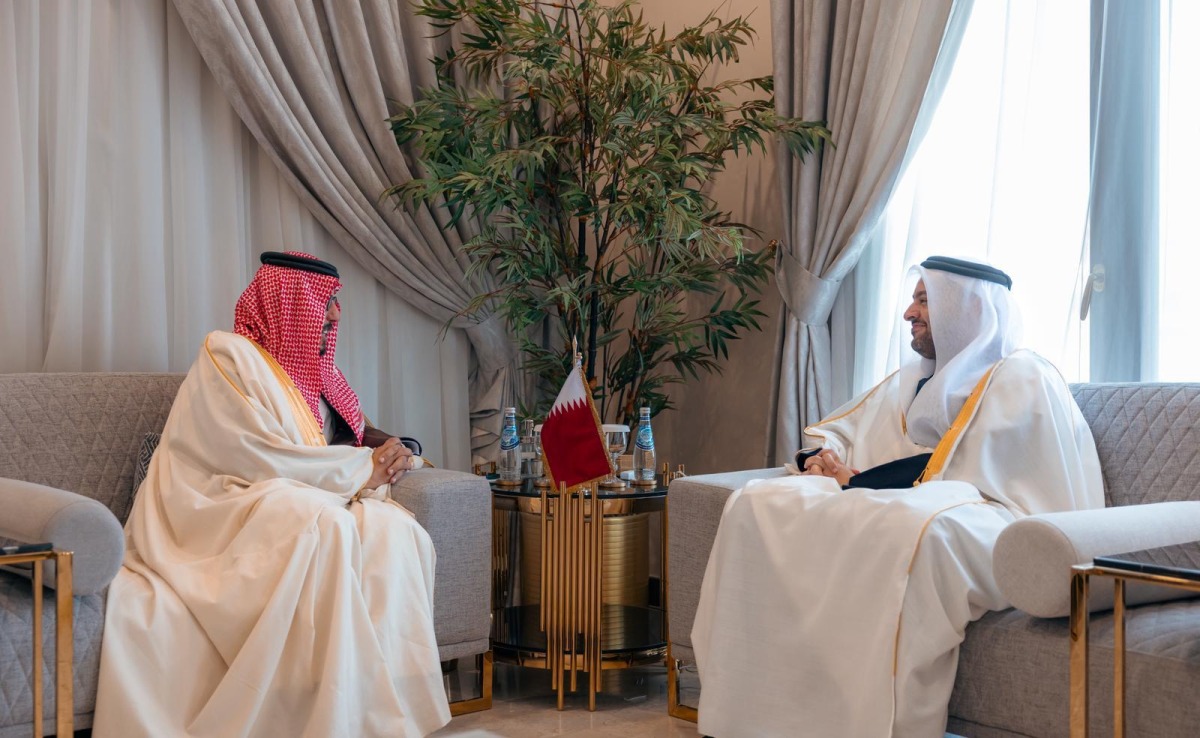

Doha, Qatar – Discussions regarding Lebanon and enhanced bilateral ties took center stage during a meeting between Qatari and Saudi officials on Sunday. Minister of State at the Ministry of Foreign Affairs, HE Dr. Mohammed bin Abdulaziz bin Saleh Al Khulaifi, met with Advisor to the Saudi Foreign Minister on Lebanese Affairs, HH Prince Yazid bin Mohammed bin Fahd Al Farhan, in Doha. The meeting underscores the ongoing Qatar-Saudi Arabia cooperation aimed at addressing regional challenges, particularly the protracted political and economic crisis in Lebanon.
The talks focused on strengthening cooperation between Qatar and Saudi Arabia and coordinating efforts to support stability in Lebanon. Both nations have expressed concern over the ongoing deadlock in Lebanon and the impact on its population. This meeting represents a continuation of diplomatic engagement between the two Gulf states regarding the situation.
Strengthening Qatar-Saudi Arabia Relations and the Focus on Lebanon
The meeting between Dr. Al Khulaifi and Prince Al Farhan highlights the improving relationship between Qatar and Saudi Arabia following a period of strained relations. Diplomatic ties were fully restored in 2021, and both countries have since worked to align their foreign policies on key regional issues. This renewed collaboration is seen as crucial for mediating and resolving conflicts in the Middle East.
According to a statement released by the Qatari Ministry of Foreign Affairs, the discussions centered on finding sustainable solutions to the challenges facing Lebanon. The country has been grappling with a severe economic downturn, political paralysis, and a lack of a fully functioning government for several years. The situation has been exacerbated by regional instability and the aftermath of the 2020 Beirut port explosion.
Qatar’s Consistent Support for Lebanon
Qatar has consistently voiced its support for Lebanon and its people. HE Dr. Al Khulaifi reiterated Qatar’s position during the meeting, emphasizing the country’s commitment to assisting Lebanon in overcoming its current difficulties. This support has taken various forms, including financial aid, humanitarian assistance, and diplomatic efforts to encourage political reform.
Recent Qatari aid to Lebanon has focused on providing essential supplies and supporting vital infrastructure projects. However, the ministry has also stressed the importance of comprehensive political and economic reforms to address the root causes of the crisis. These reforms are seen as necessary to restore investor confidence and unlock much-needed international assistance.
Saudi Arabia’s Role in Lebanese Affairs
Saudi Arabia has historically played a significant role in Lebanese politics and has been a key provider of financial assistance. However, relations between Saudi Arabia and Lebanon have been complex in recent years, particularly due to the influence of Hezbollah, a political and military organization backed by Iran. The appointment of Prince Al Farhan as an advisor specifically for Lebanese affairs signals a renewed Saudi focus on the country.
The Saudi government has expressed concerns about the growing Iranian influence in Lebanon and its potential impact on regional stability. The kingdom has called for a neutral government in Lebanon that is not dominated by any single political faction. This stance is a key element of Saudi Arabia’s broader strategy to counter Iranian expansionism in the region. Qatar-Saudi Arabia cooperation on Lebanon may involve efforts to encourage dialogue between Lebanese political groups and address these concerns.
The meeting also comes amidst broader international efforts to resolve the Lebanese crisis. France, the United States, and other countries have been actively involved in mediating between Lebanese political leaders and urging them to implement necessary reforms. The involvement of regional powers like Qatar and Saudi Arabia is considered essential for achieving a lasting solution. Diplomatic efforts are ongoing to facilitate the election of a new president, a crucial step towards restoring political functionality.
While details of the specific proposals discussed during the meeting have not been publicly released, the joint commitment to supporting Lebanon suggests a coordinated approach. The situation in Lebanon remains highly volatile, and the success of these efforts is far from guaranteed.
Looking ahead, further consultations between Qatari and Saudi officials are expected in the coming weeks. The focus will likely remain on identifying ways to encourage the formation of a stable and effective government in Lebanon and to provide the necessary economic assistance. The international community will be closely watching to see if this renewed Qatar-Saudi Arabia cooperation can translate into tangible progress on the ground and alleviate the suffering of the Lebanese people. The timeline for significant change remains uncertain, dependent on the willingness of Lebanese political factions to compromise and implement reforms.