






European Union leaders are actively debating the long-term financing of Ukraine as the conflict with Russia continues. Discussions are centered around securing roughly €90 billion over the next two years to support Ukraine’s economy and military capabilities. Currently meeting in Brussels, leaders are considering two primary options to ensure continued aid beyond the existing support mechanisms that run through 2025.
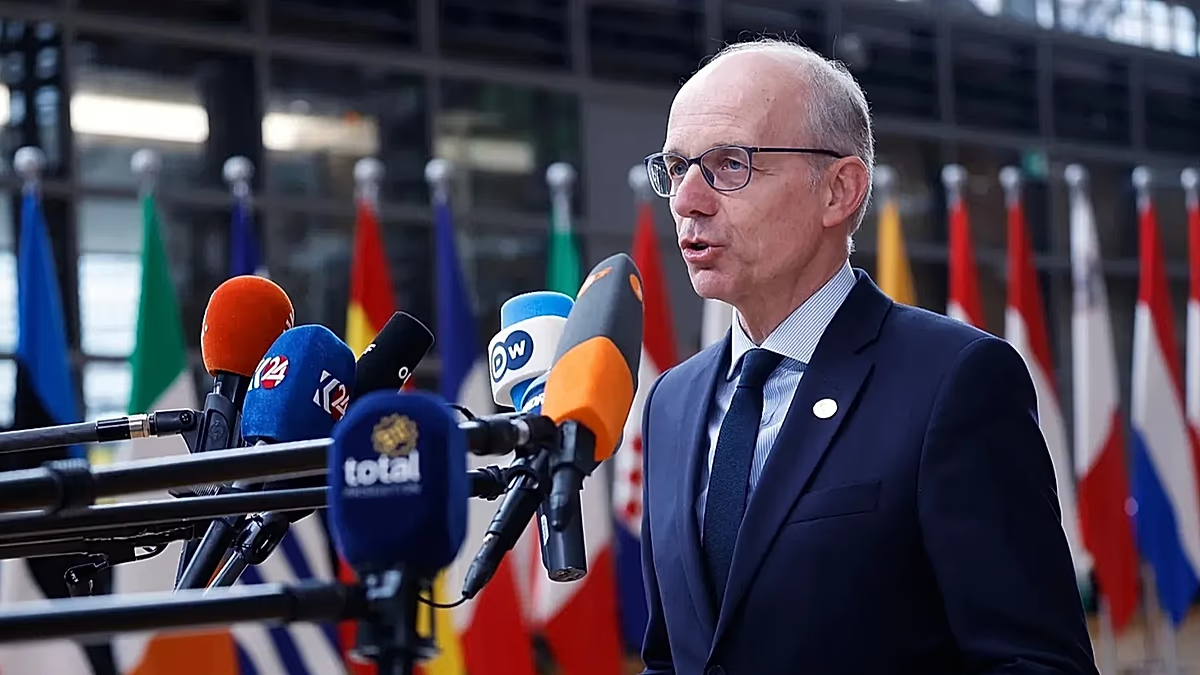
Luxembourg Prime Minister Luc Frieden emphasized the necessity of ongoing support, stating, “We need to give Ukraine the means to survive this war, borders cannot be changed by force.” He highlighted this during an interview with Euronews, underscoring a key principle guiding the negotiations. The summit, taking place on Thursday and Friday, aims to finalize a sustainable funding model before the year’s end, particularly given uncertainties surrounding future US aid.
Securing Ukraine’s Future: EU Funding Options
The two proposals currently on the table represent diverging approaches to ensure Ukraine continues to receive crucial financial support. The first centers on leveraging frozen Russian Central Bank assets held within the EU. The second involves the European Commission issuing joint debt, a tactic previously employed during the COVID-19 pandemic.
Utilizing Frozen Russian Assets
Approximately €210 billion in Russian sovereign assets are currently frozen within the EU, with the vast majority – around €185 billion – held by Euroclear in Belgium. The proposal suggests using the interest earned on these assets, or potentially the assets themselves, to create a zero-interest loan for Ukraine.
However, this option faces significant legal and political hurdles. A key concern voiced by Belgium is the potential for Russia to launch legal challenges once sanctions are lifted or the war concludes seeking the return of those assets. According to Frieden, this necessitates a “group of countries which share the risks” in the event of litigation . Finding a way to protect EU members from potential legal repercussions is therefore critical to this funding path.
Joint EU Borrowing
The alternative proposal mirrors the response to the COVID-19 crisis, where the EU collectively borrowed funds on financial markets. This method would allow for the swift allocation of substantial resources to Ukraine without relying on the complexities surrounding frozen assets. However, some member states are hesitant to take on additional debt, particularly given existing economic pressures and differing fiscal priorities.
This approach would require unanimous agreement among member states, which, as has been seen with previous aid packages, is not guaranteed. Concerns exist around the credit ratings of individual nations and the potential impact on national budgets.
The Geopolitical Context and Urgency
The ongoing discussions about Ukraine funding are taking place against a backdrop of shifting geopolitical priorities. Frieden specifically pointed to the possibility of reduced US support, stating, “We need to be united because the US might not be there with us in the future.” This perceived waning commitment from Washington is amplifying the urgency for European nations to demonstrate their own resolve.
Several EU nations have already pledged significant bilateral aid to Ukraine, but a unified, long-term solution is seen as vital for providing stability and predictability. The recent approval of a four-year, €50 billion aid package shows that EU support is strong, but arranging funds after 2025 is a new challenge.
Furthermore, the discussions are interwoven with the principle of upholding international law and deterring future aggression. The EU is firmly committed to the territorial integrity of Ukraine, and the provision of financial assistance is viewed as a critical component of this commitment.
The success of either funding mechanism hinges on achieving consensus among all 27 member states. Diplomats are working intensely to address concerns and forge a compromise that balances the need for robust support for Ukraine with the fiscal realities and legal vulnerabilities of individual nations.
As the Brussels summit progresses, observers will be closely watching for signals of compromise and clarity regarding the final funding model chosen. The outcome will have profound implications not only for Ukraine’s survival but also for the future of European security architecture. Stay tuned for further updates as this crucial story develops.

