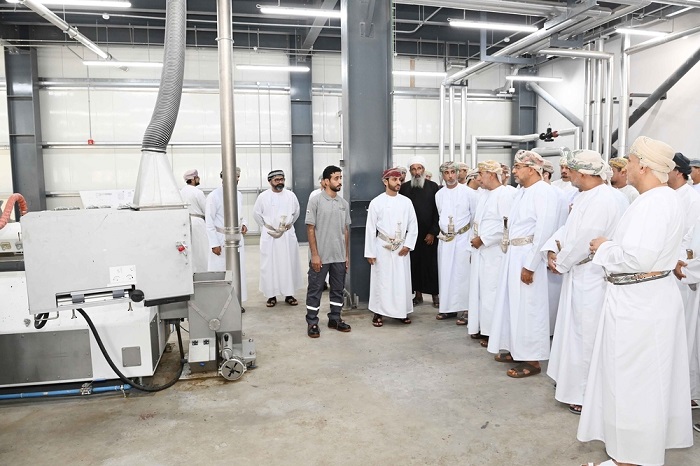

Oman is taking significant strides towards bolstering its food security and embracing a circular economy with the inauguration of a pioneering animal feed plant in Khazaen Economic City. The new facility, owned by the Omani Bioproducts Company, a subsidiary of Oman Flour Mills, represents a substantial investment of approximately OMR36 million and marks the first phase of a project poised to revolutionize the nation’s livestock and aquaculture industries. This initiative directly addresses the growing need for locally sourced, high-quality animal feed and positions Oman as a potential regional leader in sustainable feed production.
A New Era for Oman’s Food Security
The launch, held under the patronage of Dr. Saud bin Hamoud Al Habsi, Minister of Agriculture, Fisheries and Water Resources, highlights Oman’s commitment to reducing its reliance on imported feed and strengthening its domestic agricultural capabilities. Currently, Oman heavily depends on external sources to meet the demands of its rapidly developing livestock and aquaculture sectors. This presents vulnerabilities to global market fluctuations and supply chain disruptions.
This new plant, with an initial annual production capacity of 48,000 tonnes of animal feed and 15,000 tonnes of aquatic feed, aims to alleviate these concerns, providing a stable and reliable supply chain for local farmers and investors. It’s expected to meet a significant portion of the local market demand for essential feed ingredients.
Addressing Aquaculture Needs
A particular focus of the project is supporting the burgeoning aquaculture industry. The consistent availability of high-quality aquatic feed is crucial for the sustainable growth of fish and shrimp farming. The plant’s output will offer aquaculture investors a predictable supply model, encouraging further investment and expansion within the sector. This will ultimately contribute towards diversifying Oman’s economy and increasing its export potential.
Sustainable Production Through Innovation
What truly sets this facility apart is its dedication to sustainability. The plant operates on a circular economy model, converting recycled green agricultural residues – including date waste – into high-nutrition feed. This innovative approach tackles the issue of agricultural waste, which often poses environmental challenges through burning or landfilling.
Instead of discarding these valuable by-products, the Omani Bioproducts Company utilizes advanced technologies to transform them into a cost-effective alternative to imported forage. The resulting feed is enriched with nutrients, offering improved options for livestock and sheep farming projects. This process aligns perfectly with Oman’s national strategy to promote a bio-economy and maximize the utilization of local resources.
Khazaen Economic City: A Strategic Hub for Food Production
The selection of Khazaen Economic City as the location for this crucial project is no accident. Eng. Salim bin Sulaiman Al Thuhli, CEO of Khazaen, underscored the plant’s importance in strengthening Khazaen’s position as a dedicated food hub. Khazaen’s strategic location boasts excellent connectivity to ports, airports, and border crossings, facilitating efficient logistics and cost-effective access to regional markets.
This integration with advanced infrastructure, a free zone, a dry port, and comprehensive logistical solutions makes Khazaen an incredibly attractive destination for industrial and food-related investments. The project’s presence symbolizes growing investor confidence and highlights Khazaen’s rapid evolution into a key economic center for both Oman and the wider region.
Boosting Omanisation & Local Expertise
The Omani Bioproducts Company is also prioritizing the development of local talent. With an Omanisation rate exceeding 95%, the plant is creating valuable employment opportunities and fostering a highly skilled national workforce. Haitham bin Shakhboot Al Saadi, Chairman of the Board of Directors, emphasized that the facility isn’t just a production site, but a strategic national project that reflects Oman’s commitment to building qualified national capabilities. This ultimately contributes to a more sustainable and independent domestic industry.
Future Expansion and Regional Ambitions
The current inauguration marks only the beginning. The project is planned in three phases, with full completion anticipated between 2027 and 2030. Upon completion, the production capacity is expected to increase dramatically, potentially transforming Oman from a major importer of animal feed—particularly aquatic feed—into a competitive producer for regional markets.
This expansion will introduce new products, cater to evolving market needs, and pave the way for further agricultural and livestock sector support. The ongoing development also indicates a long-term vision for the project, demonstrating a commitment to continuous improvement and innovation in the realm of sustainable feed production. The long term vision focuses on providing cost-effective feed solutions for local and international markets.
In conclusion, the inauguration of the Omani Bioproducts Company’s animal and aquatic feed plant in Khazaen Economic City is a landmark achievement for Oman. It represents a significant investment in food security, a commitment to sustainable practices, and a strategic move to position the nation as a regional leader in feed production. This initiative, driven by innovation and a dedication to local resources, promises to deliver lasting benefits to Oman’s agricultural sectors and contribute to a more resilient and prosperous future. To learn more about Oman’s economic initiatives, explore resources from the Ministry of Commerce, Industry & Investment Promotion.