
German artificial intelligence company Black Forest Labs secured $300 million in Series B funding, significantly boosting its valuation and cementing its position as a key player in the rapidly evolving field of image generation. The funding, announced Monday, values the company at $3.25 billion. This infusion of capital is intended to accelerate research and development of the company’s foundation AI models and expand its technological capabilities.
Based in Germany, Black Forest Labs creates AI models utilized for both the production and modification of images. The company’s quick ascent to prominence since its August 2024 launch underscores the heightened demand for cutting-edge AI tools across diverse industries. The Series B round was co-led by Salesforce Ventures and Anjney Midha (AMP), with participation from a wide range of venture capital firms and prominent tech companies.
Black Forest Labs: Powering the Future of Image Generation
Black Forest Labs distinguishes itself by focusing on foundational models, which serve as the base for more specialized AI applications. These types of models represent a significant investment and demand substantial computational resources for both training and operation. The company’s recent valuation reflects the market’s confidence in the long-term viability and potential of this approach.
The company gained notable attention in 2024 when it became known that Elon Musk’s Grok chatbot integrated Black Forest Labs’ models for its image creation features. This partnership highlighted the quality and competitive advantage of Black Forest Labs’ technology. Beyond Grok, a growing list of companies – including Adobe, fal.ai, Picsart, ElevenLabs, VSCO, and Vercel – now leverage the company’s AI capabilities.
Recent Technological Advances
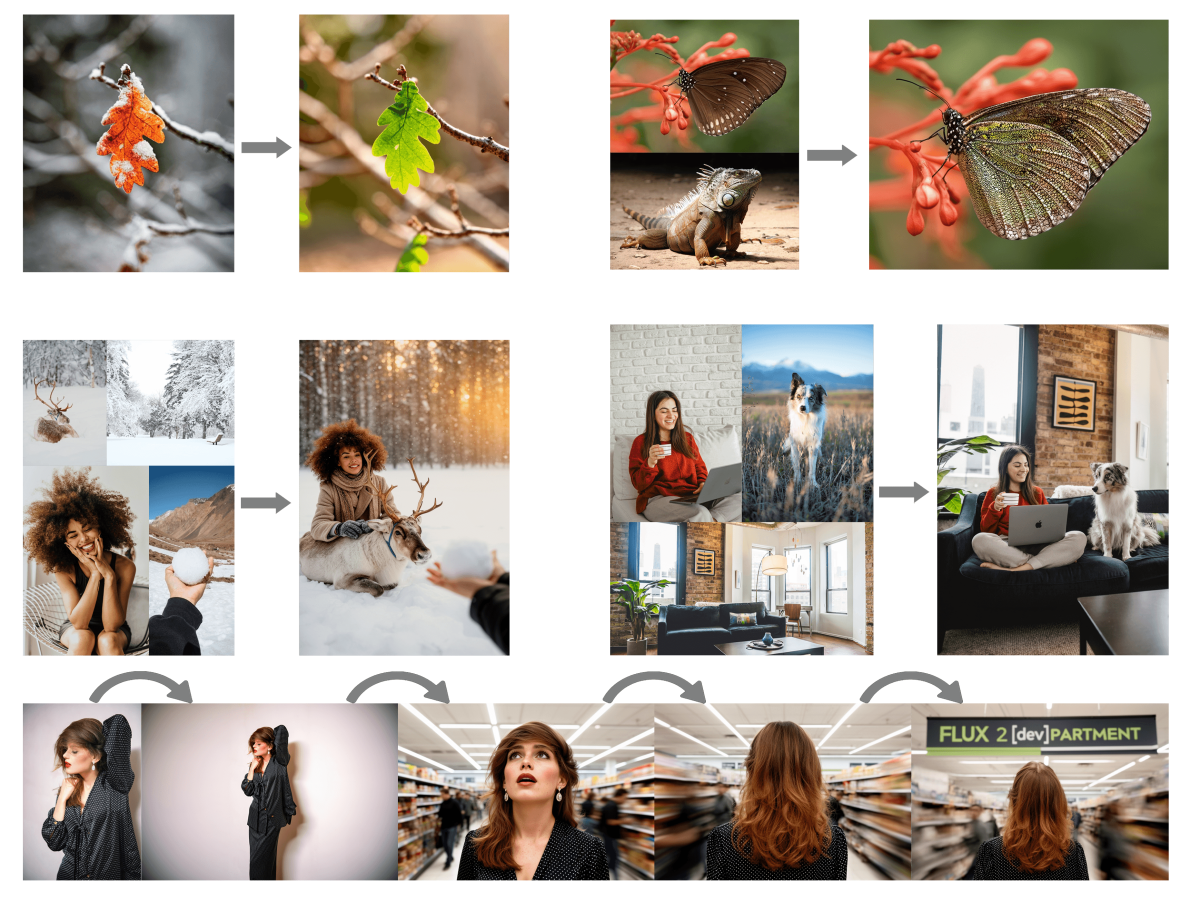
Black Forest Labs recently unveiled Flux 2, the latest iteration of its image generation model. The new model reportedly offers improvements in rendering both text and images, leading to enhanced visual quality. The company states that Flux 2 can incorporate up to 10 reference images, enabling a greater degree of control over stylistic consistency and overall tone.
Another key feature of Flux 2 is its ability to generate images in resolutions up to 4K. This higher resolution capacity opens opportunities for professional applications such as marketing materials, high-quality prints, and detailed visual content. This is a step beyond many competing models which still struggle with high-fidelity output.
The underlying technology is rooted in the expertise of the company’s founding team. Co-founders Robin Rombach, Patrick Esser, and Andreas Blattmann previously were central researchers in the development of Stability AI’s widely used Stable Diffusion models. This deep understanding of diffusion-based techniques has carried over into the creation of Black Forest Labs’ proprietary technology.
The broader market for generative AI is experiencing rapid expansion. Analysts predict continued growth in demand for these technologies across many sectors, including advertising, entertainment, and design. This growth is fueled by the increasing accessibility of AI tools and their ability to automate creative tasks. This increased access has sparked discussion about copyright and ownership in the world of AI-generated content.
However, the development and deployment of generative AI also present challenges. Concerns about potential misuse, the spread of misinformation (deepfakes), and the ethical implications of AI-created art are becoming increasingly prominent. Companies like Black Forest Labs are under pressure to develop safeguards and responsible AI practices as the technology matures.
Meanwhile, competition in the AI image generation arena is intensifying. Stability AI, Midjourney, and DALL-E 3 (from OpenAI) remain significant rivals. Each company is pursuing different strategies to improve performance, expand functionality, and attract users. Differentiation in this market increasingly relies on specialized capabilities and ecosystem integration.
The influx of funding will allow Black Forest Labs to further enhance its models, explore new applications, and potentially develop its own platform for deploying image generation tools. The company is also likely to invest in attracting and retaining top AI talent, given the high demand for skilled professionals in the field. The ultimate goal is to establish a dominant position in the AI model landscape.
Investment in AI infrastructure is also increasing, with companies like NVIDIA actively involved in financing generative AI startups, recognizing the substantial hardware requirements of these technologies. This signifies a broader trend of investment throughout the AI value chain, from model development to computing power.
It’s important to note that a large portion of the focus in artificial intelligence funding, including this round, is dedicated to foundational model research. These are expensive and time-consuming projects, but lead to breakthroughs utilized across a range of downstream applications. The success of Black Forest Labs exemplifies the potential for significant returns within this specialized segment.
Looking ahead, Black Forest Labs intends to use the Series B funding to primarily advance its research and development efforts. While a specific timeline for new product releases hasn’t been announced, the company is expected to continue iterating on Flux and potentially explore other generative AI modalities. The company’s path will be closely watched, alongside developments in responsible AI governance and the evolving competitive landscape.