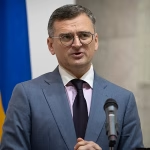

The Prime Minister of Moldova, Alexandru Munteanu, recently held discussions with the State of Qatar’s Ambassador to Moldova, Dr. Turki bin Abdullah Zaid Al Mahmoud, focusing on strengthening Moldova-Qatar relations. The meeting, which took place in Chisinau, reviewed existing cooperative efforts between the two nations and explored potential avenues for future collaboration. This engagement signals a continued interest in bolstering diplomatic and economic ties between the European country and the Gulf state.
The meeting occurred as Moldova continues to navigate complex geopolitical challenges and seeks to diversify its international partnerships. Qatar, a significant player in global energy markets and investment, represents a potentially valuable partner for Moldova’s economic development. Details of specific projects discussed were not immediately released by either government, but the conversation centered on mutual interests and expanding cooperation.
Strengthening Moldova-Qatar Relations: A Focus on Economic Growth
While diplomatic relations between Moldova and Qatar have existed for some time, recent years have seen increased efforts to foster closer ties. According to the Moldovan Ministry of Foreign Affairs, the primary goal of these interactions is to attract foreign investment and support Moldova’s modernization efforts. This latest meeting underscores that commitment.
Qatar has been actively expanding its economic footprint in Europe, and Moldova presents a relatively untapped market. The country’s strategic location and ongoing reforms aimed at improving its business climate are likely attractive factors for Qatari investors. Discussions likely included opportunities in sectors such as agriculture, infrastructure, and renewable energy.
Geopolitical Context and Diversification
Moldova’s pursuit of stronger relationships with countries like Qatar is partly driven by its desire to reduce dependence on traditional partners. The ongoing conflict in Ukraine and its impact on regional stability have highlighted the importance of diversifying foreign relations for Moldova. This diversification strategy is a key component of the nation’s broader foreign policy objectives.
Additionally, Moldova has been working towards European Union membership, a process that requires significant economic and political reforms. Investment from countries like Qatar could contribute to these reforms and accelerate Moldova’s integration with European structures. However, balancing these competing interests – closer ties with the EU and engagement with Gulf nations – requires careful diplomacy.
Areas of Potential Cooperation
Beyond investment, potential cooperation between Moldova and Qatar extends to several areas. Energy security is a crucial concern for Moldova, and Qatar’s status as a major liquefied natural gas (LNG) exporter could be explored. The report indicates that discussions may have touched upon potential LNG supply agreements or investments in Moldova’s energy infrastructure.
Furthermore, there is scope for collaboration in the fields of tourism and cultural exchange. Qatar’s successful hosting of the FIFA World Cup 2022 demonstrated its capacity to manage large-scale events, and Moldova could potentially benefit from Qatari expertise in this area. The development of bilateral trade is also expected to be a priority.
In contrast to some other nations in the region, Moldova has maintained a relatively neutral stance on many international issues, which may make it a more appealing partner for Qatar. This approach allows for pragmatic engagement based on mutual economic benefits, rather than being constrained by broader geopolitical alignments. The focus remains on foreign investment and economic development.
Meanwhile, Qatar is also looking to expand its diplomatic presence and influence in Eastern Europe. Establishing stronger ties with Moldova aligns with this broader strategy, providing Qatar with a foothold in a strategically important region. This is part of a wider pattern of increased engagement from Gulf states in Eastern European affairs.
The next steps in this developing relationship are expected to involve follow-up meetings between officials from both countries to discuss specific projects and agreements. A timeline for potential investment deals or formal agreements remains uncertain, and will likely depend on ongoing due diligence and negotiations. Monitoring the progress of Moldova’s EU accession talks and the evolving geopolitical landscape will be crucial in understanding the future trajectory of Moldova-Qatar relations.
It is also worth watching for any announcements regarding Qatari investment in specific Moldovan sectors, as well as any developments in potential energy cooperation agreements.