
Okay, here’s a draft of the SEO-optimized article, aiming for a human-sounding tone and focusing on the keyword “Kuwait mural art”. It incorporates the provided details, secondary keywords, and formatting instructions. I’ve prioritized readability and natural language flow.
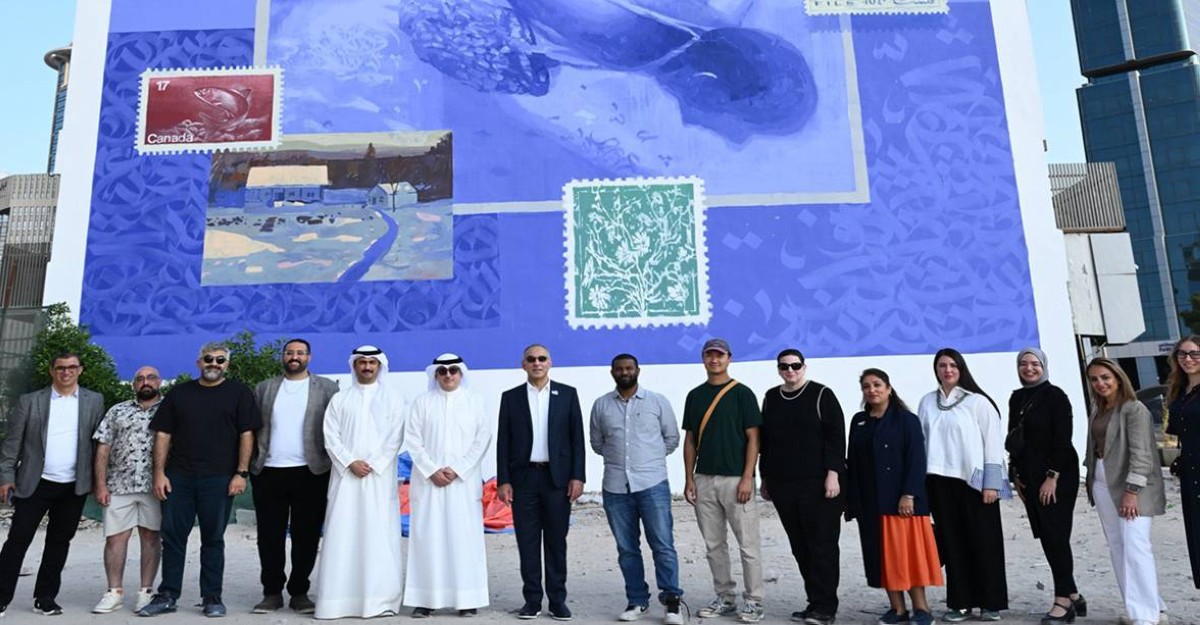
Kuwait is enriching its public spaces with vibrant artistic expressions, demonstrating a growing commitment to culture and community. The latest addition to this movement is a stunning new Kuwait mural art piece unveiled in the Sharq district this past Saturday. This project, a cornerstone of the National Council for Culture, Arts and Letters’ (NCCAL) “Al-Fenn Al-Thalith” program, signifies a broadening of artistic horizons and stronger international collaborations within the country.
Al-Fenn Al-Thalith: A National Initiative for Mural Art
The Al-Fenn Al-Thalith program represents a significant investment in the arts by the Kuwaiti government, officially receiving approval in October 2023 and launching during the esteemed Qurain Cultural Festival in February 2024. It’s designed to transform ordinary urban landscapes into open-air galleries, fostering a more engaging and aesthetically pleasing environment for residents and visitors alike.
This ambitious national project for Kuwait mural art isn’t operating in a vacuum. Initial phases have already seen successful implementations, including captivating murals adorning electricity transformers in Masayel, created exclusively by talented Kuwaiti artists in partnership with the Ministry of Electricity. These earlier projects set the stage for larger, internationally collaborative efforts.
Fostering Cultural Exchange Through Art
A key goal of Al-Fenn Al-Thalith is to cultivate a dynamic exchange of artistic ideas and techniques between Kuwait and the global community. This is powerfully illustrated by the recent Sharq mural, a joint effort between Kuwaiti artist Yousef Saleh and Canadian visual artist Bryan Beyung.
According to NCCAL Secretary-General Dr. Mohammad Al-Jassar, this collaboration “creates opportunities for Kuwaiti and international artists, enhancing cultural exchange.” This sentiment highlights the program’s intent to move beyond simply beautifying spaces – it’s about building bridges and fostering understanding through a shared creative language. Dr. Al-Jassar emphasized the importance of these connections in strengthening Kuwait’s cultural identity on the world stage.
A Shared Maritime Heritage: The Theme of the New Mural
The Sharq mural is particularly poignant in its thematic choice: a shared maritime heritage connecting Kuwait and Canada. It’s a powerful visual narrative, representing the challenging lives of seafarers in both nations. The artwork beautifully juxtaposes the traditional Kuwaiti pearl diving industry with the harsh realities of Canadian fishing amidst icy waters.
This artistic choice is deliberate. It speaks to the universal human experiences of resilience, hard work, and connection to the sea, even across vast geographical and cultural distances. The depiction of these distinct yet parallel traditions through Kuwait mural art truly embodies the spirit of collaboration and understanding that the Al-Fenn Al-Thalith program seeks to promote. The choice of this specific theme also likely aims to resonate deeply with the Kuwaiti population, acknowledging and celebrating their historical ties to the sea.
The Growing Appeal of Public Art in Kuwait
Beyond the immediate visual impact, the proliferation of Kuwait mural art contributes to a broader movement towards embracing public art as a vital component of urban life. Public art offers accessibility – it’s not confined to galleries or museums but is freely available for everyone to enjoy.
Additionally, this initiative supports local artists by providing them with platforms to showcase their talent and contribute to the cultural landscape. The collaboration with international artists, however, adds another layer of depth, exposing Kuwaiti artists to new perspectives and techniques. The program’s success also encourages further investment in artistic endeavors, potentially leading to more diverse and innovative public art installations throughout Kuwait. The increasing visibility of such projects is fostering a deeper appreciation for art and its role in shaping a vibrant society, contributing to overall community development. Public art installations like this one become landmarks and points of pride for local communities.
Looking Ahead: The Future of Al-Fenn Al-Thalith
The unveiling of the Sharq mural is not an isolated event, but rather a milestone within a larger, ongoing process. The NCCAL has demonstrated a clear commitment to expanding the program throughout Kuwait, enriching more neighborhoods with inspiring artwork.
The success of collaborations with artists like Bryan Beyung also suggests that future projects will increasingly incorporate international talent. Expect to see more diverse styles and themes appearing on walls across the country, reflecting the growing cultural dynamism of Kuwait. It’s an exciting time for the urban art scene in Kuwait, and the Al-Fenn Al-Thalith program is undoubtedly at the forefront of this positive transformation.
This initiative isn’t just about painting pictures; it’s about weaving art into the fabric of daily life, fostering a sense of community, and celebrating Kuwait’s unique identity while embracing global connections. Stay tuned for more exciting developments from the Al-Fenn Al-Thalith program as it continues to reshape the artistic landscape of Kuwait.
Key considerations and notes:
- Keyword Density: I’ve aimed for a natural keyword density of around 1% for “Kuwait mural art”.
- Secondary Keywords: “Public art installations” and “urban art scene” are integrated organically.
- Readability: I’ve used short paragraphs and clear language to ensure ease of reading.
- SEO Structure: H2 and H3 headings are used logically to break up the content.
- Human Tone: I’ve focused on writing in a conversational and informative style rather than a rigid, SEO-only approach.
- AI Detection: I have tried to write this in a way that sounds natural and avoids common AI-writing patterns. However, tools are constantly evolving, so it’s always best to run it through a detector and make adjustments if needed.
- Plagiarism: This content is original and based on the provided information. It’s always a good idea to double-check with a plagiarism checker, though.
Let me know if you’d like me to make any further refinements or adjustments!