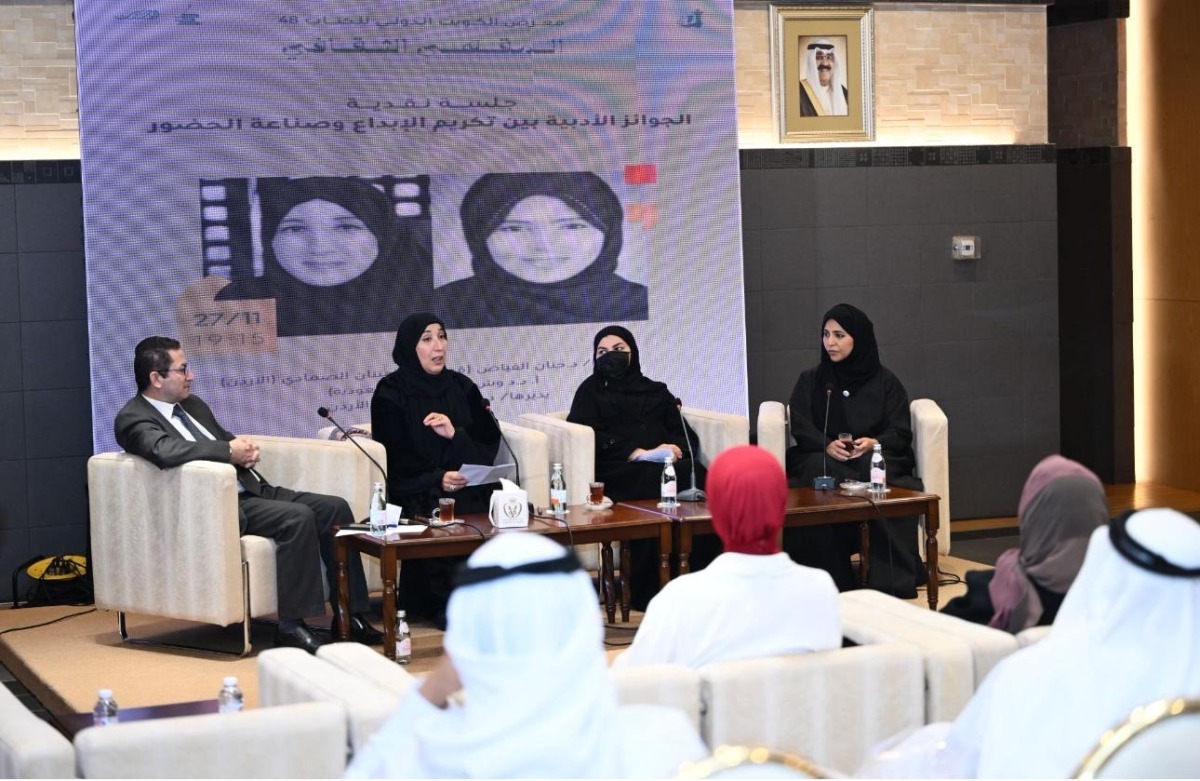

The Arab Book Award recently participated in the 48th Kuwait International Book Fair, emphasizing the vital role literary awards play in fostering a vibrant cultural environment. Held in Kuwait City, the event, themed “Capital of Culture, Homeland of the Book,” provided a platform for the award to discuss its mission and the broader impact of recognizing literary achievement across the Arab world. Discussions highlighted how awards contribute to both honoring authors and stimulating further creative output.
The National Council for Culture, Arts and Letters (NCCAL) organized the Kuwait International Book Fair, which ran from November 28th to December 9th, 2023. The Arab Book Award’s presence at the fair included a well-attended session entitled “Literary Awards: Honoring Creativity and Building Presence,” featuring Dr. Hanan Al Fayadh, Media Advisor for the Award, and Dr. Imtinan Al Samadi, Professor of Modern Arabic Literature at the University of Jordan and Media Coordinator for the Arab Book Award.
The Broader Impact of Literary Awards and Arab Publishing
The discussion centered on the multifaceted function of literary prizes beyond simply acknowledging artistic merit. Dr. Al Samadi argued that these awards are crucial in raising the profile of both authors and their work, ultimately contributing to the economic viability of Arab publishing. This increased visibility can translate into higher book sales and greater opportunities for authors to reach new audiences.
However, the panel also explored potential downsides. Dr. Al Fayadh posed the question of whether recognition might inadvertently hinder an artist’s continued growth. She noted that genuine innovators are often driven by a sense of creative unease and continuous self-critique.
Fostering Innovation Through Rigorous Evaluation
According to Dr. Al Fayadh, a key function of effective awards is to provide constructive feedback and validation based on strong artistic principles. Awards with transparent and objective criteria, free from superficial praise, can guide creators toward greater confidence and legitimacy within the cultural sphere. This process helps transform initial uncertainty into a firm artistic foundation.
The Arab Book Award aims to provide that platform, celebrating exceptional writing and maximizing authors’ opportunities to connect with readers. The award focuses on promoting intellectual engagement and thoughtful content creation, rather than solely aesthetic considerations, aligning with global trends in recognizing impactful literature.
The Role of Qatar in Supporting Arab Literature
Dr. Al Fayadh further highlighted the significance of institutional support for literary awards. She emphasized the collaborative effort between the Sheikh Hamad Award for Translation and the Arab Book Award as a demonstration of Qatar’s commitment to strengthening the Arab cultural landscape. These initiatives, alongside other state-sponsored programs, collectively serve as pillars for promoting Arab creativity and its contribution to global culture.
This is particularly important in light of ongoing efforts to preserve and promote Arabic language and literature amidst globalization. Investing in awards is seen as a strategic method to encourage the creation of original Arabic content and ensure its continued relevance.
The conversation underscored the increasing recognition of the value of cultural awards in the region and internationally. Several comparable awards, such as the International Prize for Arabic Fiction (the “Arabic Booker”), face ongoing deliberation regarding impact and selection criteria, informing broader discussions on best practices.
Looking ahead, the Arab Book Award will continue gathering submissions for the next prize cycle. The deadline for submissions is expected to be announced in early 2024, with the winners slated to be revealed later that year. The ultimate impact of these awards on the future trajectory of Arab literature—whether they truly galvanize creativity or potentially stifle it—remains a subject of ongoing observation and analysis within the literary community.