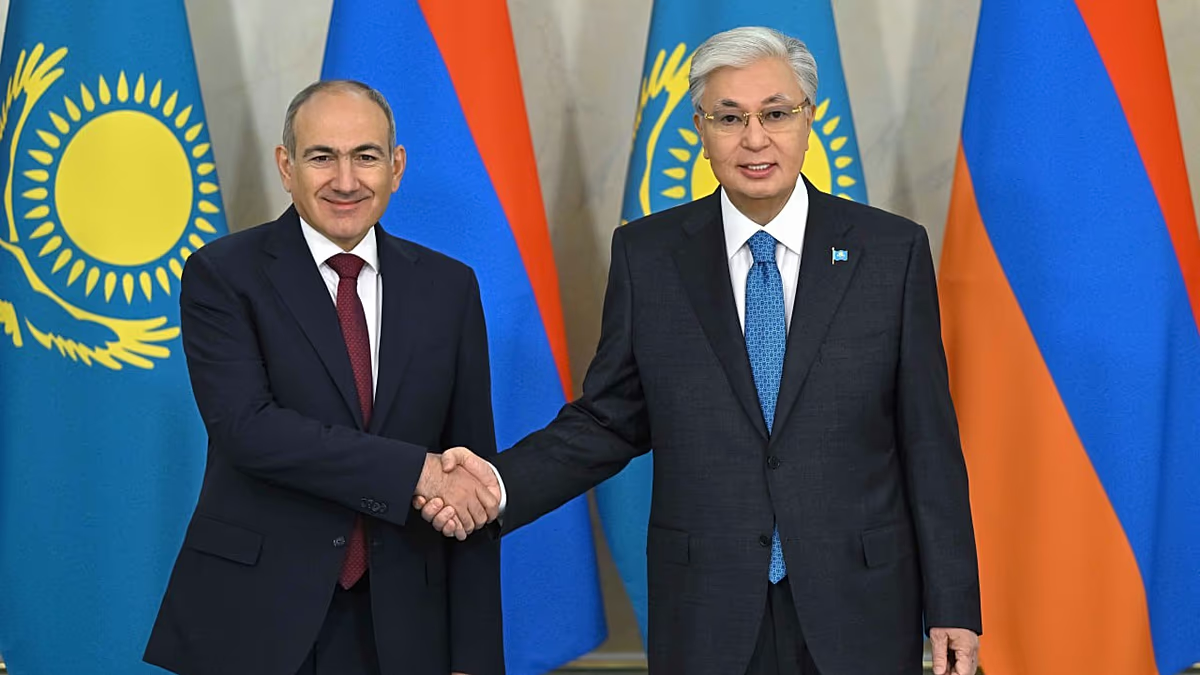

Kazakhstan has voiced its support for the Trump Route for International Peace and Prosperity (TRIPP) and Armenia’s “Crossroads of Peace” initiative, potentially reshaping trade and transit routes in the South Caucasus. The commitment came during a visit by Armenian Prime Minister Nikol Pashinyan to Astana, signaling a strengthening of bilateral ties and a shared interest in diversifying transportation links. This collaboration aims to create new economic opportunities for both nations and reduce reliance on existing corridors.
According to statements released by Kazakh officials, a key component of the agreement is linking TRIPP with the Trans-Caspian International Transport Route (TITR) and the North-South Corridor. This would create an alternative east-west transportation network, bypassing both Russia and Iran. Kazakhstan views this as crucial for diversifying its trade routes and enhancing its connectivity to global markets.
The Strategic Importance of the Trump Route
The TRIPP project, also frequently referred to as the Zangezur Corridor by Azerbaijan and Turkey, is envisioned as a transportation link connecting mainland Azerbaijan with its exclave of Nakhchivan, traversing Armenian territory. Importantly, Armenia maintains its sovereignty over the route, and it will operate under Armenian law, with the United States securing exclusive development rights for a period of 99 years. This aspect has been a point of discussion and negotiation.
Background of the Armenia-Azerbaijan Agreement
The foundations for these developments were laid with the signing of a joint declaration on August 8, 2024, mediated by the United States, outlining a potential peace agreement between Armenia and Azerbaijan to resolve the long-standing Nagorno-Karabakh conflict. While the declaration represents a significant milestone, ratification within Armenian legislature is still required for full implementation. The proposed peace agreement and TRIPP are intrinsically linked, aiming to normalize relations and foster regional stability.
Deputy Prime Minister and Minister of National Economy Serik Zhumangarin emphasized that the primary benefit for Kazakhstan lies in diversification. “Previously, we went through Azerbaijan to Georgia’s Black Sea ports, but this route will allow us to reach Nakhchivan and then directly Turkey,” he said. While a route through Iran exists, it is currently less utilized.
Pashinyan expressed gratitude for Kazakhstan’s role in facilitating negotiations between Armenia and Azerbaijan, particularly citing the meeting of foreign ministers in Almaty. He stated the Almaty Declaration formed a vital basis for the subsequent peace process. His administration is now focused on finalizing the legal framework for TRIPP through ongoing discussions with the US.
The collaboration extends beyond transportation. During the visit, 15 agreements and memorandums were signed between Kazakhstan and Armenia, covering areas such as trade, transit, investment, agriculture, digital technology, artificial intelligence, healthcare and cultural exchange. Discussions also included the possibility of resuming direct air travel between the two countries and establishing a Kazakh-Armenian Business Council.
Additionally, the two countries celebrated the inaugural shipment of 1,000 tonnes of grain from Kazakhstan to Armenia, demonstrating the immediate practical benefits of improved logistics. The Joint Statement issued during the visit formally elevated the relationship between Kazakhstan and Armenia to a strategic partnership.
However, the TRIPP initiative hasn’t been without controversy. Both Russia and Iran have voiced criticisms. Iran is concerned about potential disruptions to its own transit connections with Armenia, while Russia perceives the project as a challenge to its regional influence. The inclusion of the US in the project is intended, in part, to counter the growing influence of Azerbaijan and Turkey in the region.
Looking ahead, the successful implementation of TRIPP hinges on finalizing the legal agreements with the United States and securing ratification of the Armenia-Azerbaijan peace agreement. The development of this new transportation corridor has the potential to significantly alter regional geopolitics and trade dynamics, making it a key development to watch in the coming months. Stay informed about this evolving situation and its impact on international trade routes and the South Caucasus region.