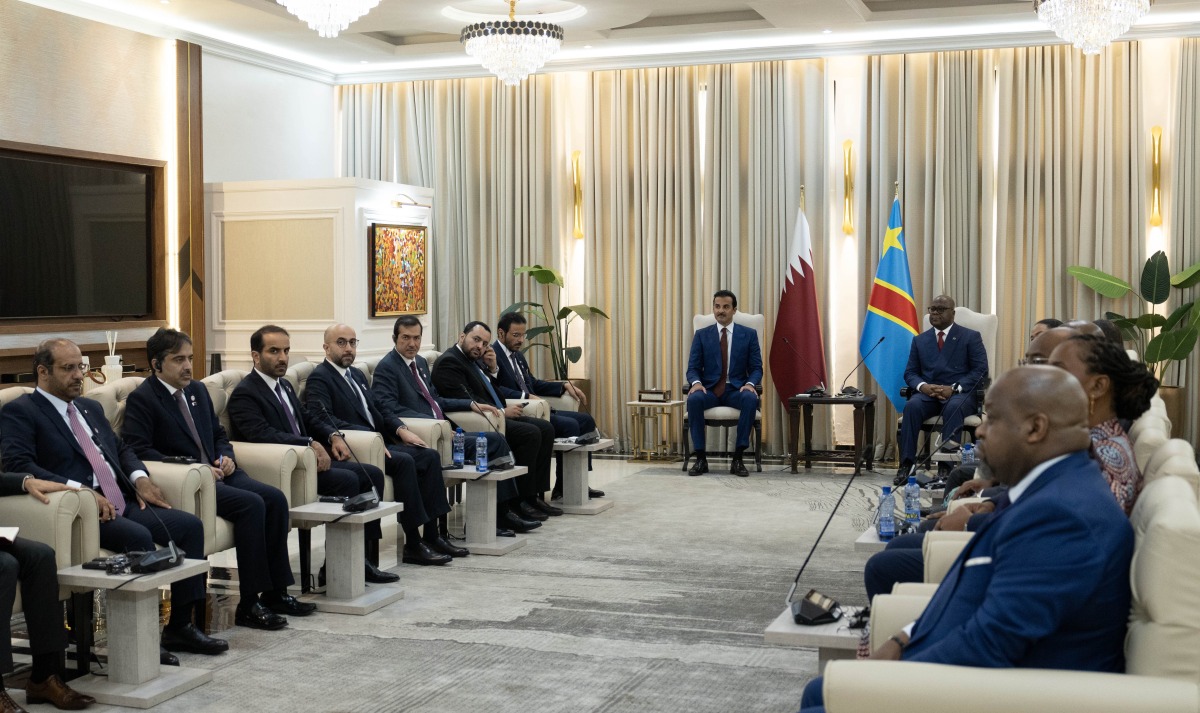

Qatar and the Democratic Republic of Congo (DRC) have significantly strengthened their bilateral ties with the signing of multiple agreements and memoranda of understanding (MoUs) in Kinshasa on Friday. The agreements, witnessed by His Highness Sheikh Tamim bin Hamad Al-Thani, Amir of Qatar, and DRC President Félix Tshisekedi, cover a range of sectors including ports, legal cooperation, humanitarian aid, youth and sports, and diplomatic relations. This Qatar DRC agreement signals a deepening of economic and political engagement between the two nations.
The signing ceremony took place at the Presidential Palace in Kinshasa, marking a key moment in the evolving relationship between Doha and Kinshasa. These agreements aim to foster collaboration and investment, addressing critical needs within the DRC while opening new avenues for Qatari economic influence in Central Africa. The agreements were signed by representatives from both governments and key Qatari entities like Qatar Ports Management Company (Mwani Qatar) and the Qatar Fund for Development (QFFD).
Strengthening Bilateral Ties: The Qatar DRC Agreement
The core of the agreements focuses on bolstering economic cooperation. A key MoU between Mwani Qatar and the DRC’s National Transport Office (ONATRA SA) aims to enhance port infrastructure and management within the DRC. This is particularly important given the DRC’s limited access to efficient port facilities, hindering its trade potential. According to the World Bank, improved logistics are crucial for the DRC’s economic diversification.
Key Areas of Cooperation
Beyond ports, the agreements span several vital sectors:
Legal Cooperation: An MoU between the Ministries of Justice will facilitate collaboration on legal matters, potentially including judicial training and the exchange of expertise. This could contribute to strengthening the rule of law within the DRC.
Humanitarian Aid: The QFFD pledged support for a multi-sectoral emergency response project in North Kivu, South Kivu, Ituri, and Chubu regions of the DRC. This aid addresses urgent humanitarian needs in areas affected by conflict and instability, reflecting Qatar’s commitment to international development. The project will focus on providing essential services and support to vulnerable populations.
Youth and Sports: An MoU on cooperation in youth and sports aims to promote cultural exchange and development in these areas. This initiative could foster people-to-people connections and contribute to social development within the DRC.
Diplomatic Relations: A mutual exemption from entry visas for holders of diplomatic and special passports was agreed upon, streamlining travel for officials from both countries. This will facilitate diplomatic engagement and strengthen political ties.
Additionally, an MoU was signed for political consultations between the foreign ministries of both nations, establishing a framework for regular dialogue on issues of mutual interest. This is expected to enhance coordination on regional and international matters.
However, the DRC faces ongoing challenges related to political stability and security, particularly in its eastern regions. These factors could potentially impact the implementation of some of the agreements. The success of these initiatives will depend on sustained commitment from both sides and a conducive environment for investment and development.
The agreements also come amidst increasing international interest in the DRC’s vast mineral resources, including cobalt and lithium, which are crucial for the global energy transition. Reuters reports that the DRC is seeking to renegotiate mining contracts to secure a greater share of the revenue from its resources. Qatar’s investment could play a role in this evolving landscape, potentially diversifying the DRC’s economic partnerships.
Looking ahead, the next step involves the detailed implementation plans for each MoU and agreement. While no specific timelines were announced, officials from both countries are expected to convene in the coming months to establish concrete action plans. The effective execution of these agreements will be closely watched by regional stakeholders and international investors, as it could signal a new era of economic and political cooperation between Qatar and the Democratic Republic of Congo. Further developments regarding specific project details and investment commitments are anticipated in early 2024, though the ongoing security situation in eastern DRC remains a key variable.
The agreements also represent a broader trend of increasing engagement by Gulf states in African economies, driven by both economic opportunities and strategic considerations. The Atlantic Council notes that this engagement is likely to continue in the coming years, with a focus on sectors such as infrastructure, energy, and agriculture.